

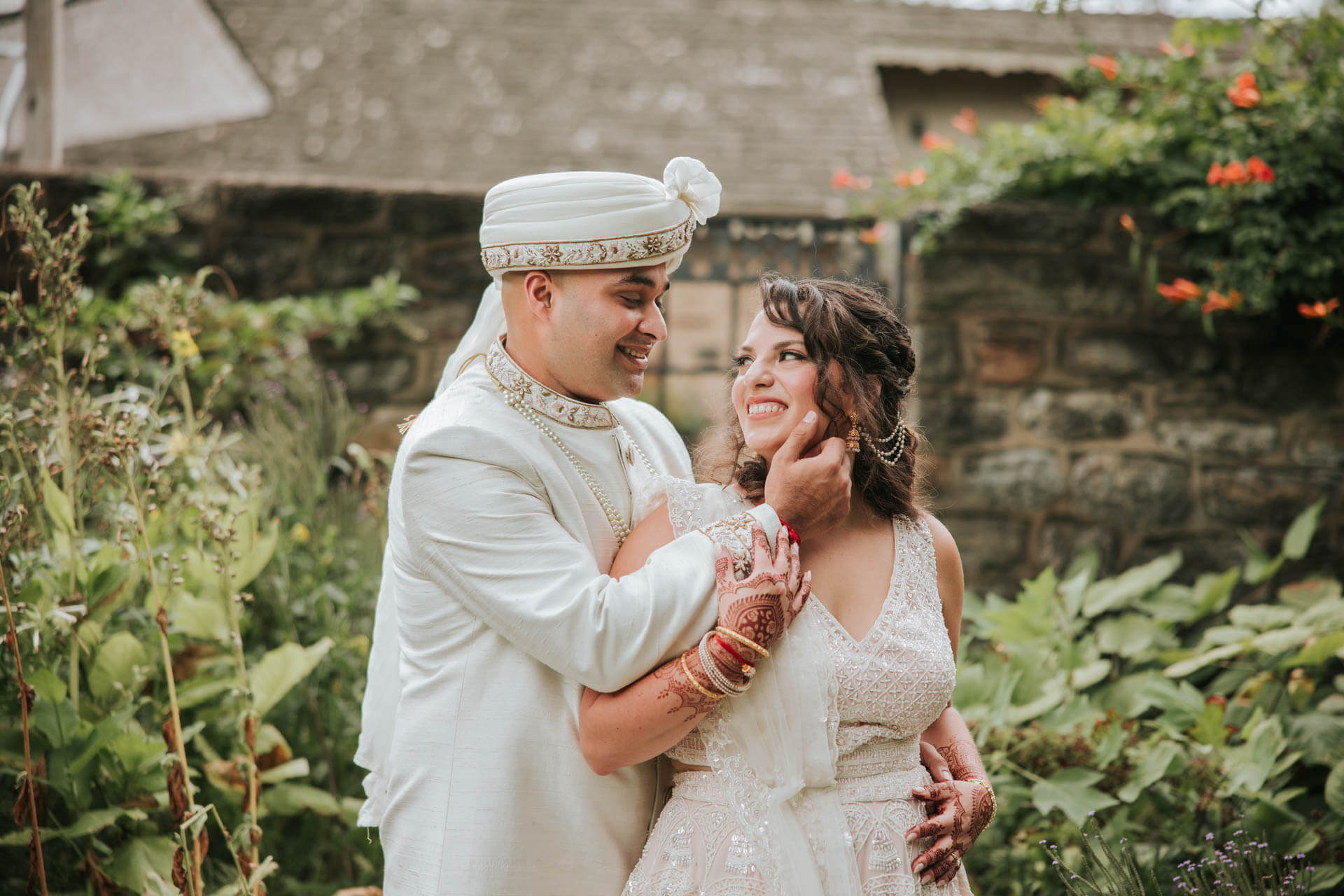

Bartram’s Garden Wedding, Philadelphia | Lori & Rakesh
An Indian-Jewish Fusion Wedding in Philadelphia
Bartram’s Garden sits in southwest Philadelphia, Pennsylvania, along the Schuylkill River — America’s oldest surviving botanical garden, and one of the most quietly beautiful wedding venues in the city. For Lori and Rakesh, it was the right place. Their wedding was a two-day Indian-Jewish fusion celebration, and the garden held all of it without effort. Lush greenery, centuries-old trees, the kind of setting that doesn’t compete with what’s happening inside it.
Lori and Rakesh came in with an intention. Two cultures, two sets of traditions, two families — and a clear vision for how to honor all of it without losing either. That clarity showed up in every detail of the day, from the Mehndi night at the Warwick Hotel to the ceremony in the garden the following afternoon.
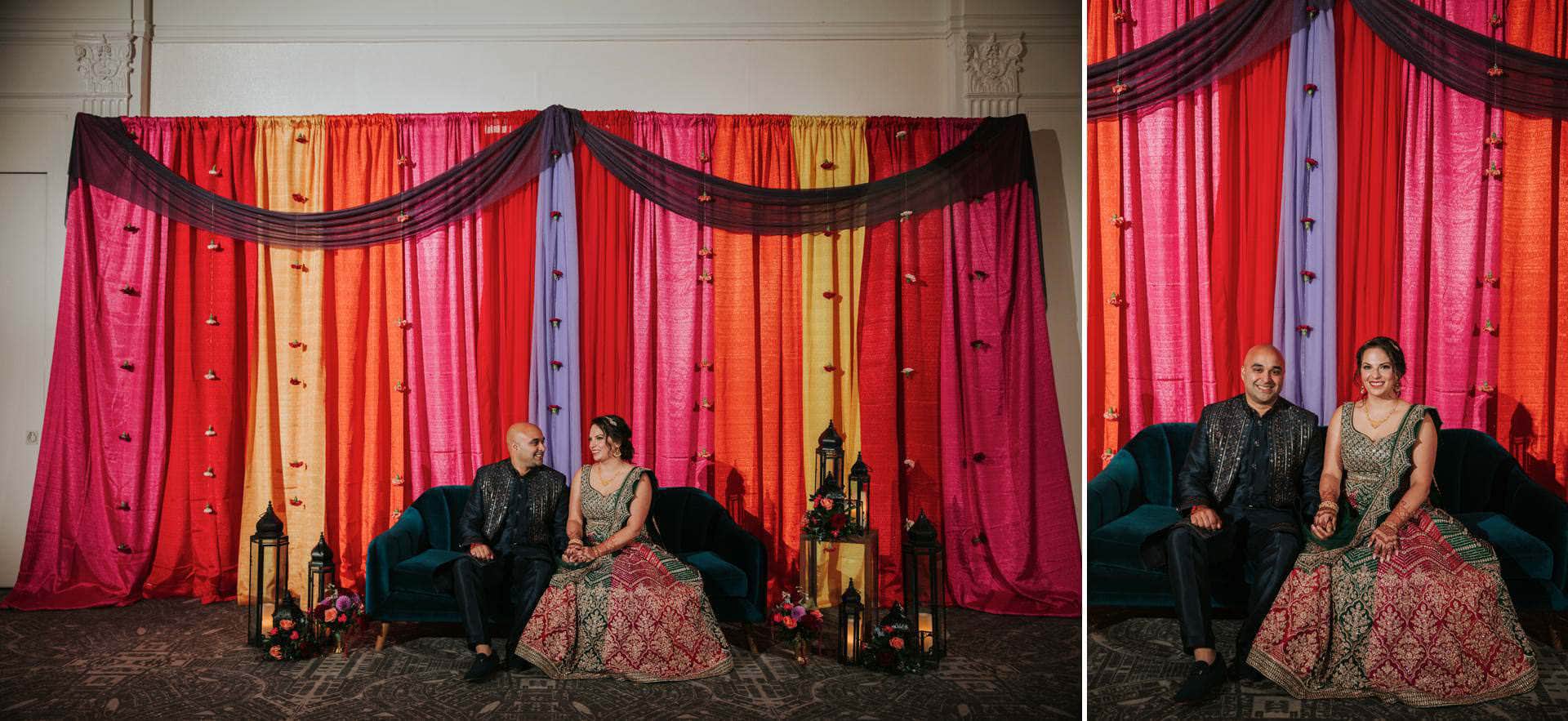
Mehndi night
The festivities began the evening before at the Warwick Hotel Rittenhouse Square. Before the Mehndi night started, Lori and Rakesh took a walk through the city together — back to the spot of their very first date. It was a quiet, personal moment in the middle of a weekend that was about to become very public. That walk said something about who they are.
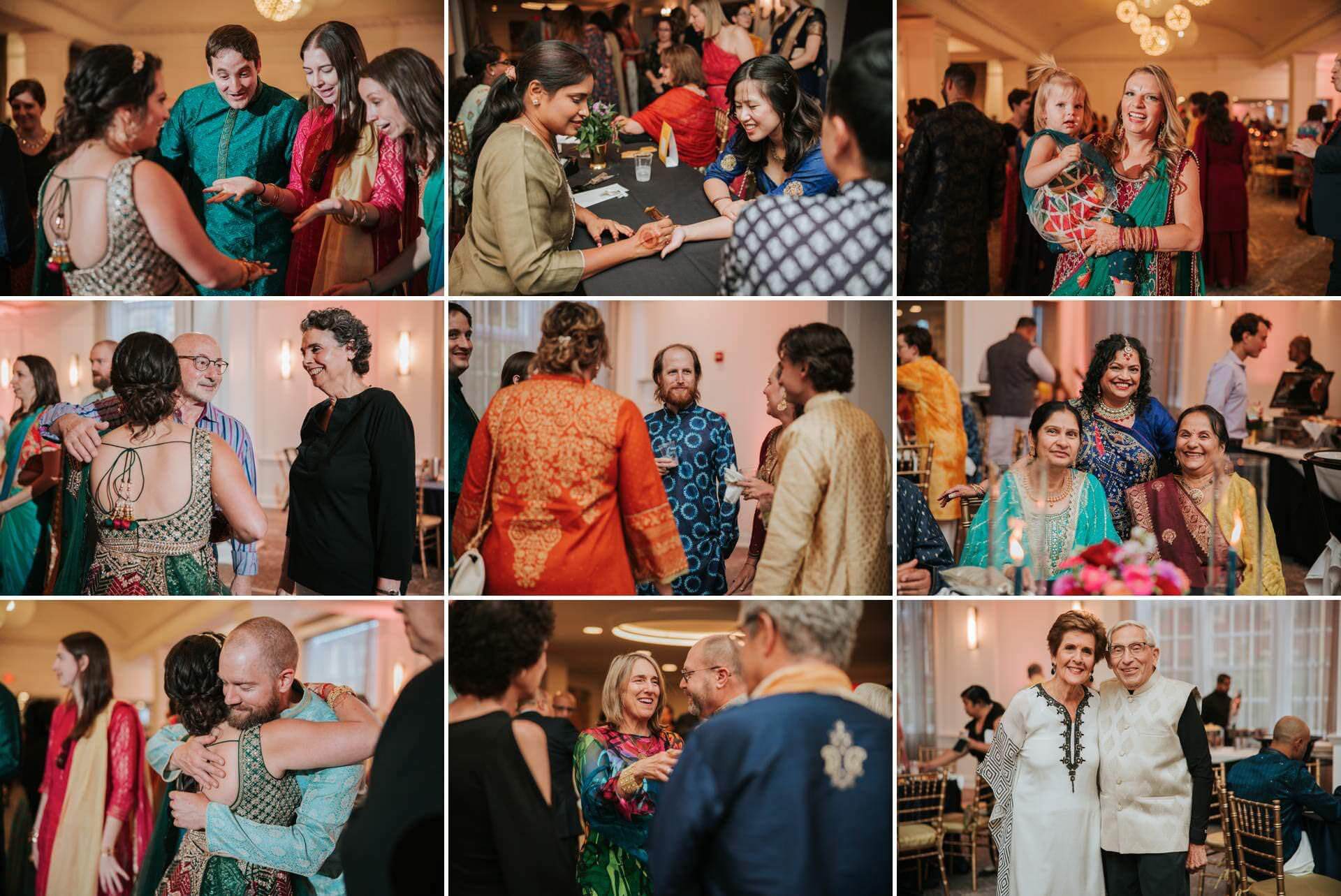
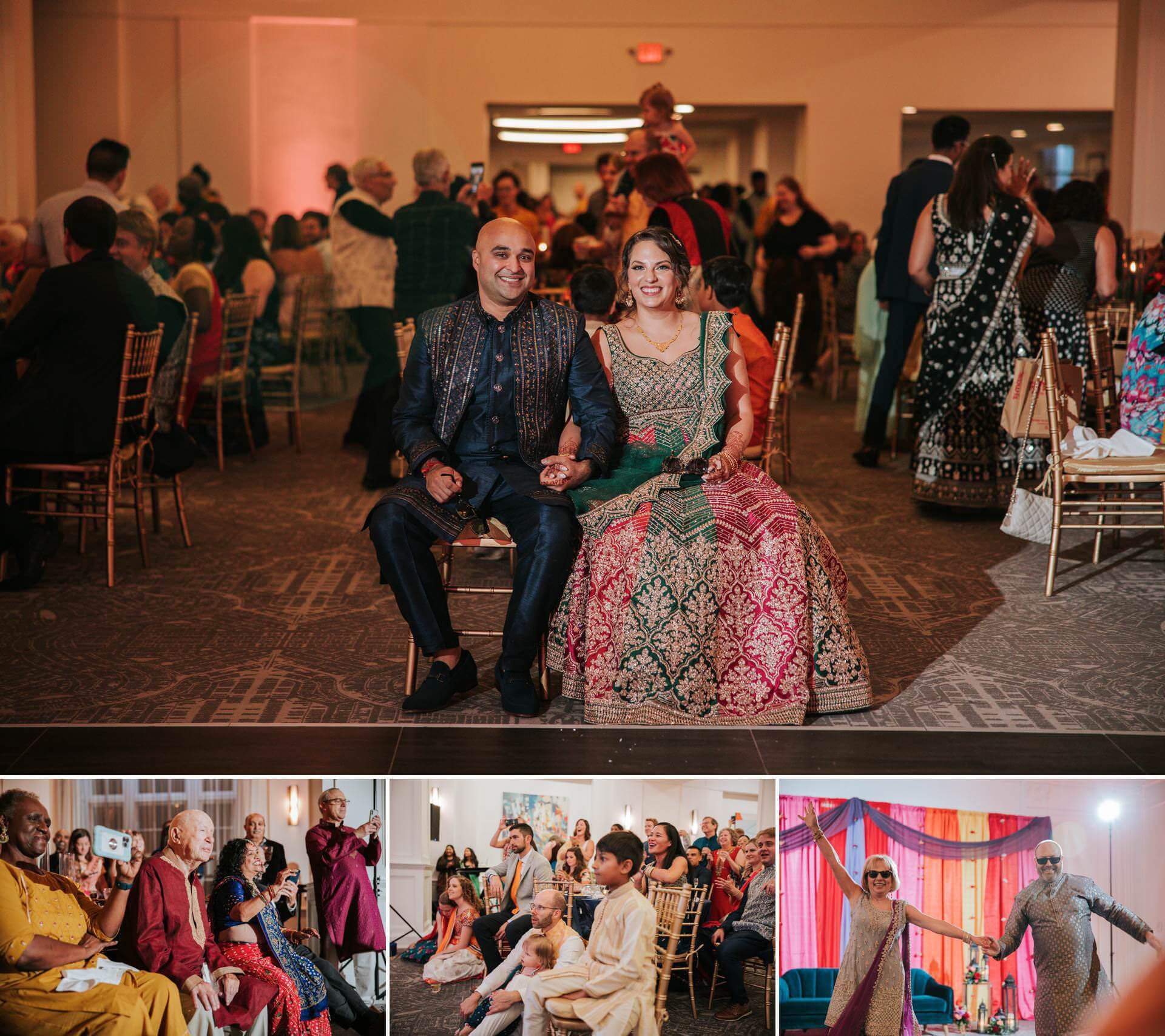
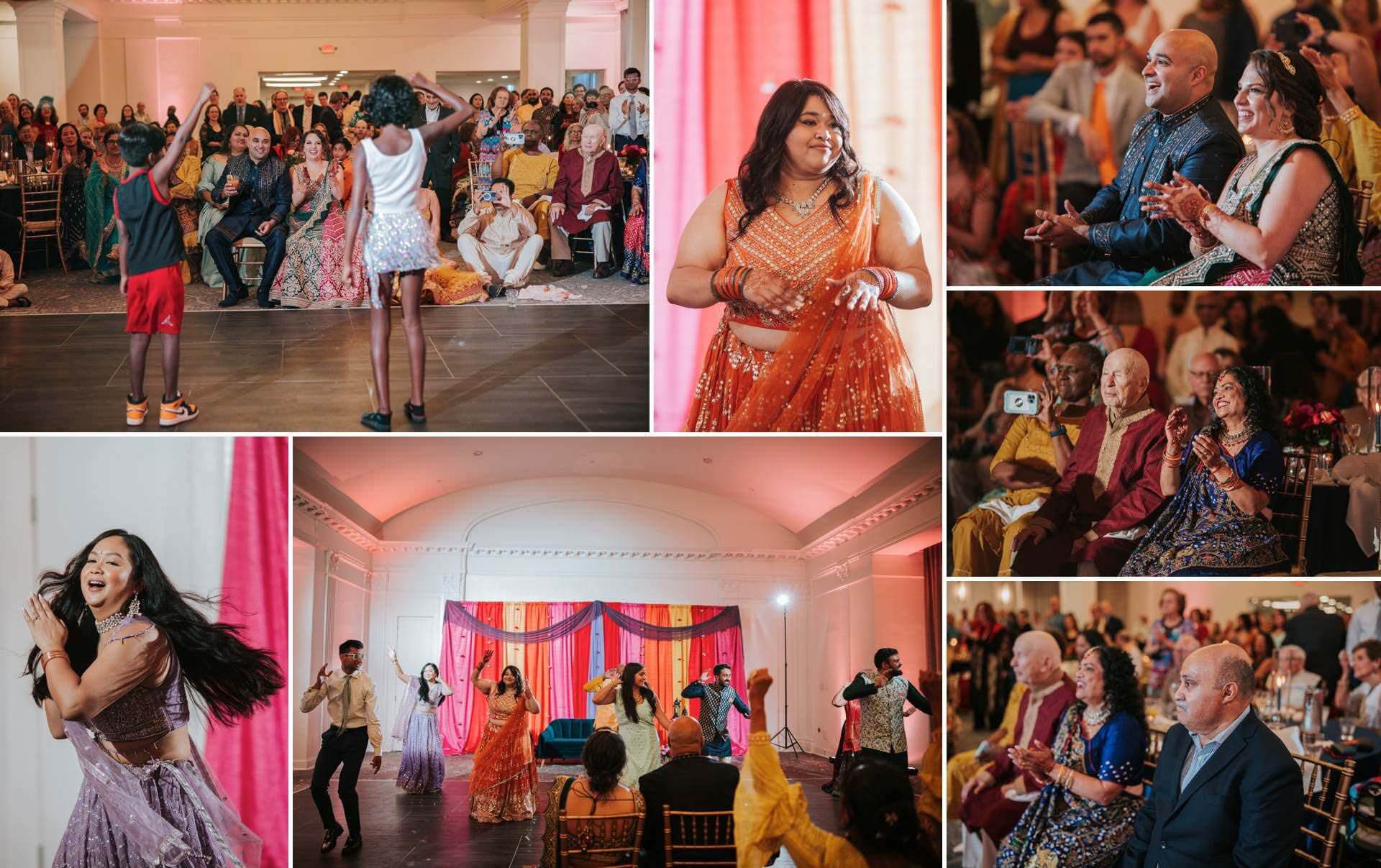
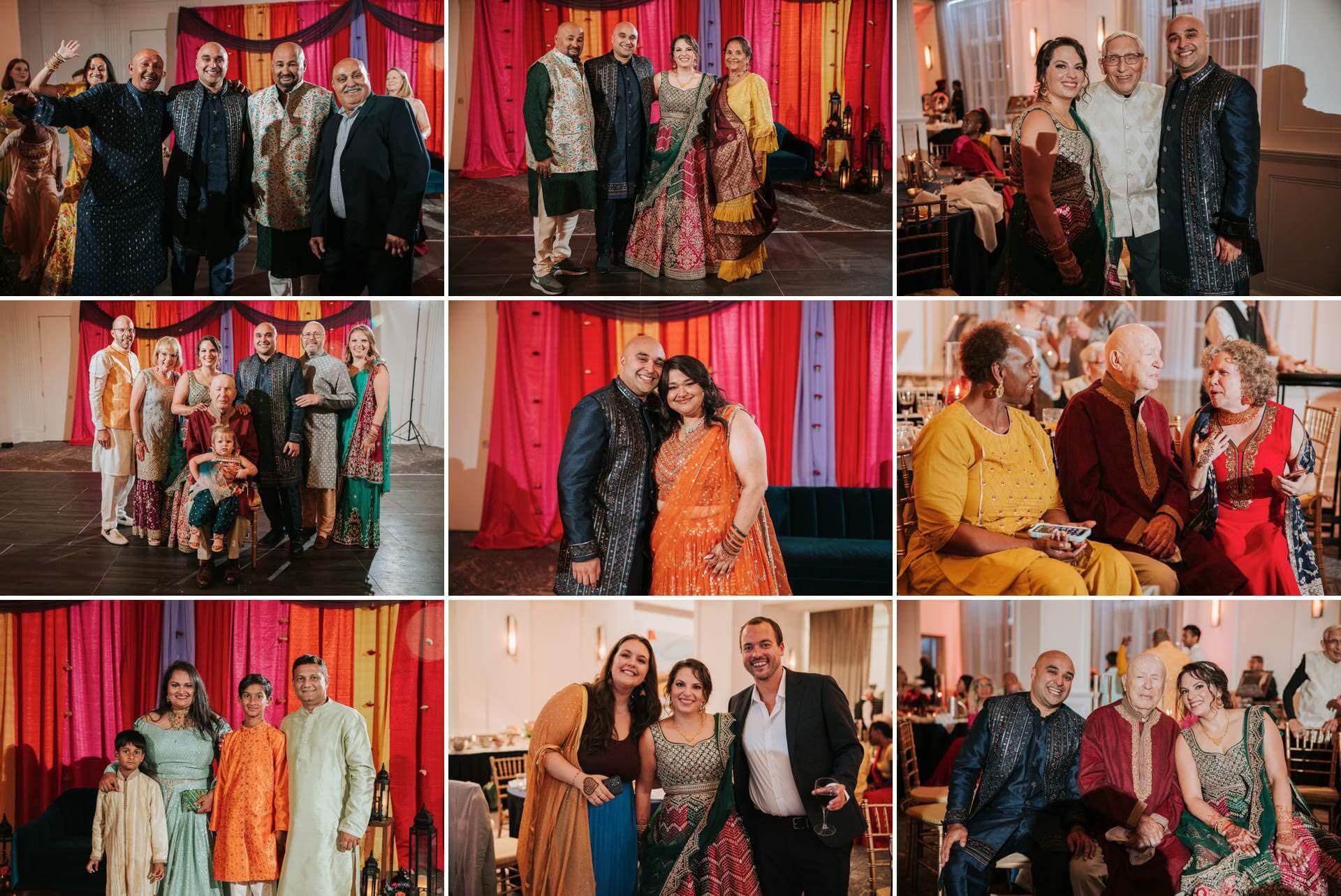
The Mehndi night itself was full. Henna artists moved through the room, guests gathered around, Bollywood Touch’s performers took the stage and brought family members up with them. The dances blended both cultures — each performance a small version of what the whole weekend was doing on a larger scale. By the end of the evening, the room had the particular energy of people who are ready for the next day.
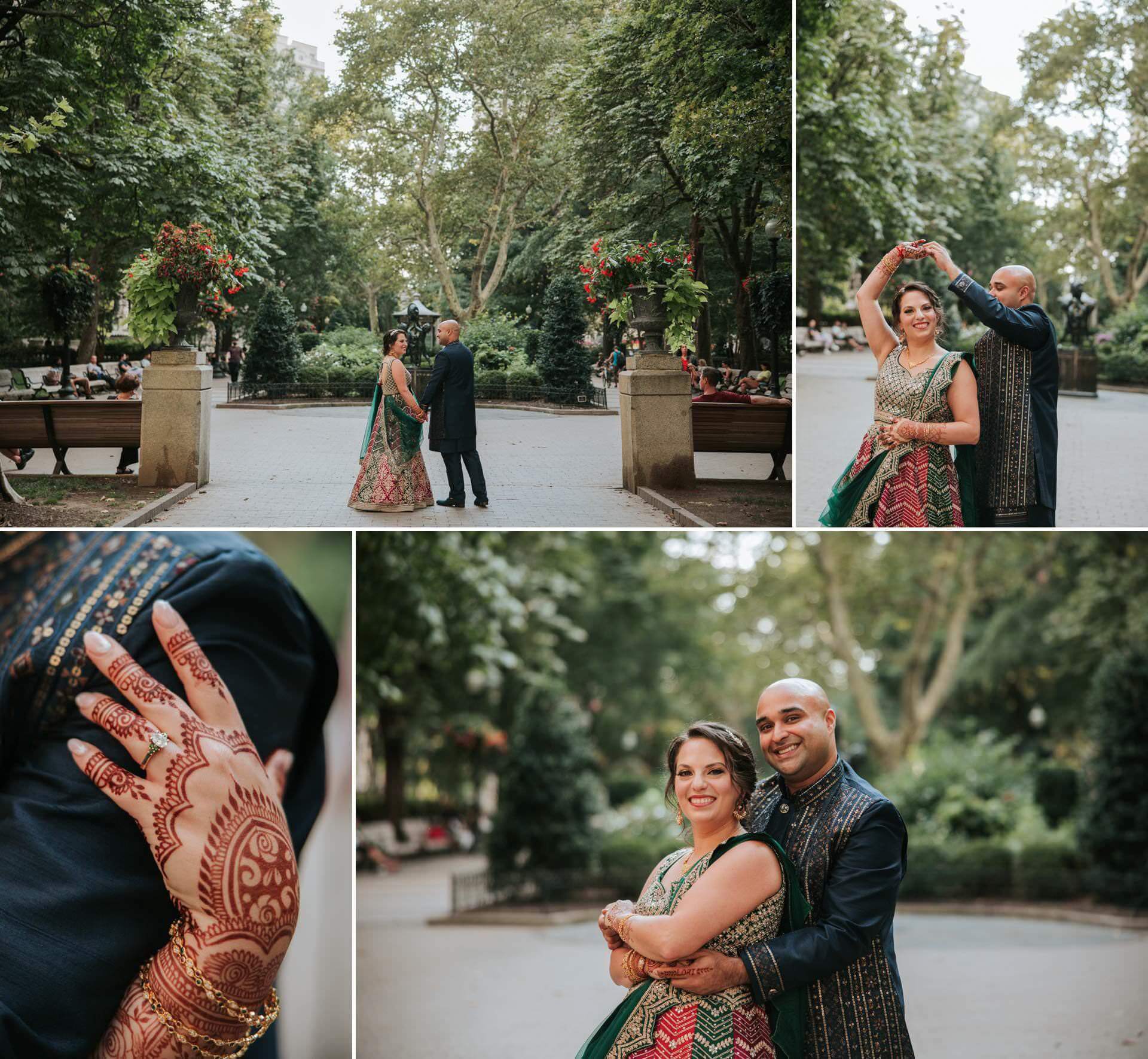
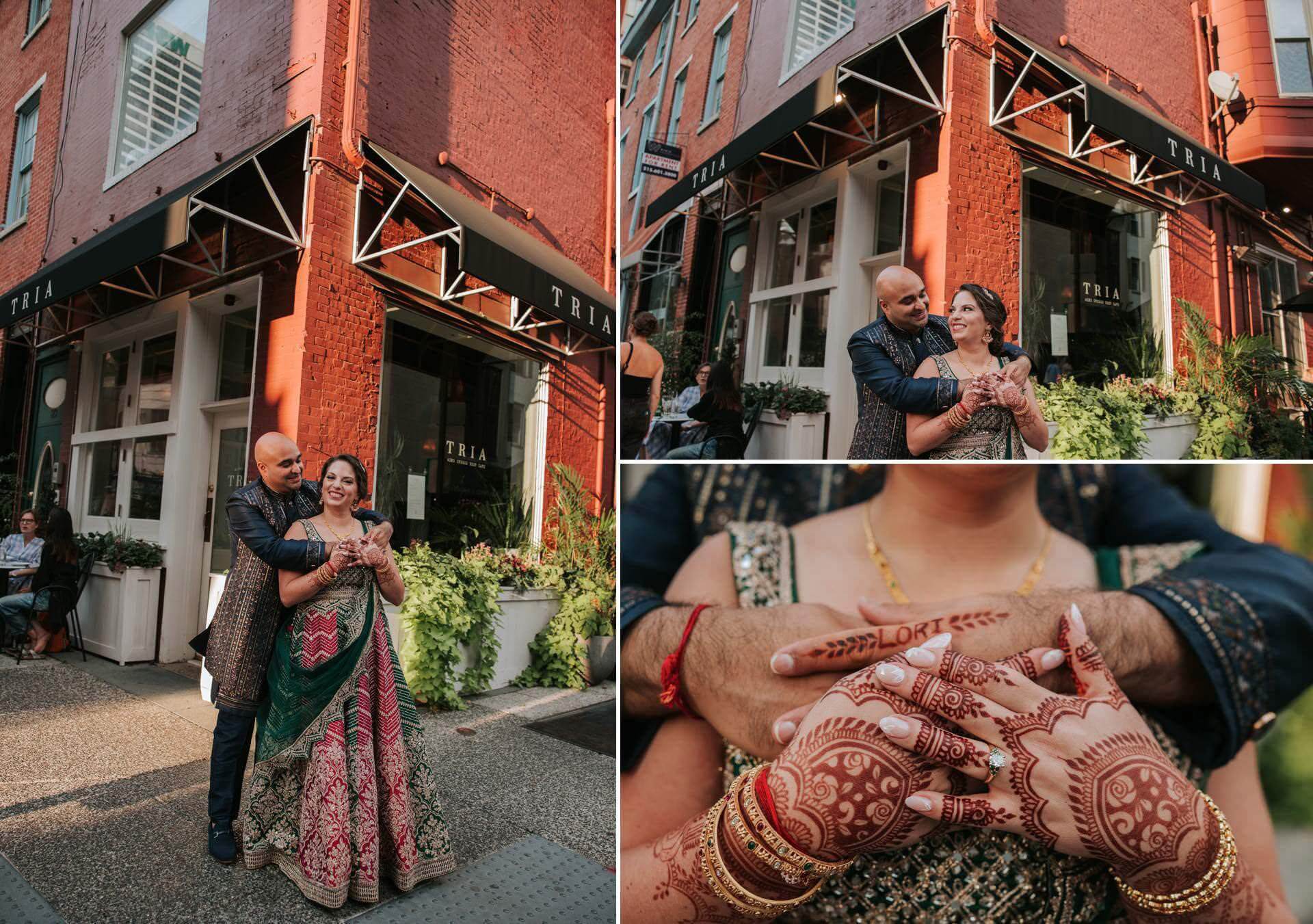
Mehndi details
The henna station was one of those things that becomes its own event within the event. Intricate designs on hands and arms, guests waiting their turn, the air full of conversation and laughter. Because henna takes time, it gave people a reason to sit together and talk. That’s what a Mehndi station does — it slows the evening down in the best way.
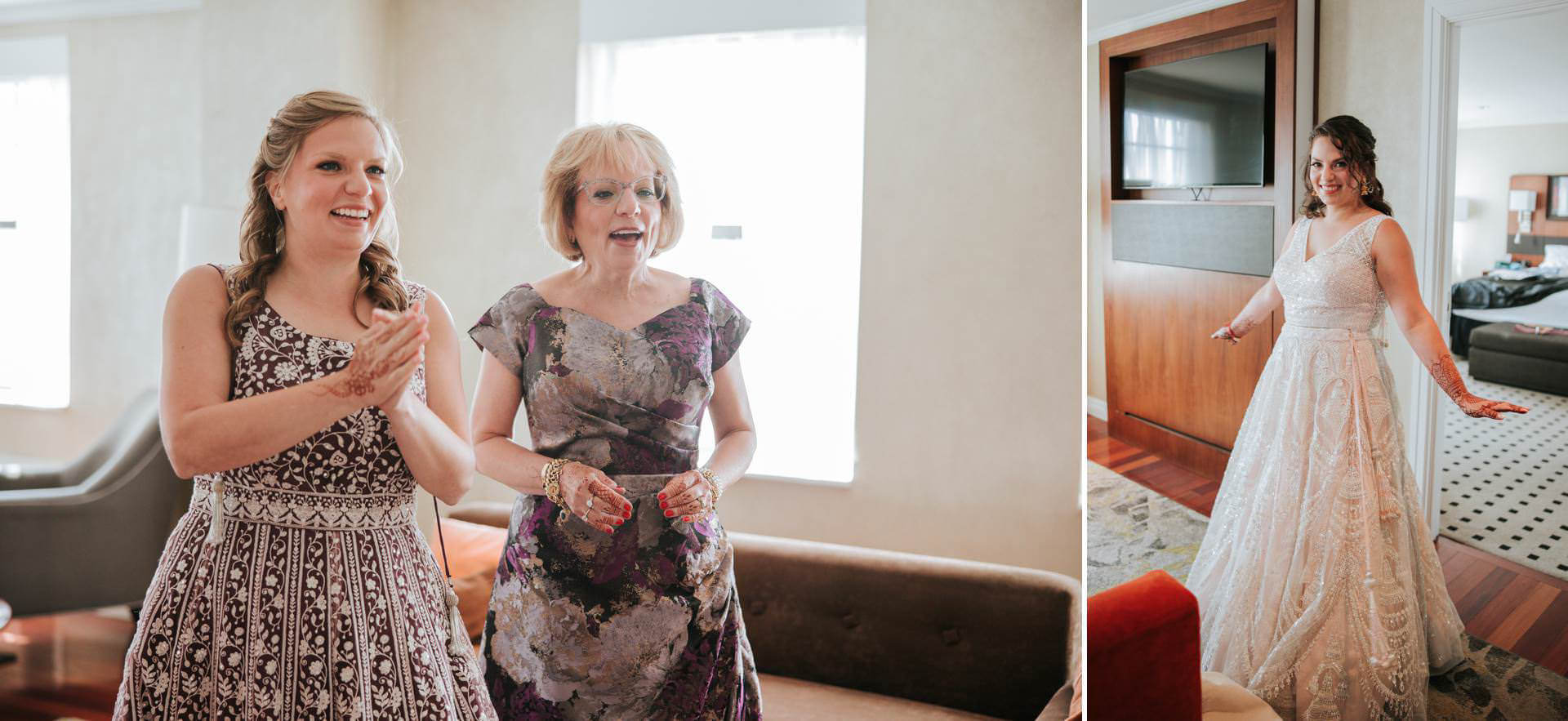
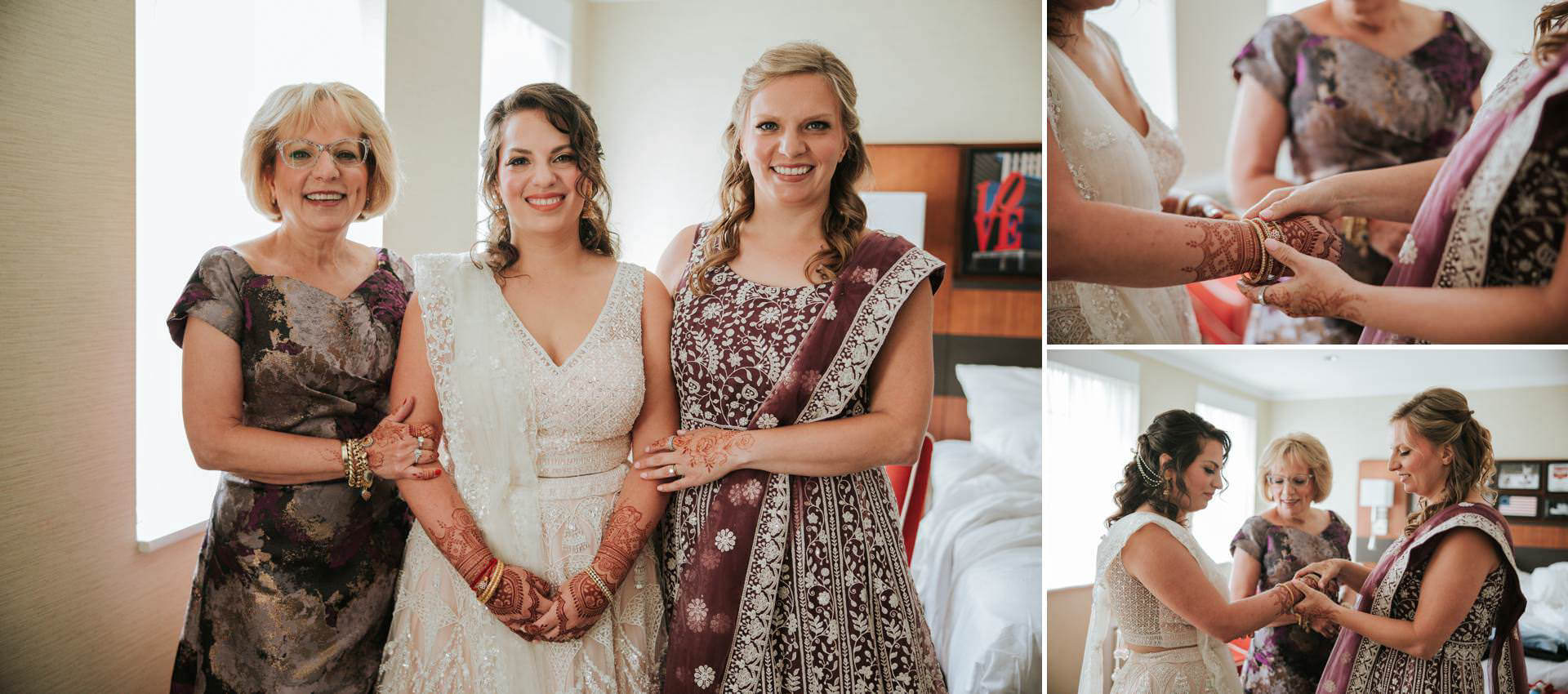
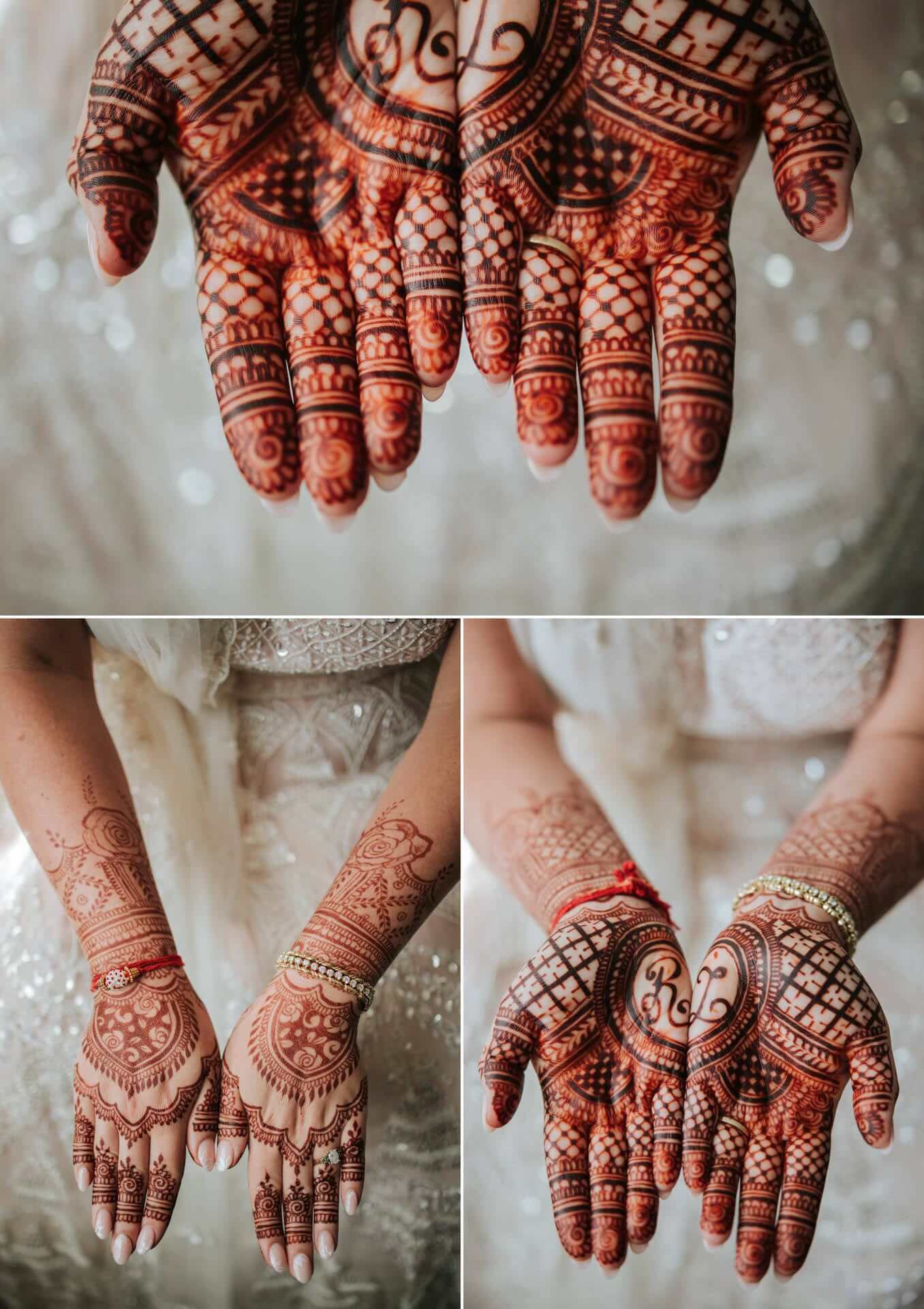
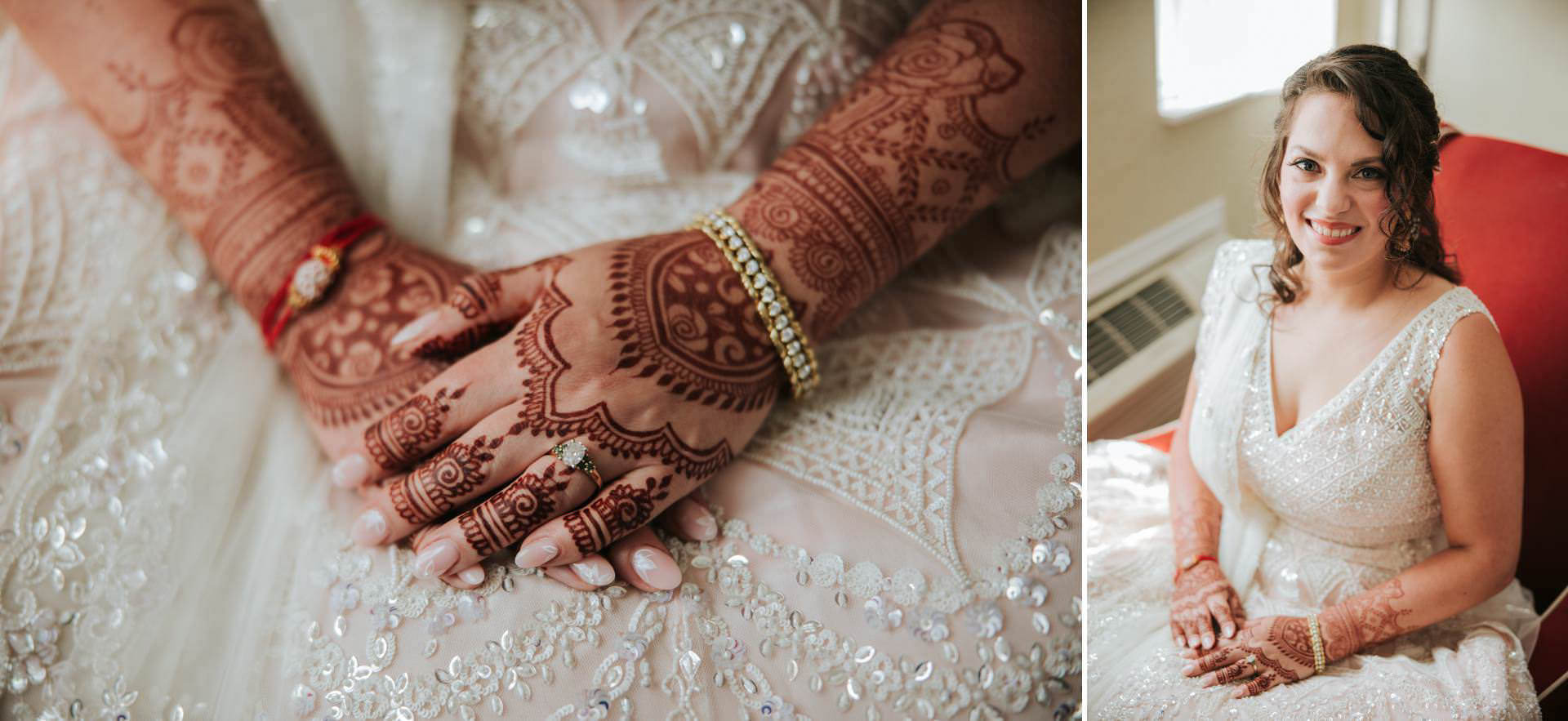
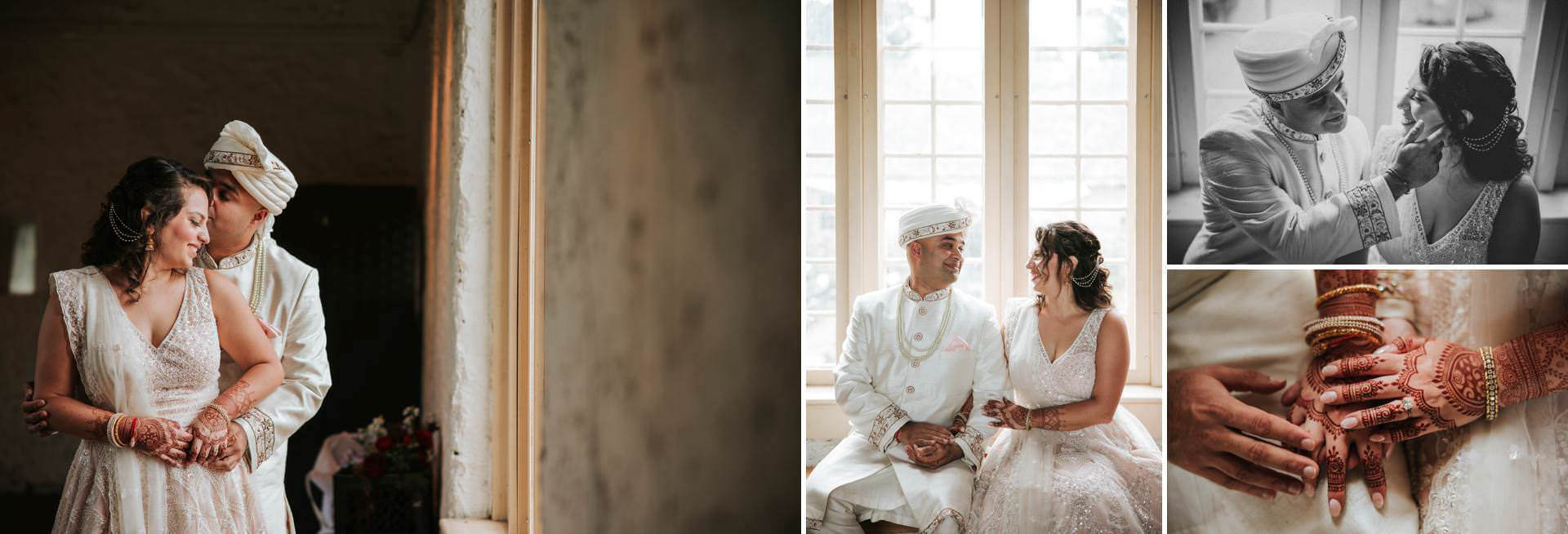
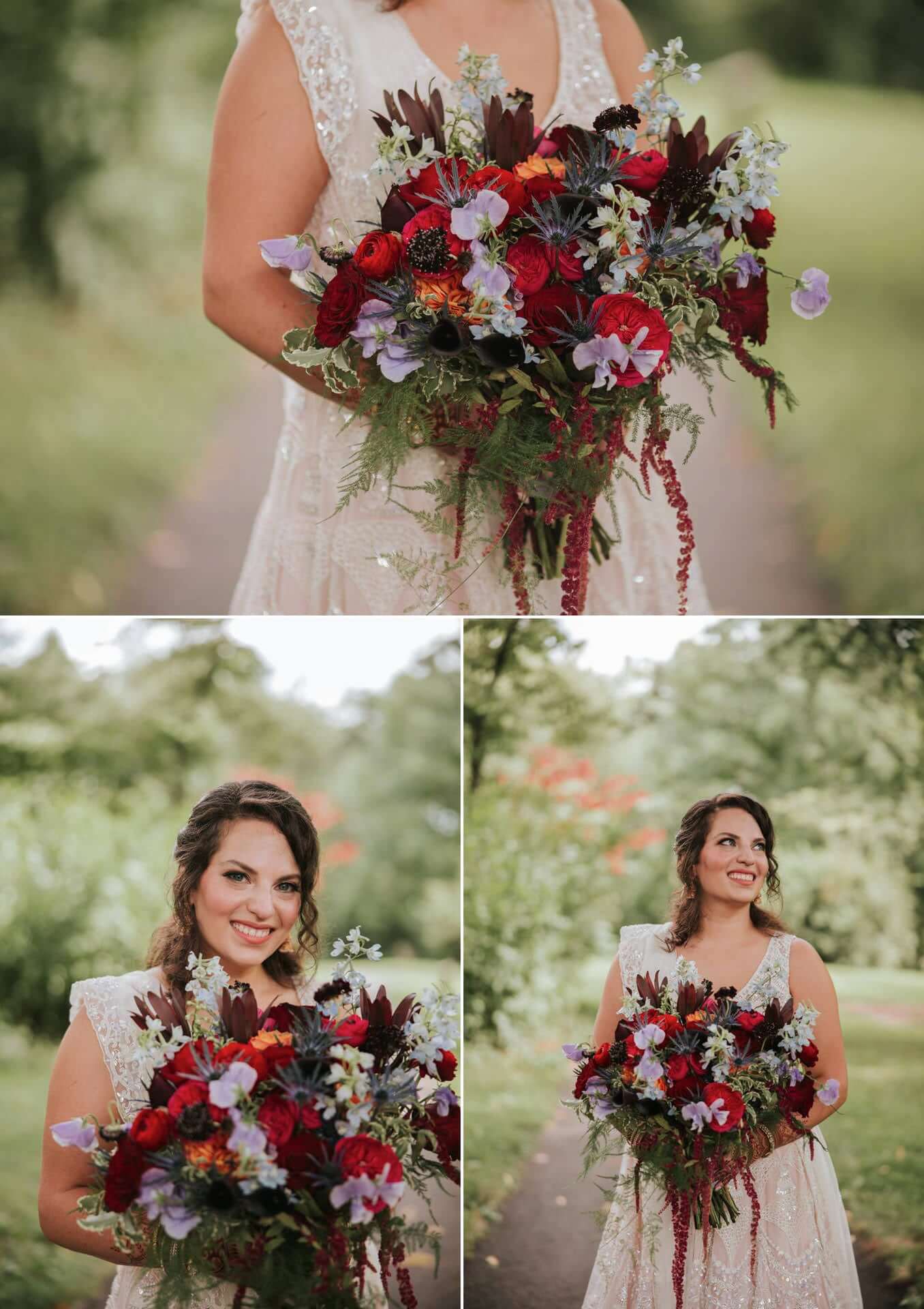
Lori’s henna was already set by the time the next morning arrived. Deep patterns running up both hands and arms, visible throughout the getting ready images, the ceremony, the reception. A detail that carried through the entire day.
Getting ready
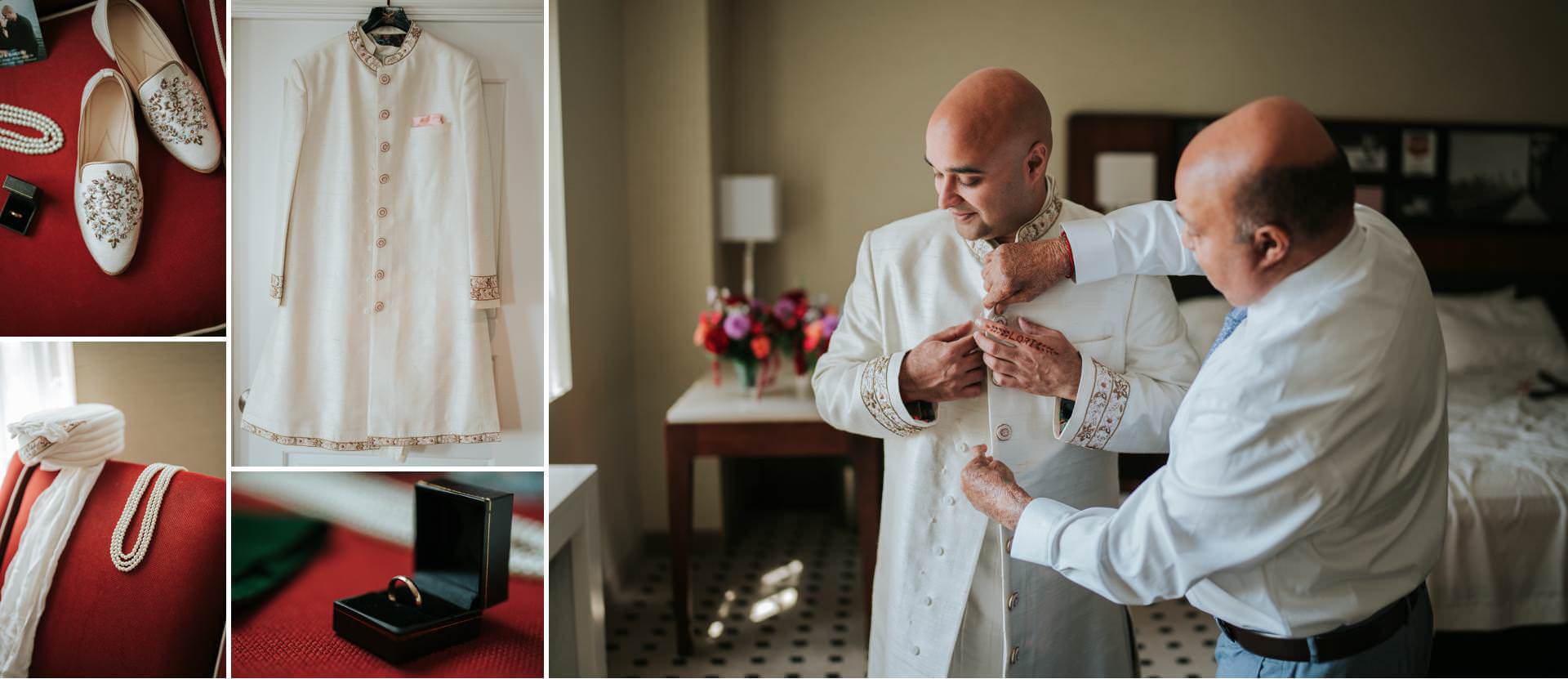
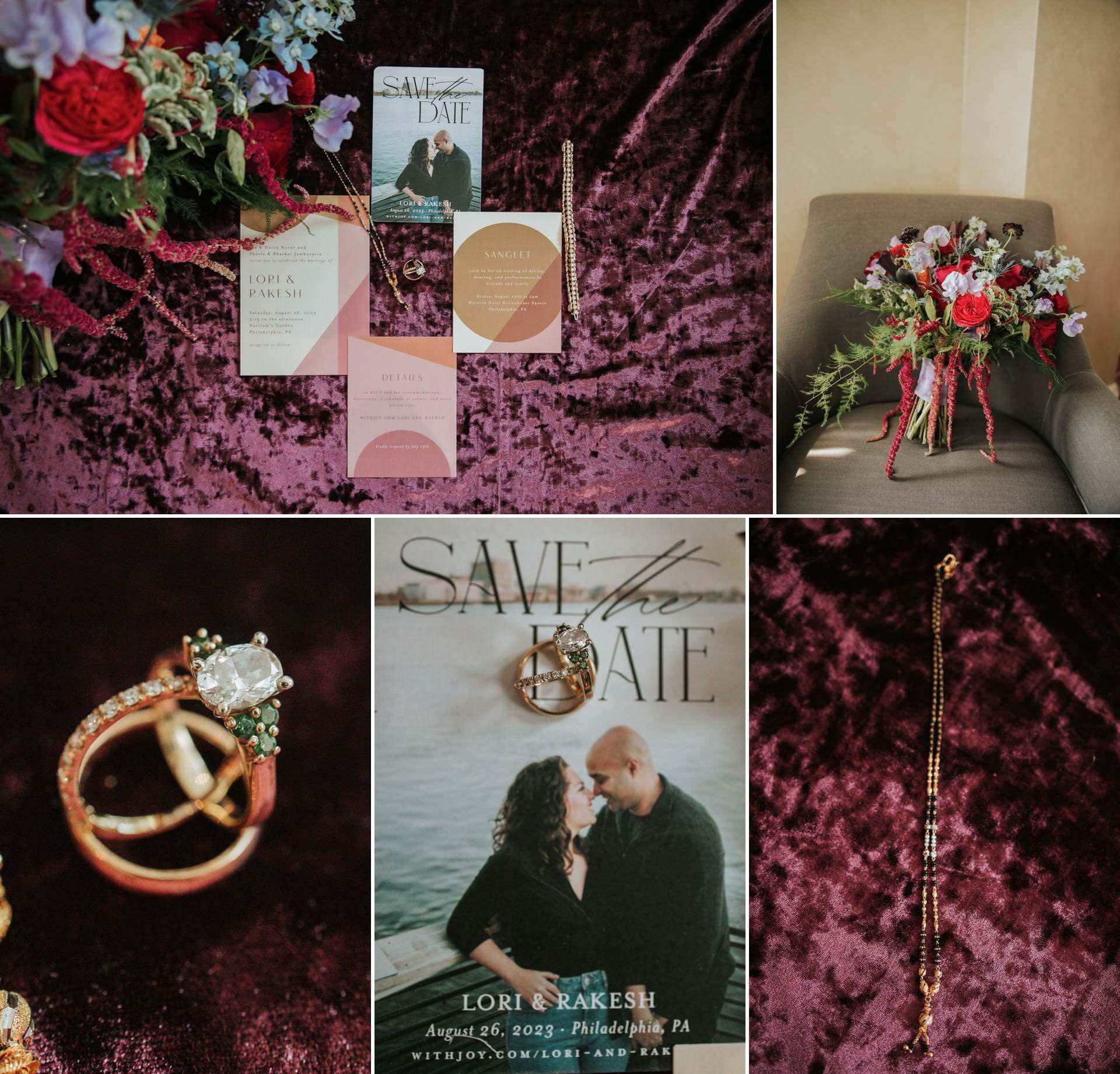
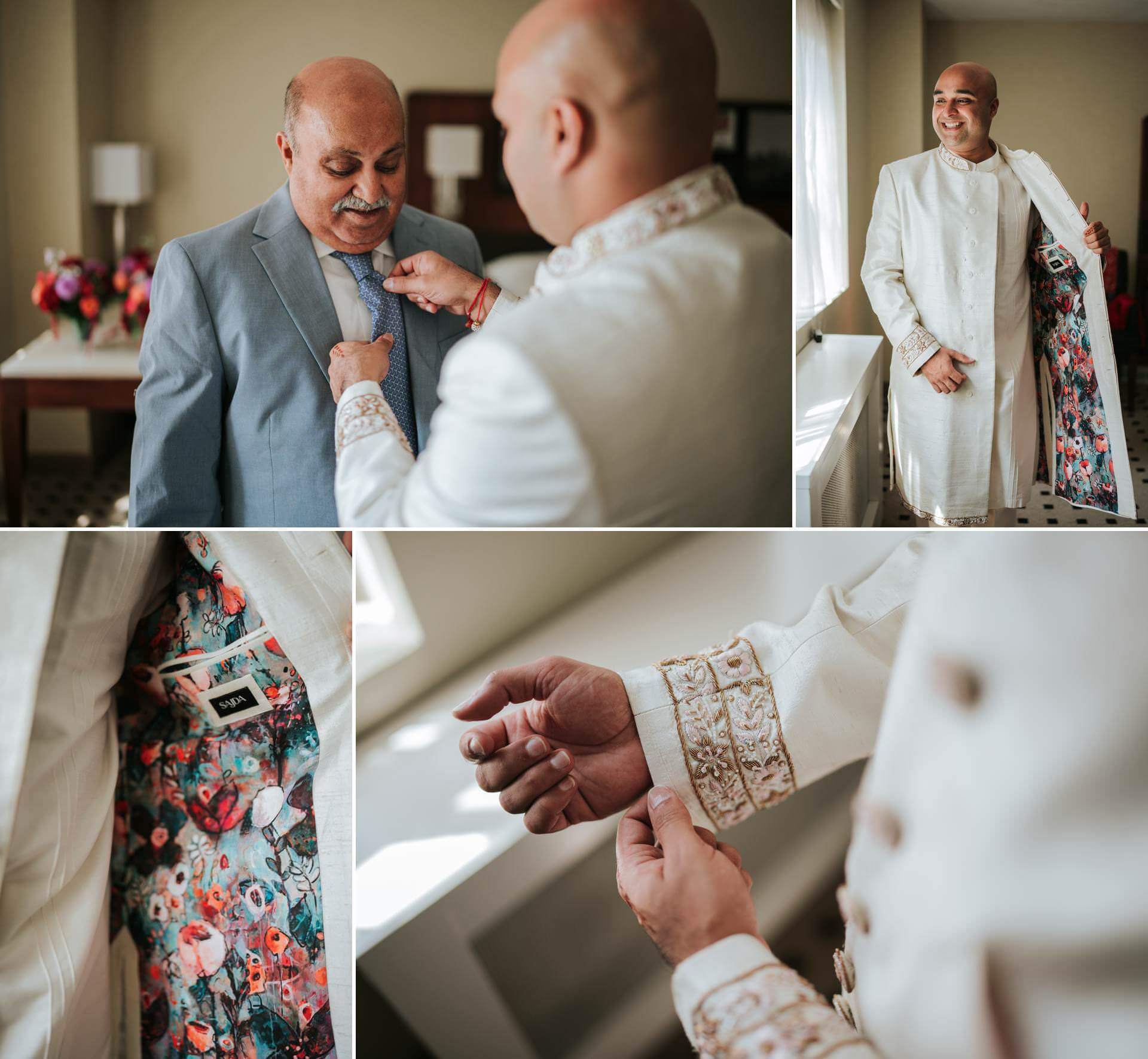
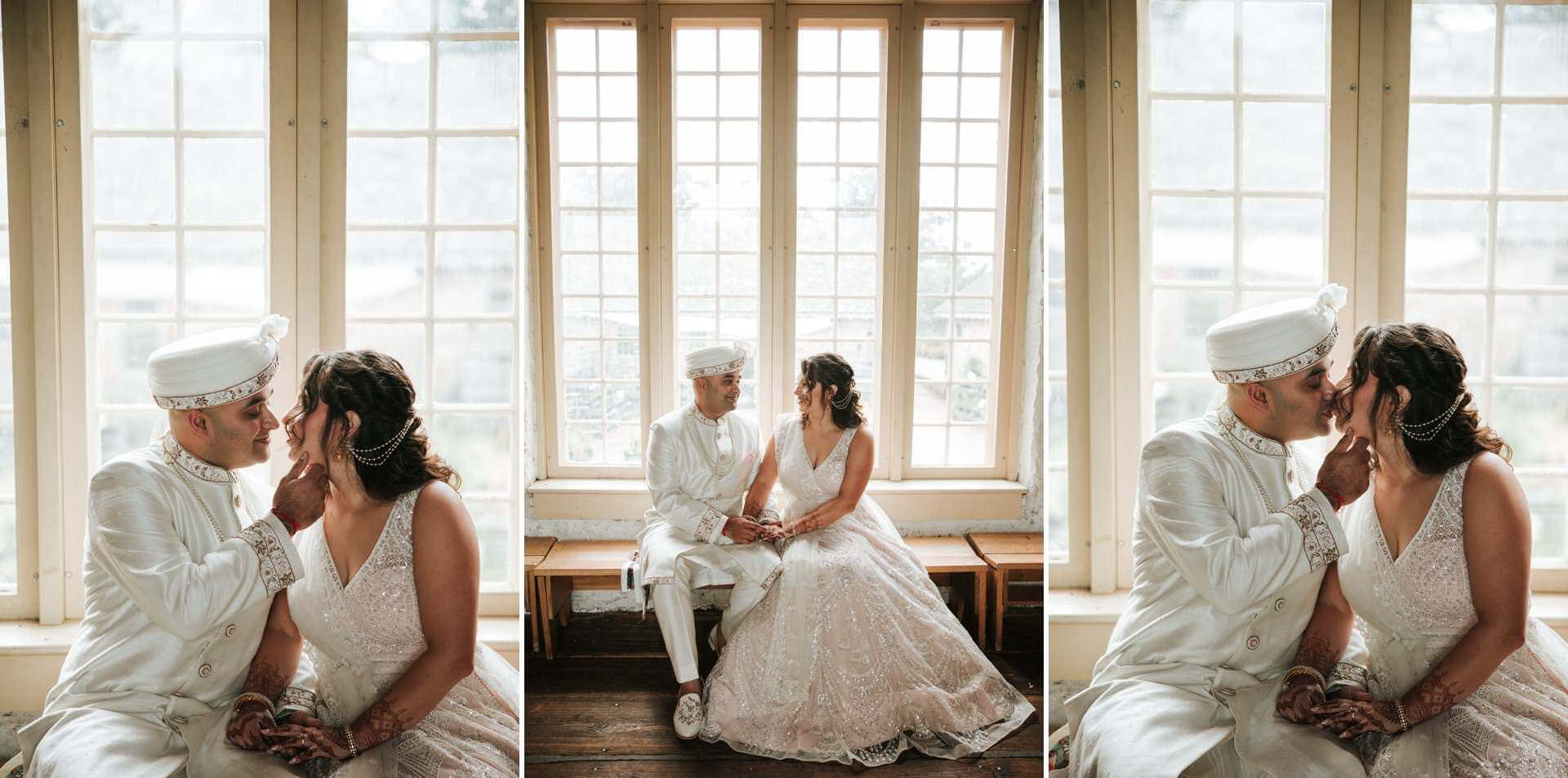
Lori got ready at the Warwick Hotel, surrounded by her closest people. Her dress — a fusion of her Jewish and Indian heritage, with henna patterns visible on her hands — came together in that room. Rakesh’s sherwani was laid out alongside the wedding details: rings, invitations, the pieces that belong to a day like this.
The energy in getting ready rooms tells you a lot about what kind of day you’re going to have. This one was warm, focused, and genuinely excited. Rakesh got ready with his father nearby, which is one of the quieter images from the morning — two people standing together before something significant, not saying much, not needing to.
The first look
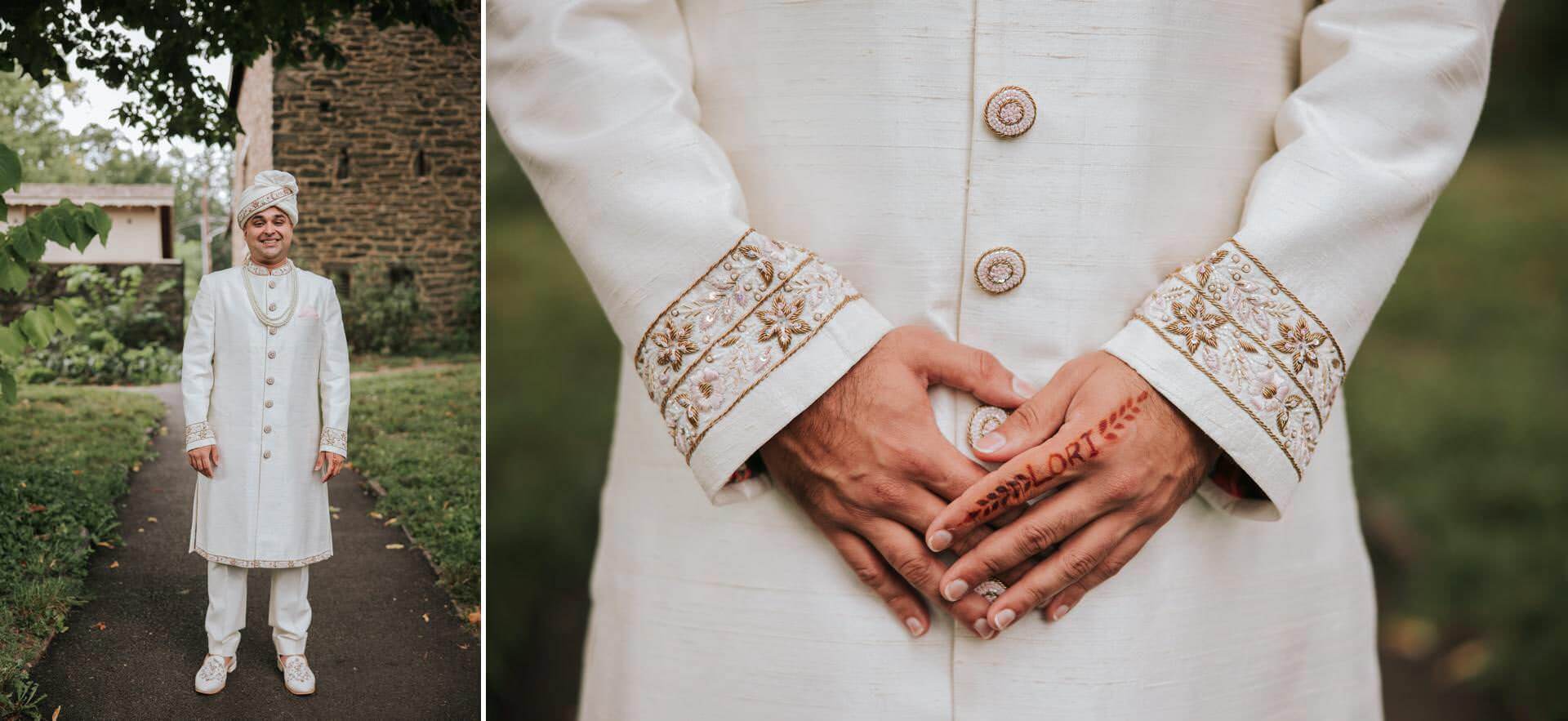
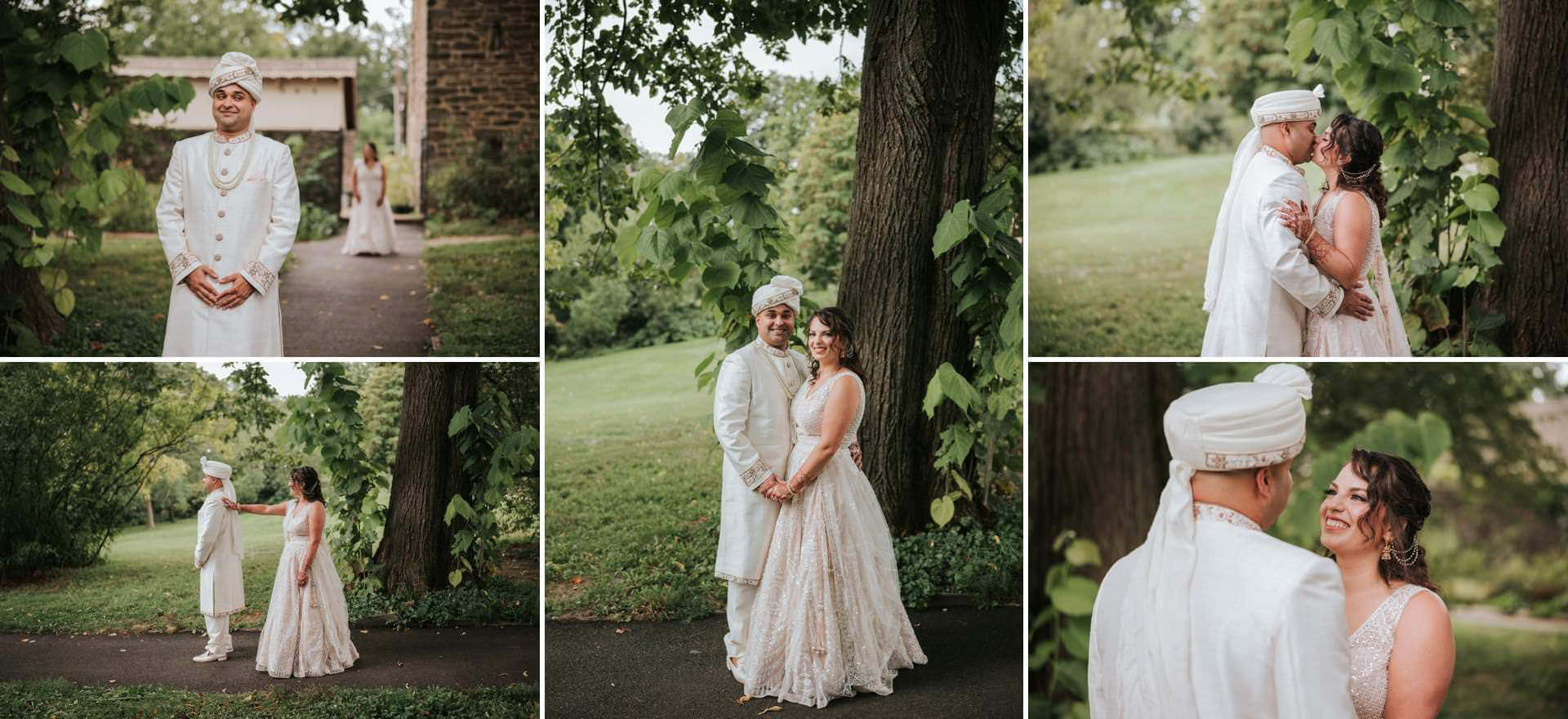
The first look happened at Bartram’s Garden, in the middle of the greenery and the centuries-old trees. When Rakesh turned around, the garden was behind him and Lori was in front of him, and the whole thing landed the way first looks are supposed to. Present, real, unrepeatable.
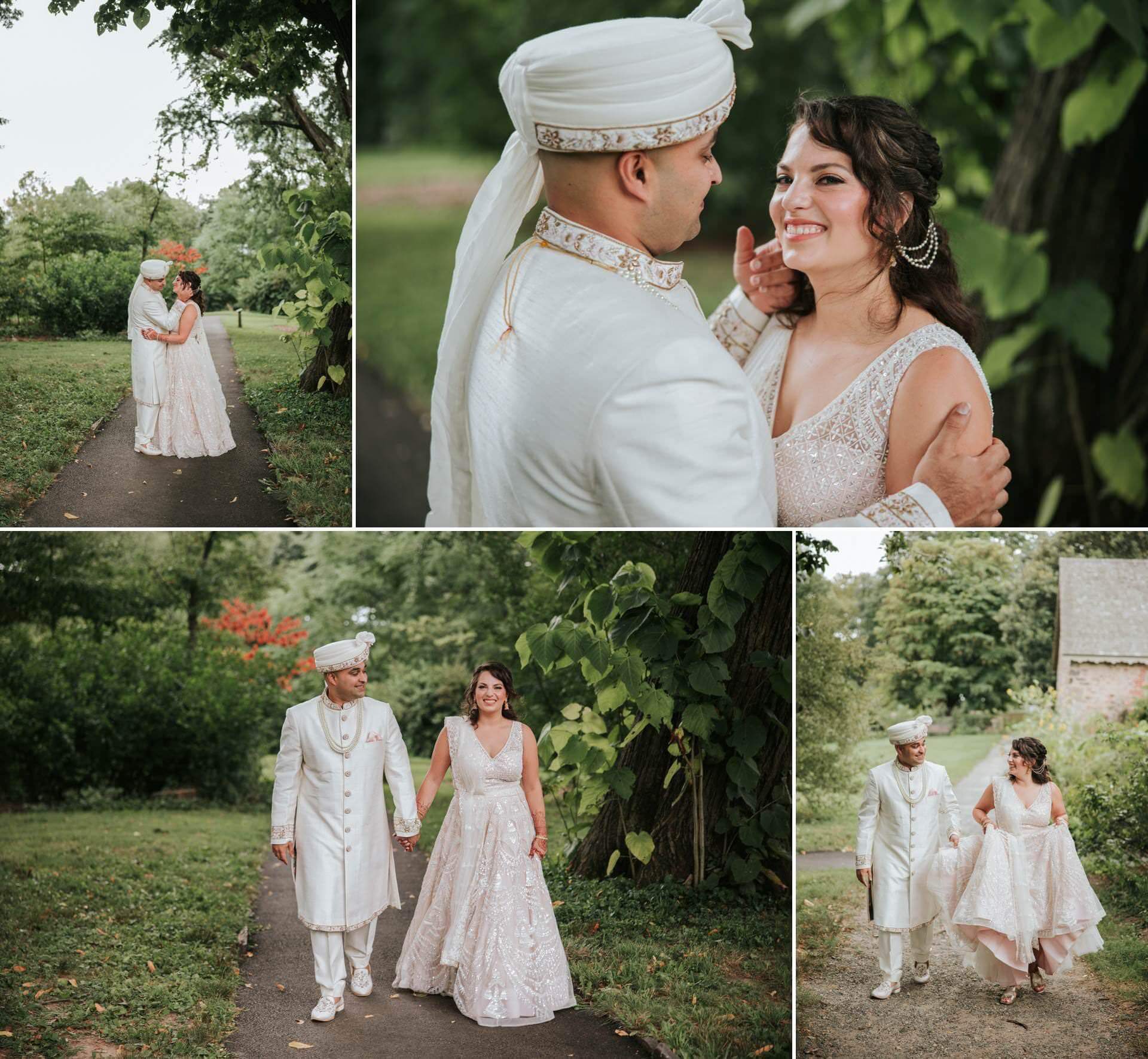
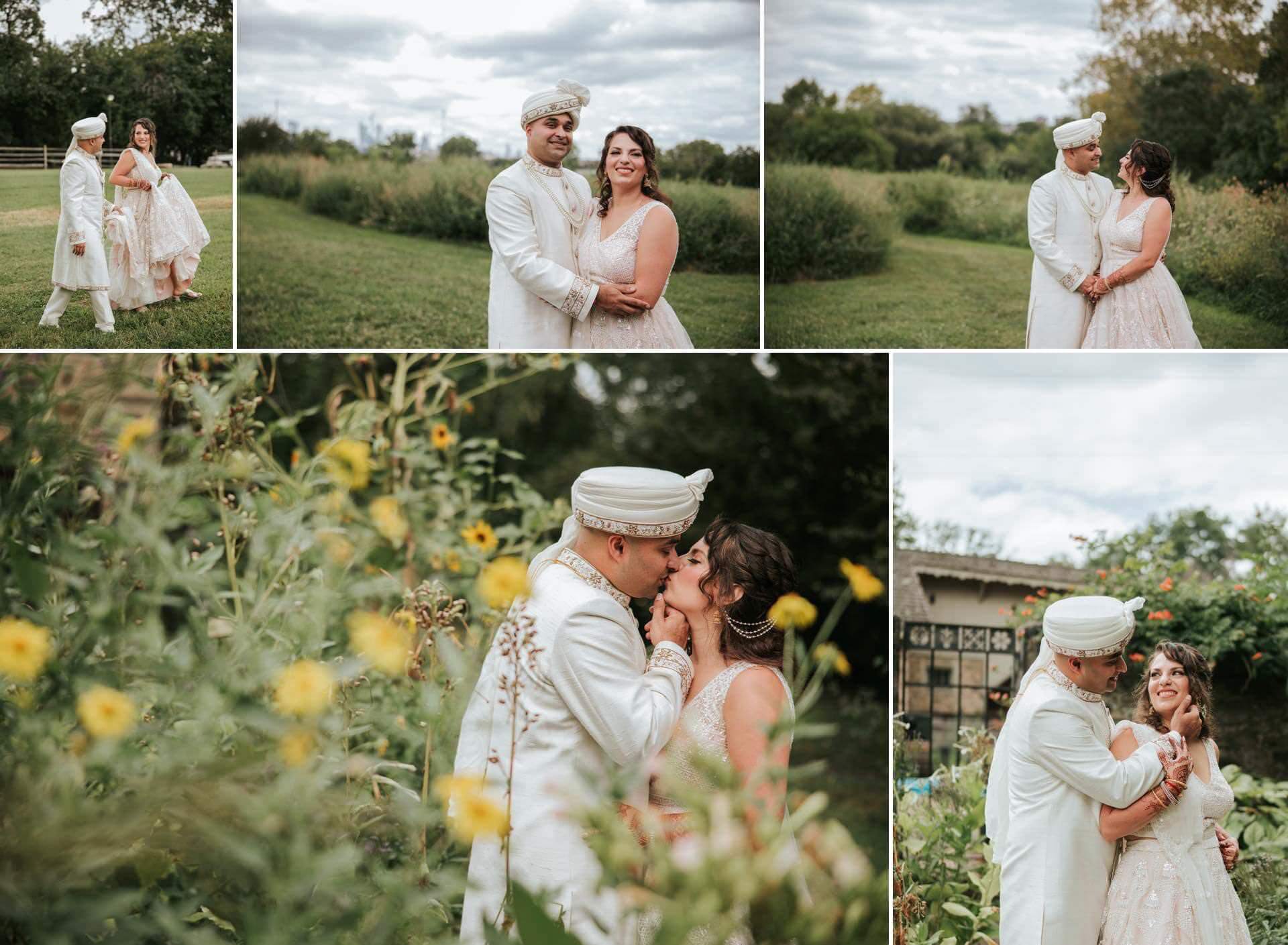
After the first look, we moved through the garden for portraits. Bartram’s Garden gives you room — long sight lines, varied settings, the river in the background if you want it. Because Lori and Rakesh were relaxed and present with each other, the portraits moved quickly. The garden did most of the work.
Ketubah signing
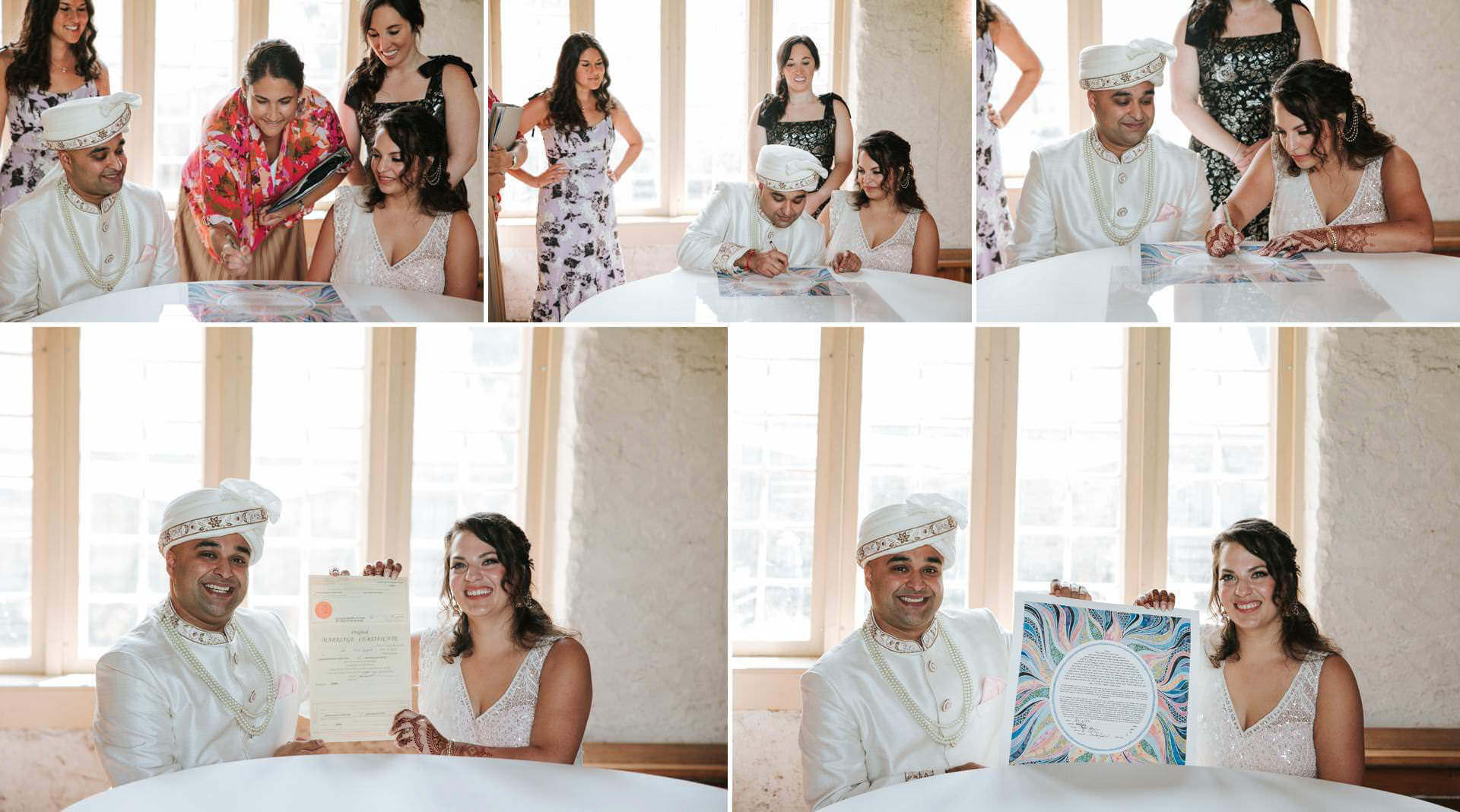
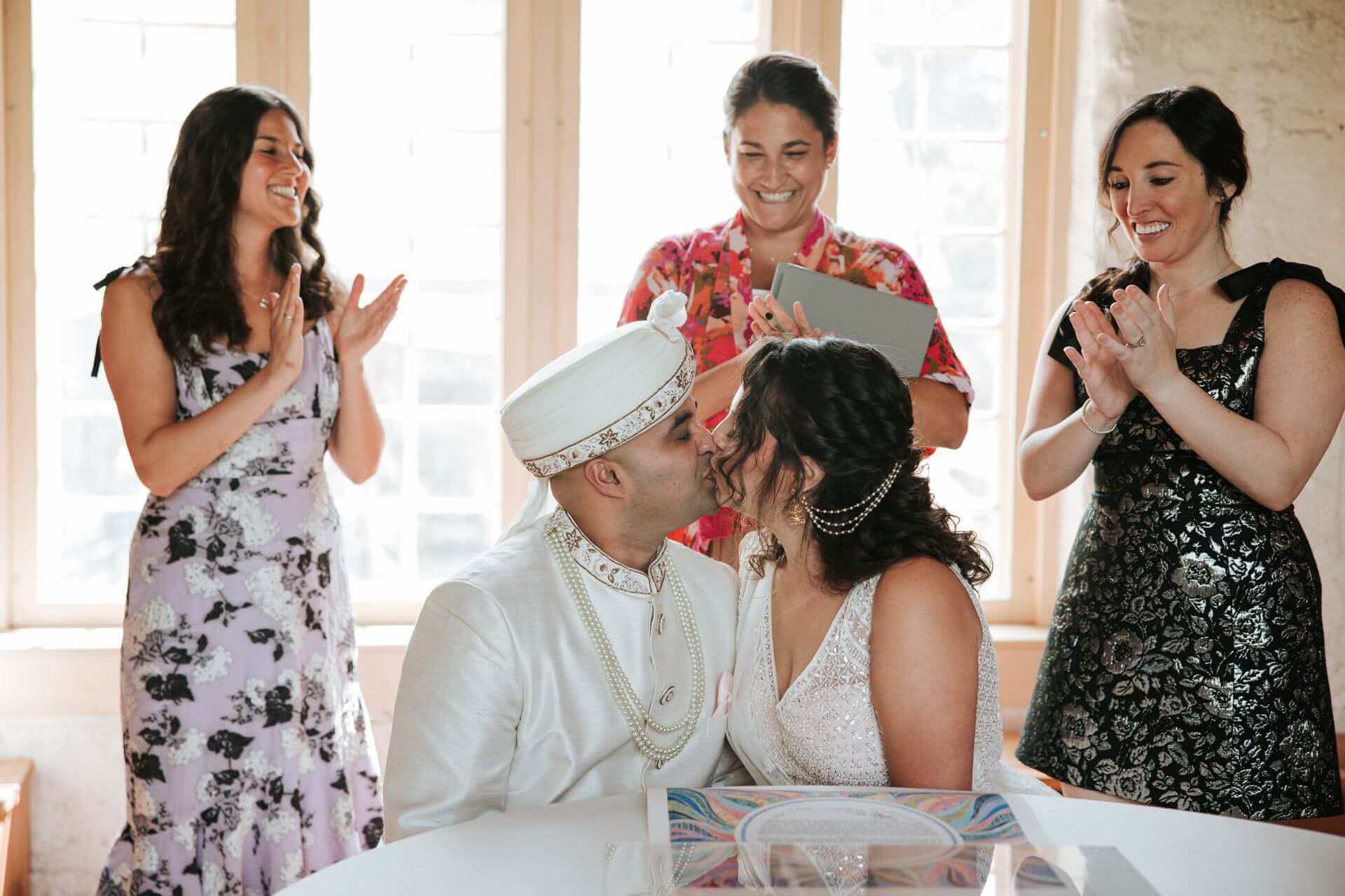
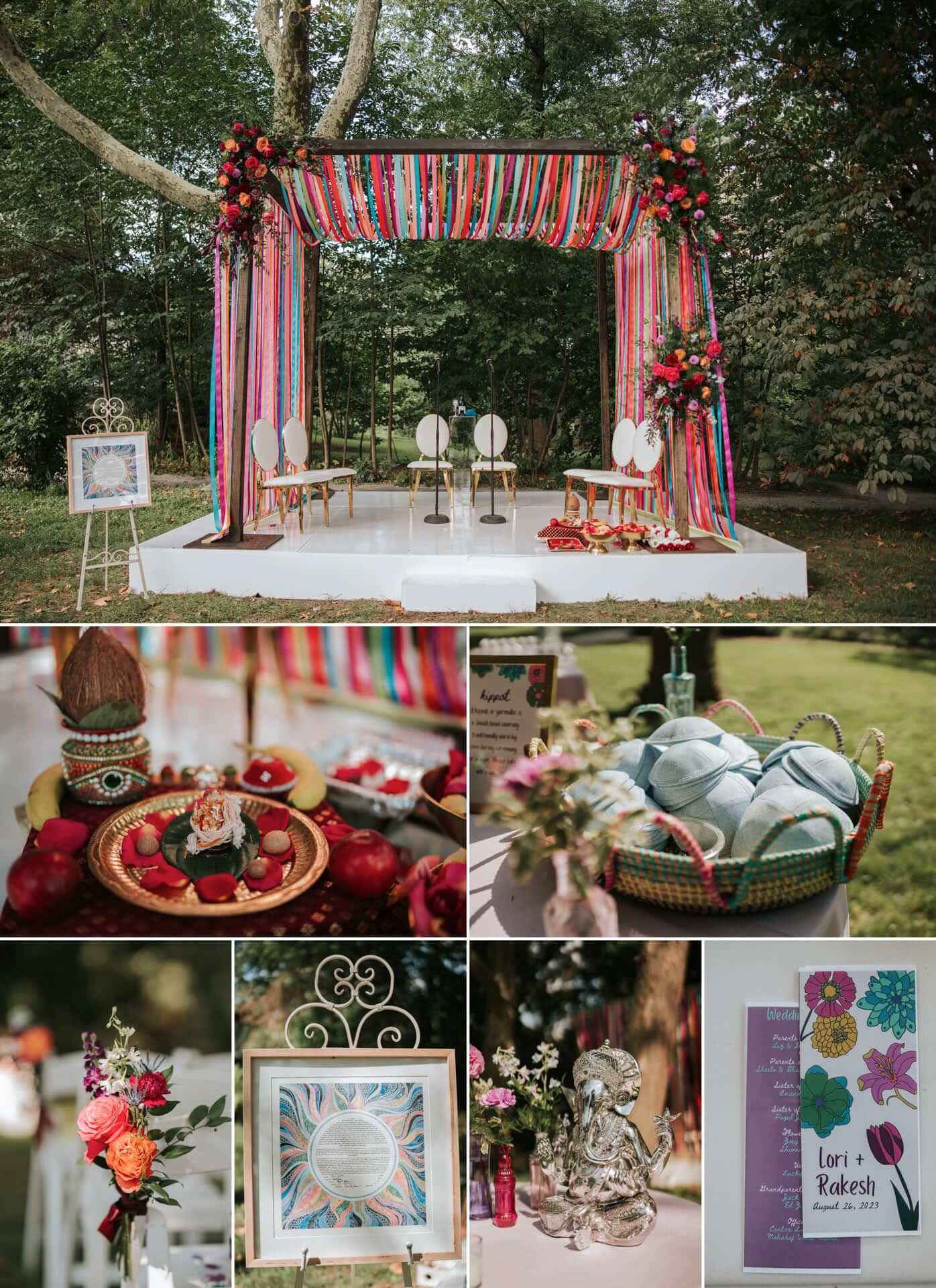
Before the ceremony, Lori and Rakesh gathered with close family and friends for the Ketubah signing. Small, intimate, the garden quiet around them. The handwritten document — a Jewish marriage contract — was signed and witnessed by the people who knew them best. That’s what the Ketubah signing does: it pulls the focus inward before the ceremony opens everything outward.
Natural light filtered through the trees, casting a soft, even quality over the whole thing. It was, in fact, one of the most quietly beautiful sections of the day to document. Because the guest count was small and the setting was calm, the significance of the moment was impossible to miss.
The Baraat
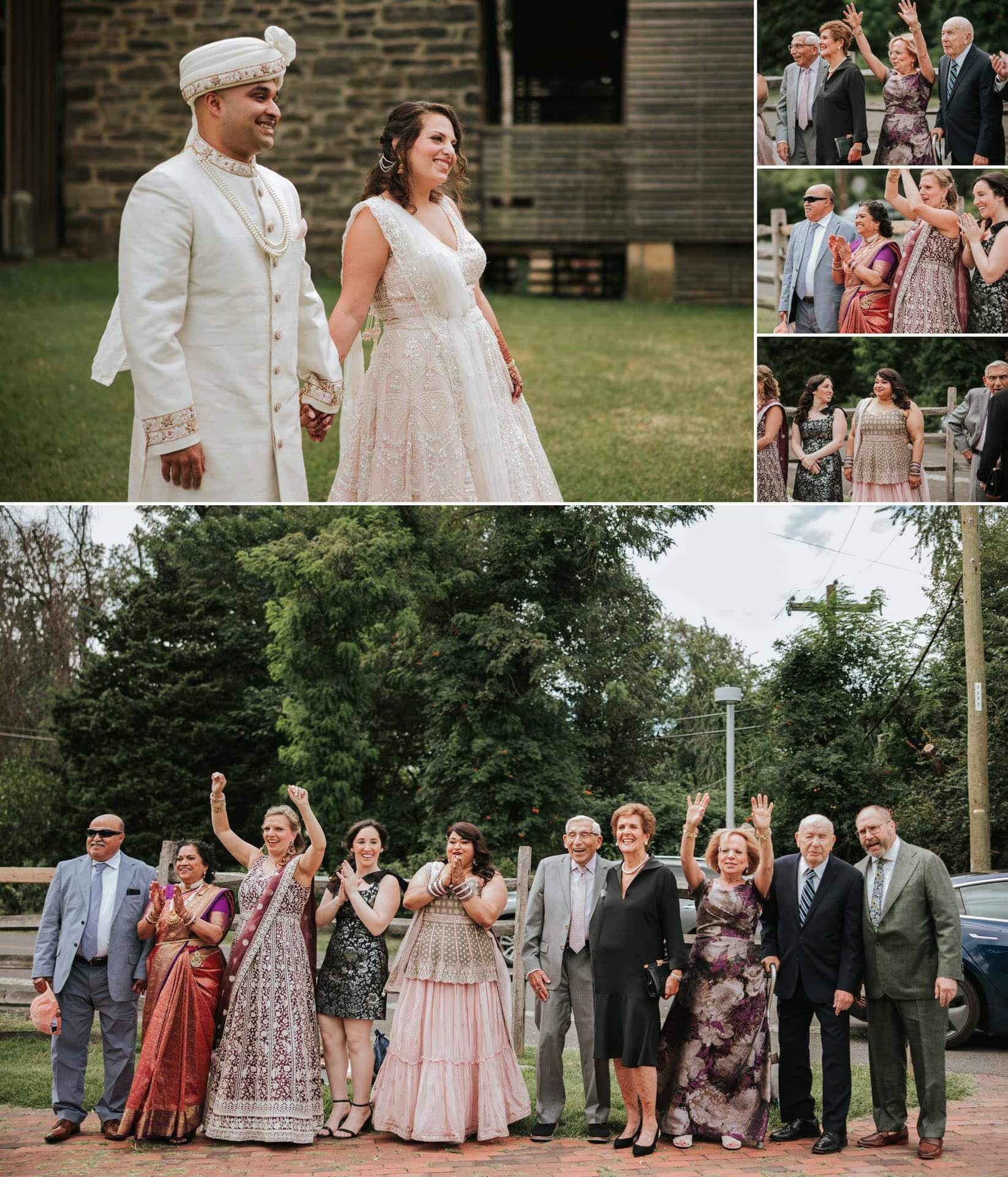
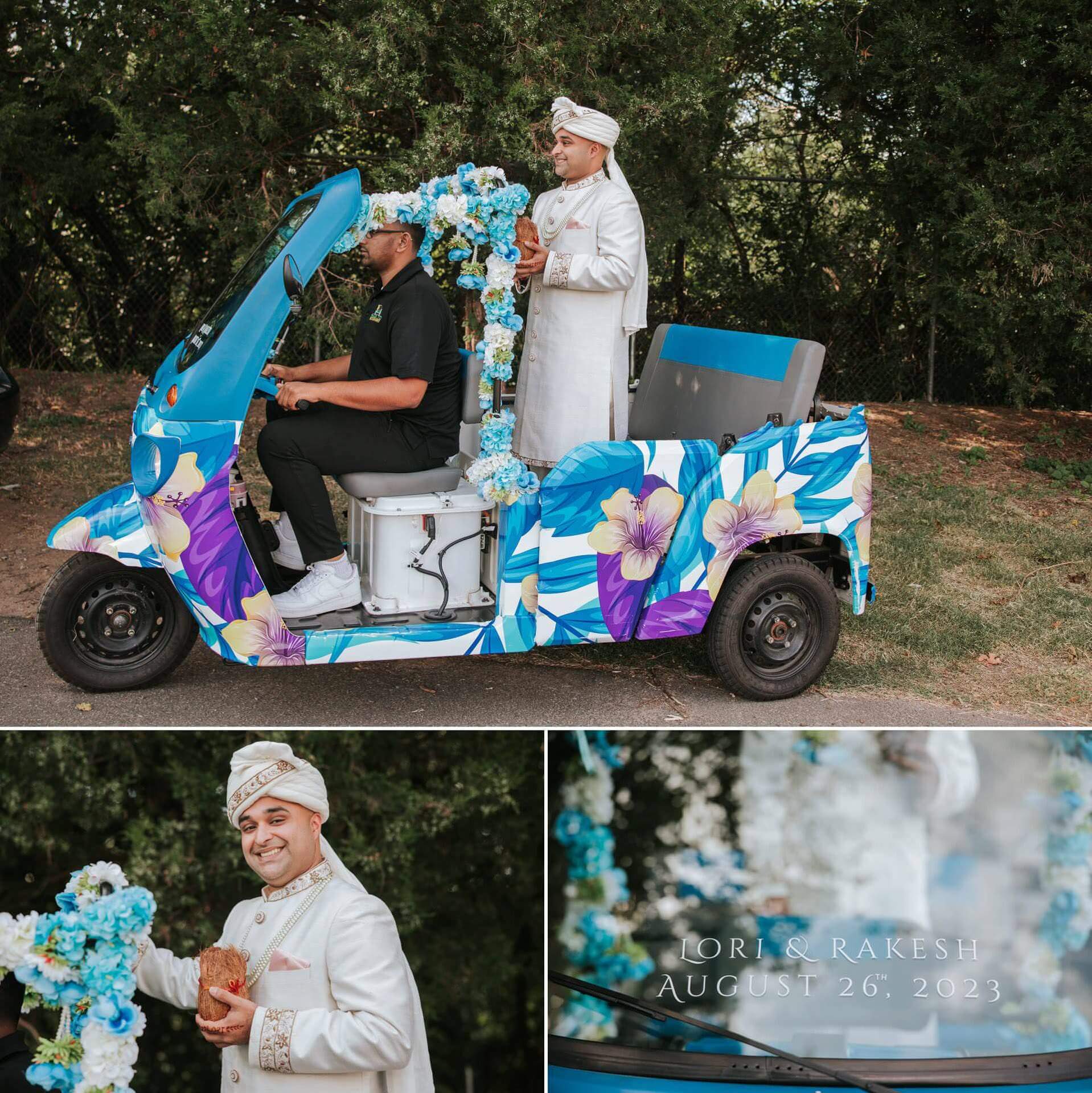
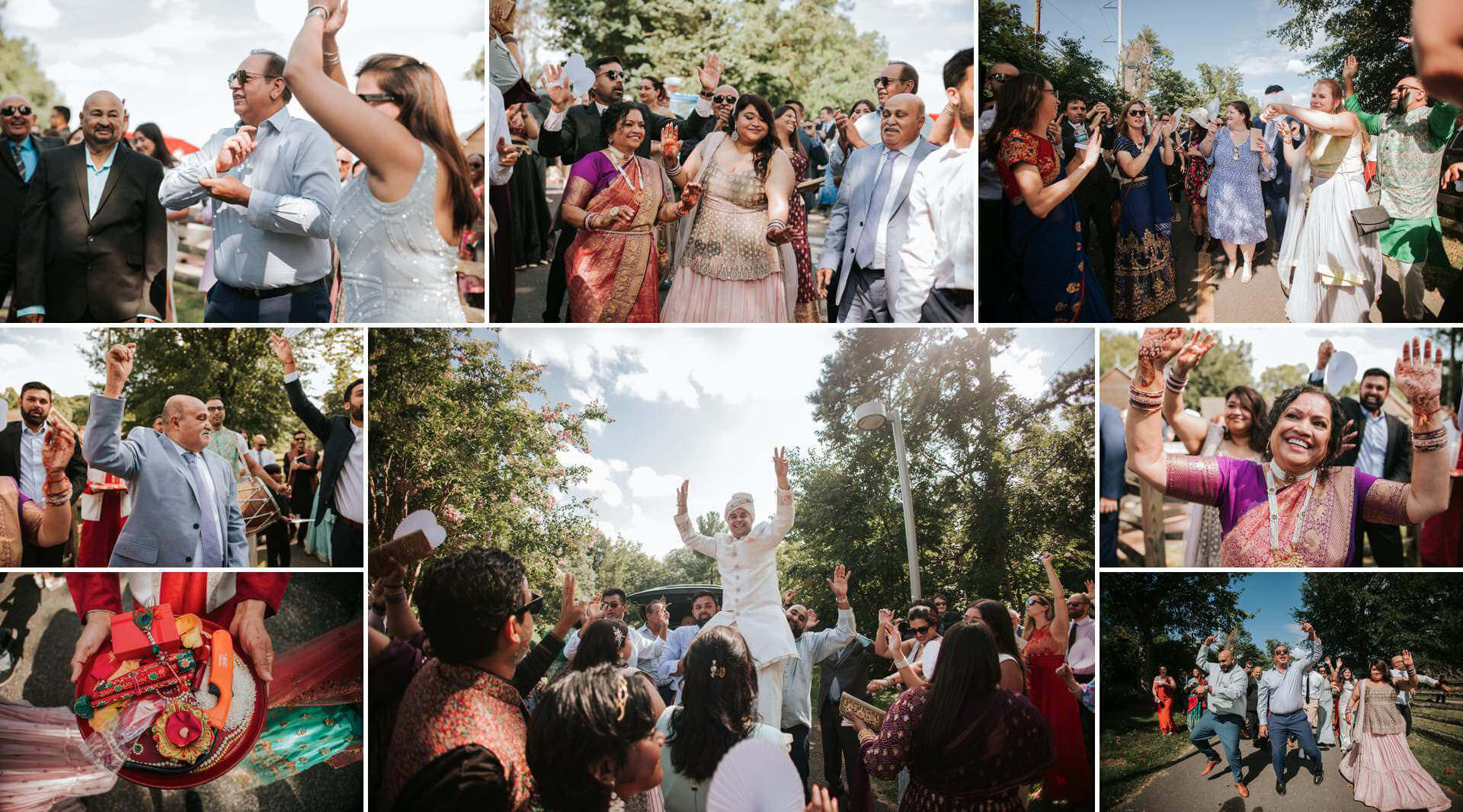
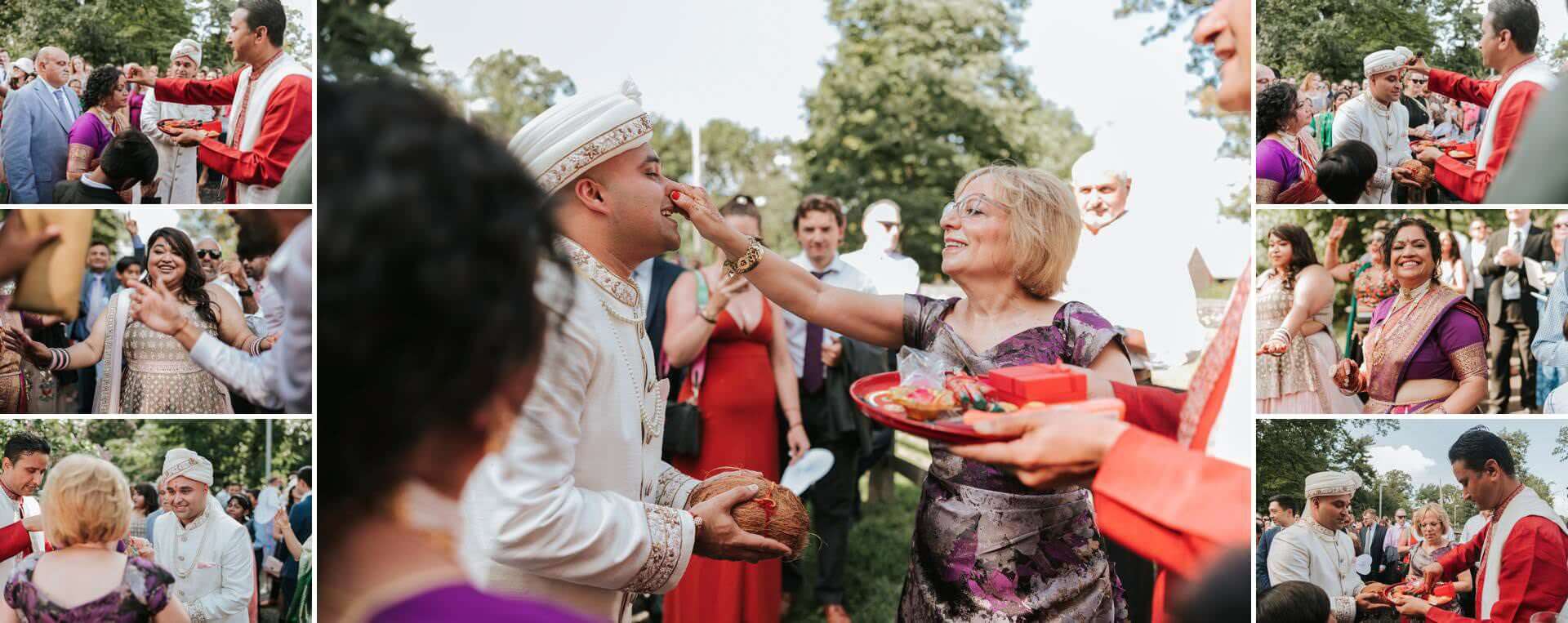
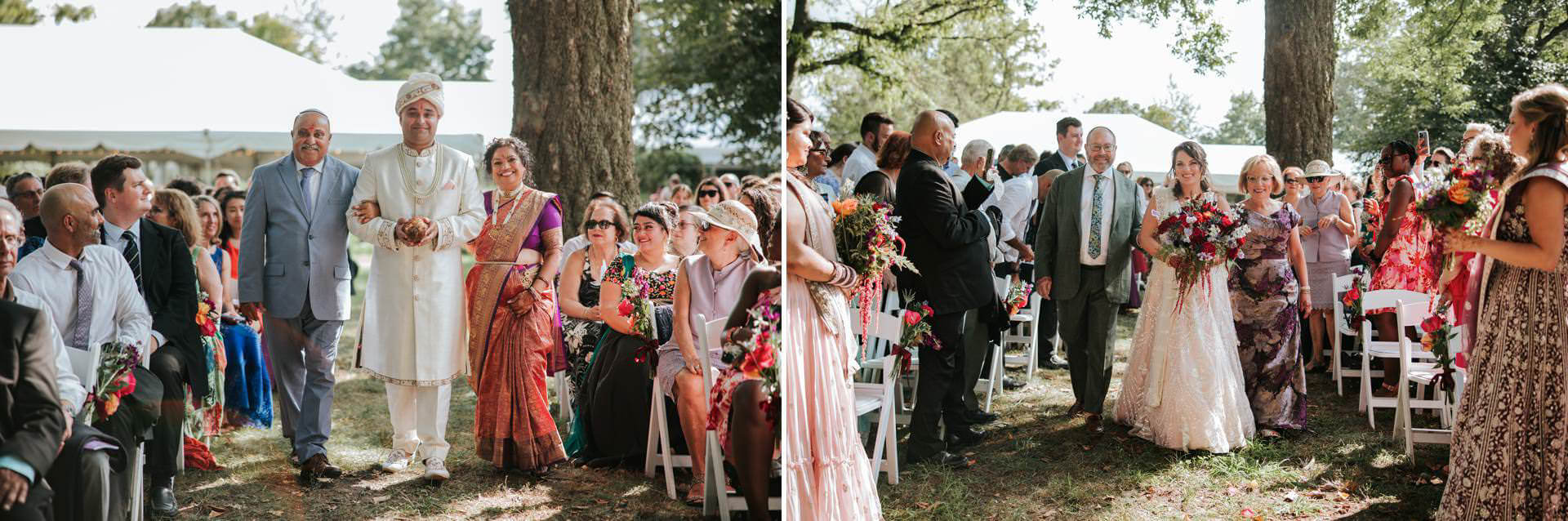
Rakesh arrived at the ceremony in a blue rickshaw — decorated with their wedding date and initials, surrounded by family and friends dancing to live music. A Baraat in a botanical garden is something specific. The energy of the procession, the color of the attire, the music moving through the trees — all of it landed differently against Bartram’s lush greenery than it would in a ballroom or a parking lot.
The rickshaw was a detail that made the whole procession feel considered. Moreover, it gave the photographs a visual anchor that most Baraats don’t have. Rakesh moved through it with the energy the moment called for — present, joyful, ready.
The ceremony
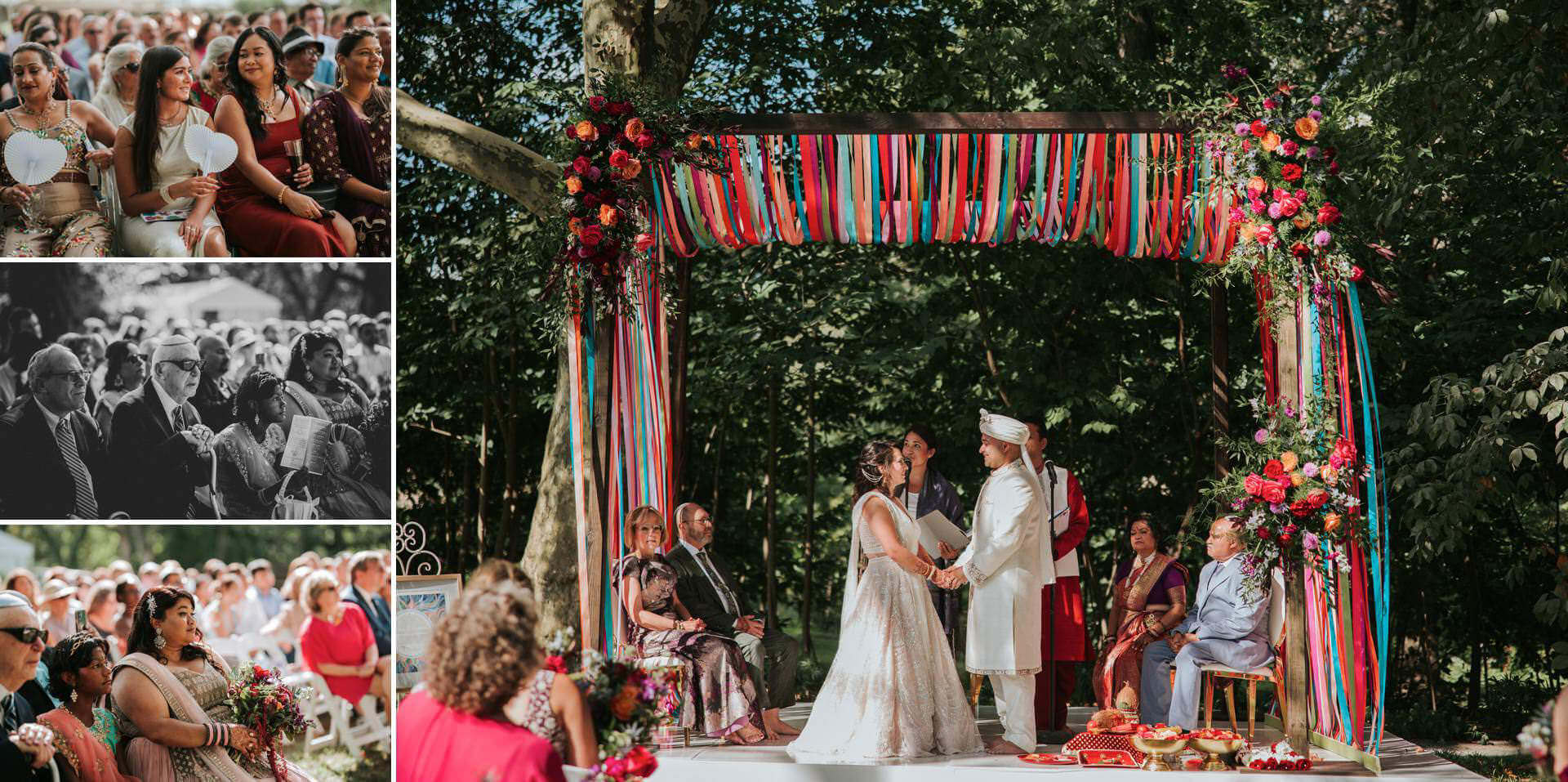
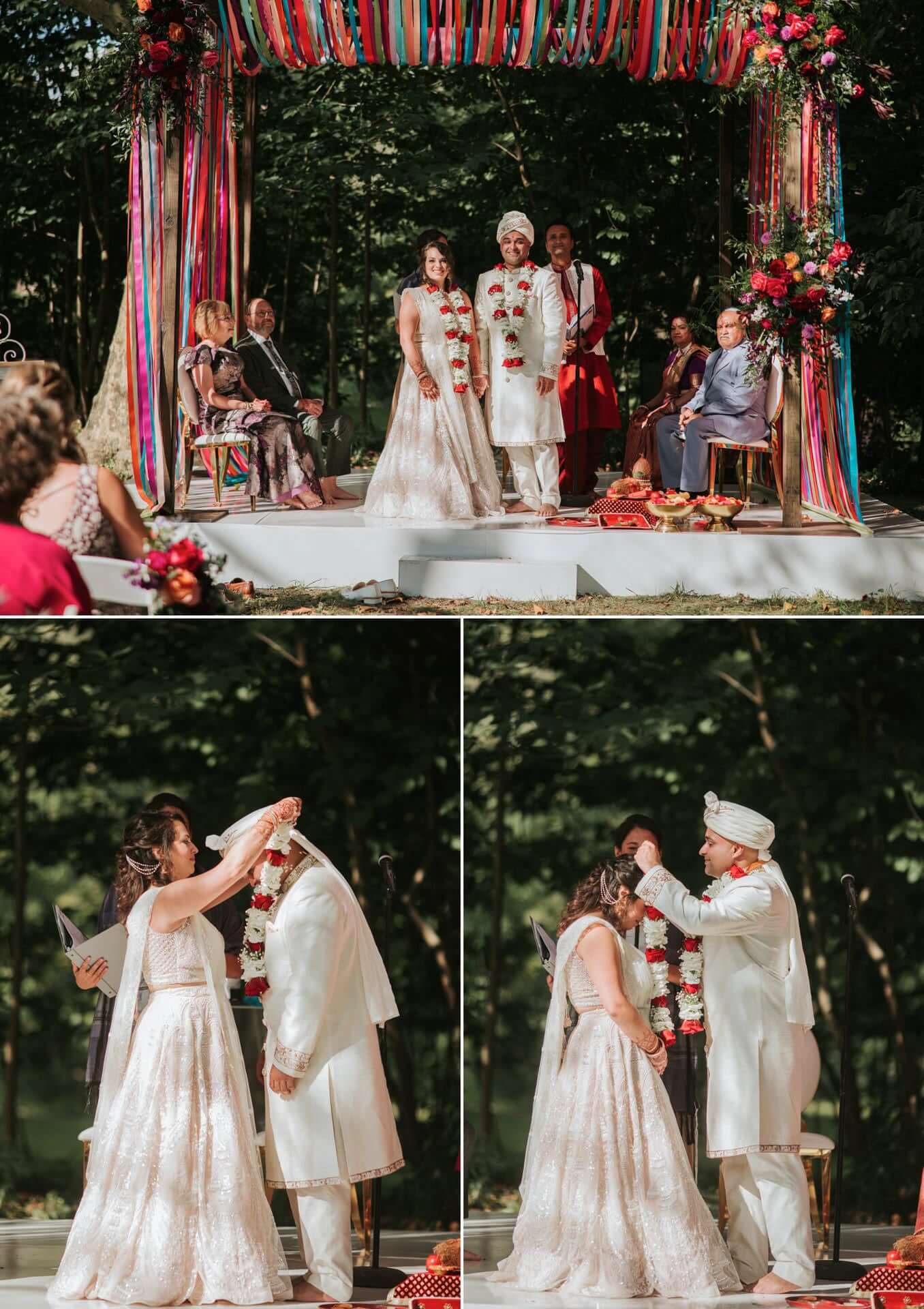
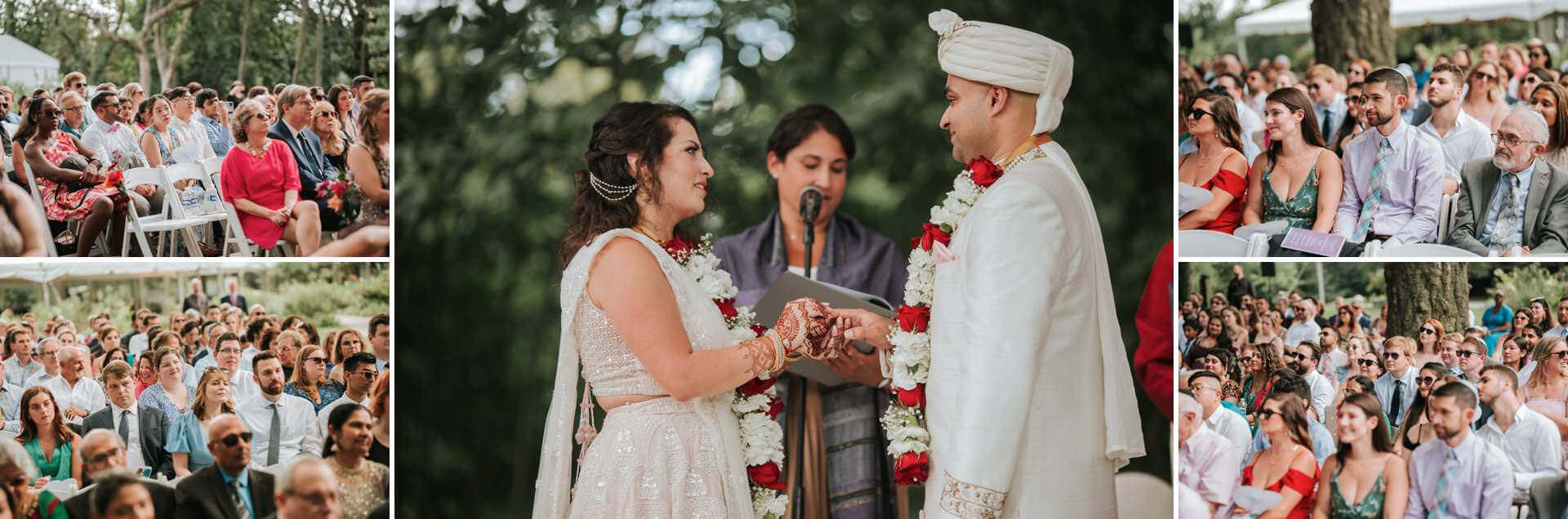
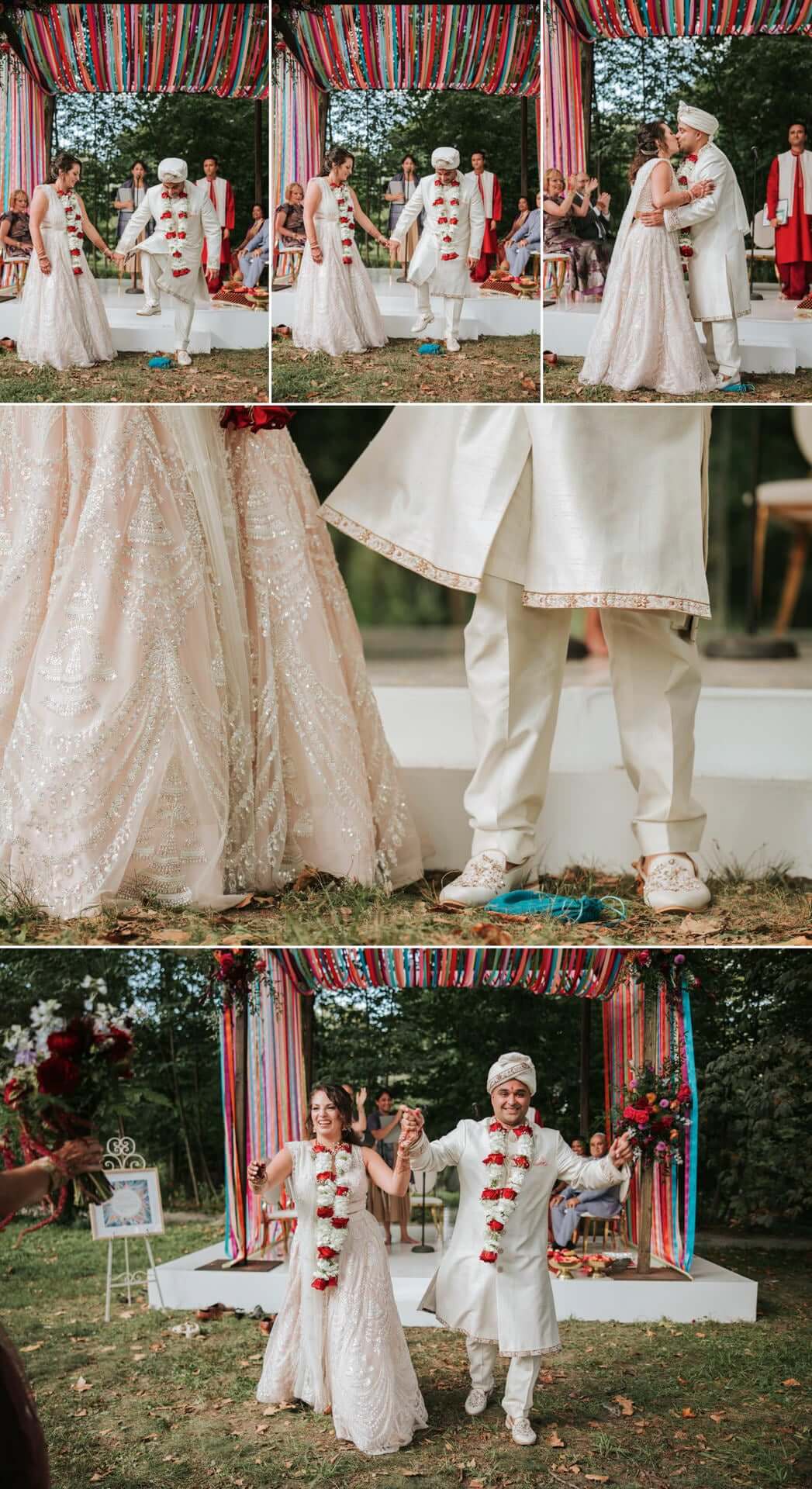
Lori and Rakesh chose both a priest and a cantor. Blessings were offered in Hebrew and Sanskrit, the two voices moving through the ceremony together, each tradition given its full weight. They stood under a chuppah — the Jewish wedding canopy — while also honoring the Saat Phere, the seven circles of the Hindu ceremony. Two complete traditions, not abbreviated versions of each, held in the same afternoon.
The ceremony at Bartram’s Garden had the quality that outdoor ceremonies at that venue tend to have — unhurried, grounded, the natural setting doing what a built environment can’t. The priest and cantor moved without rushing. The guests were close. Both families leaned in together, and the weight of what was being witnessed was visible in the room.
Five Minutes at Sunset
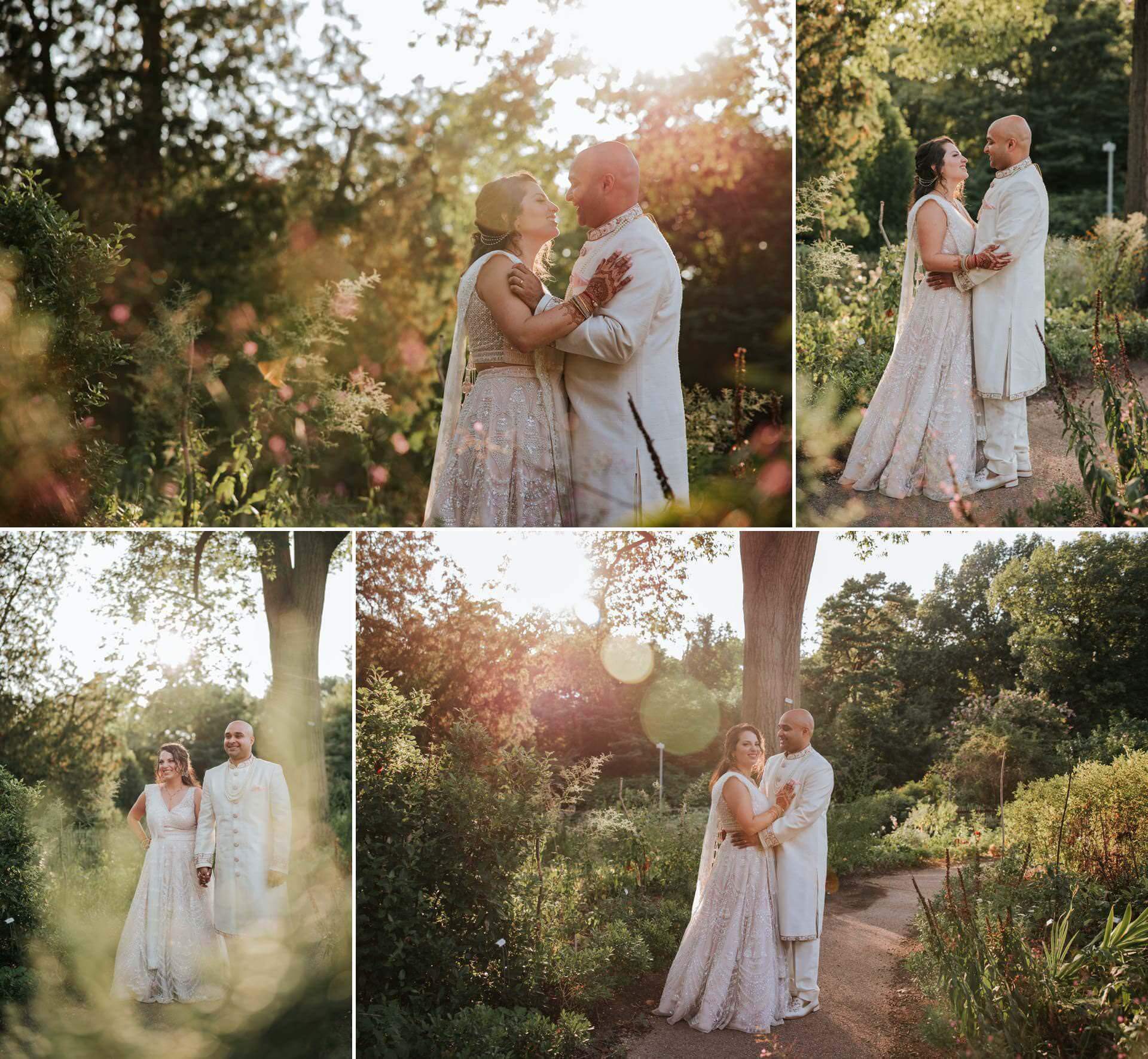
While cocktail hour moved through the garden, Lori and Rakesh slipped away for five minutes. Just the two of them, the last of the light coming through the trees along the Schuylkill. Bartram’s Garden at sunset has a warmth to it that’s hard to manufacture anywhere else — the kind that makes everything feel quieter than it actually is.
Five minutes. It was enough.
The reception
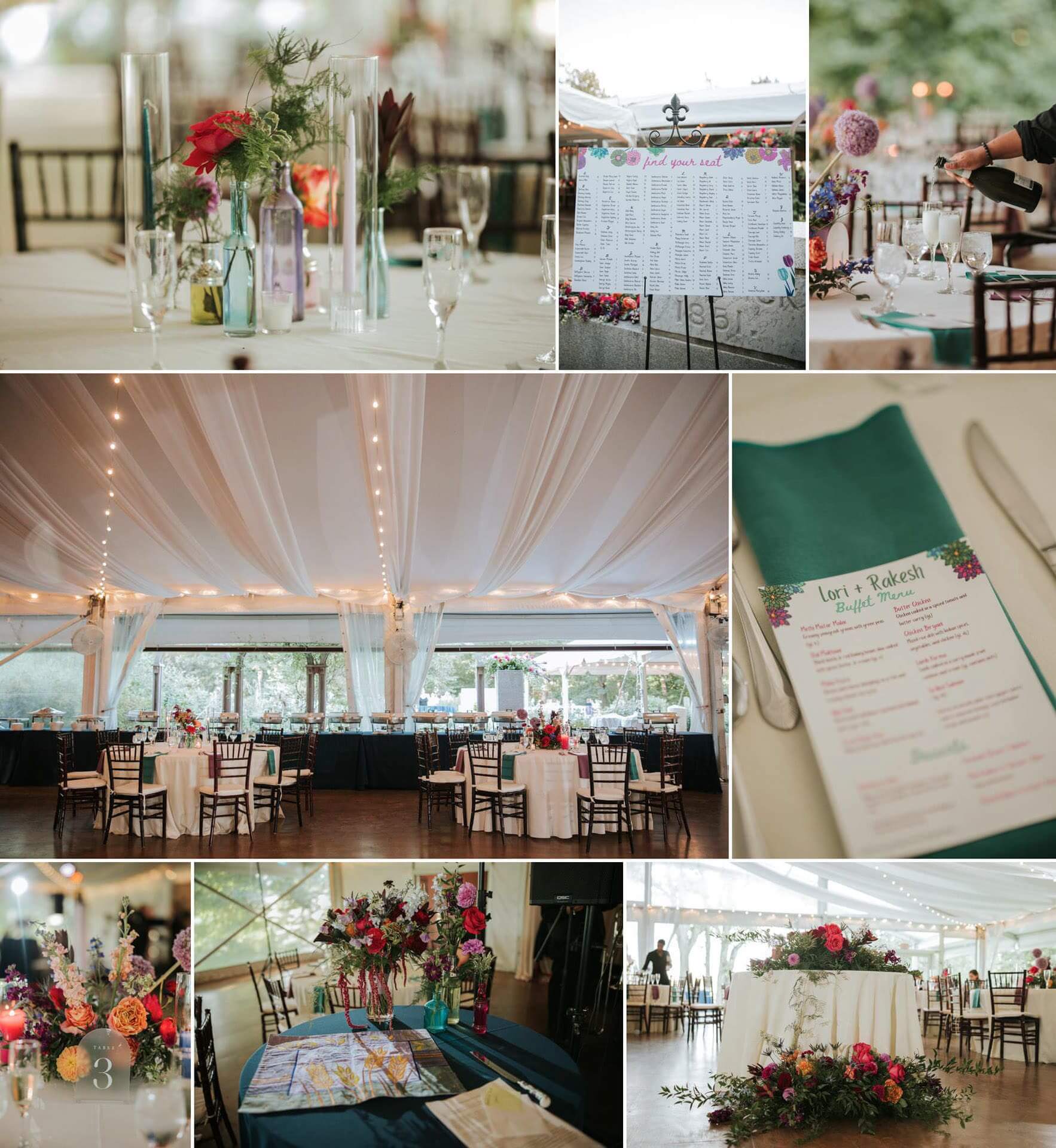
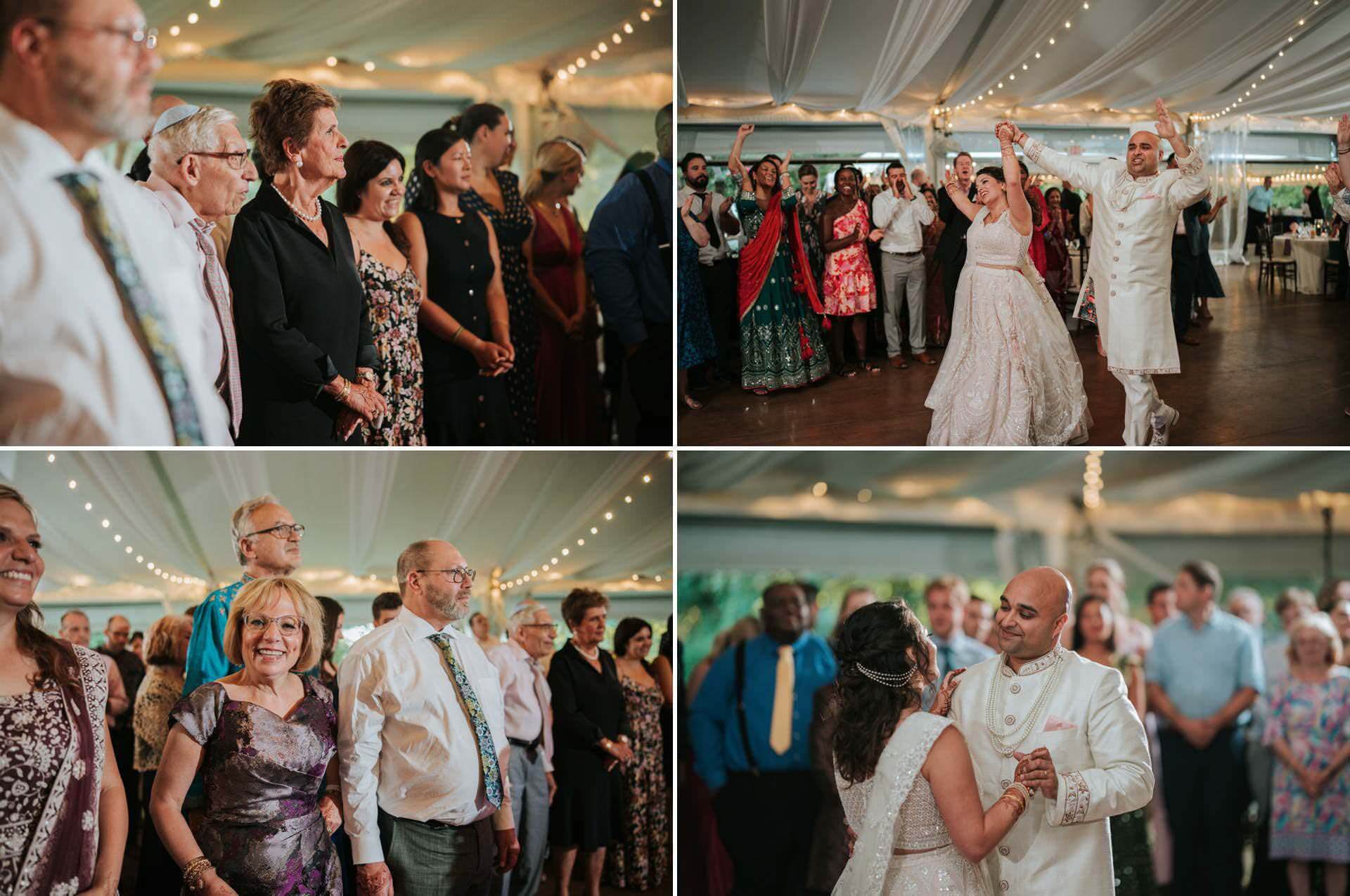
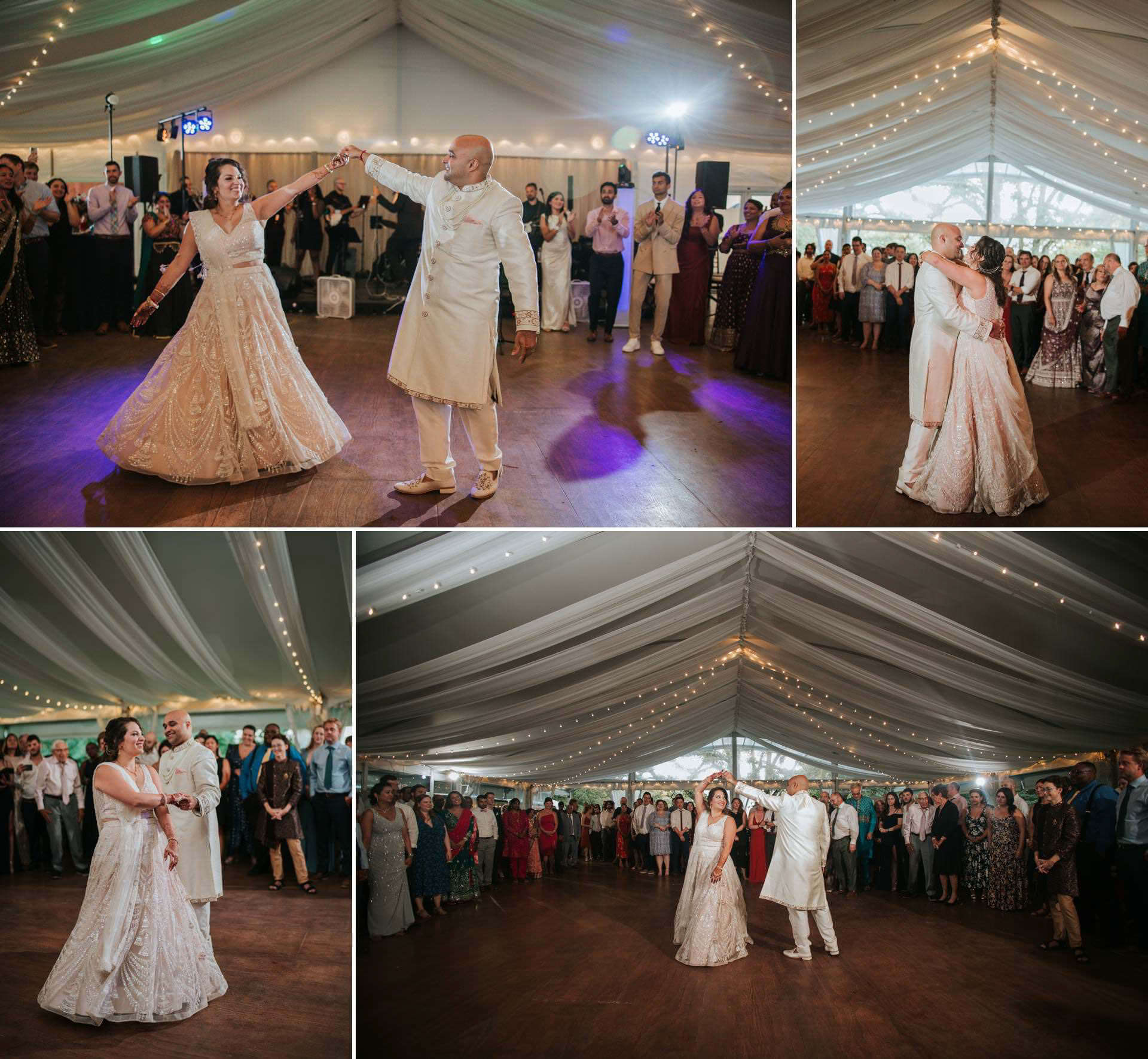
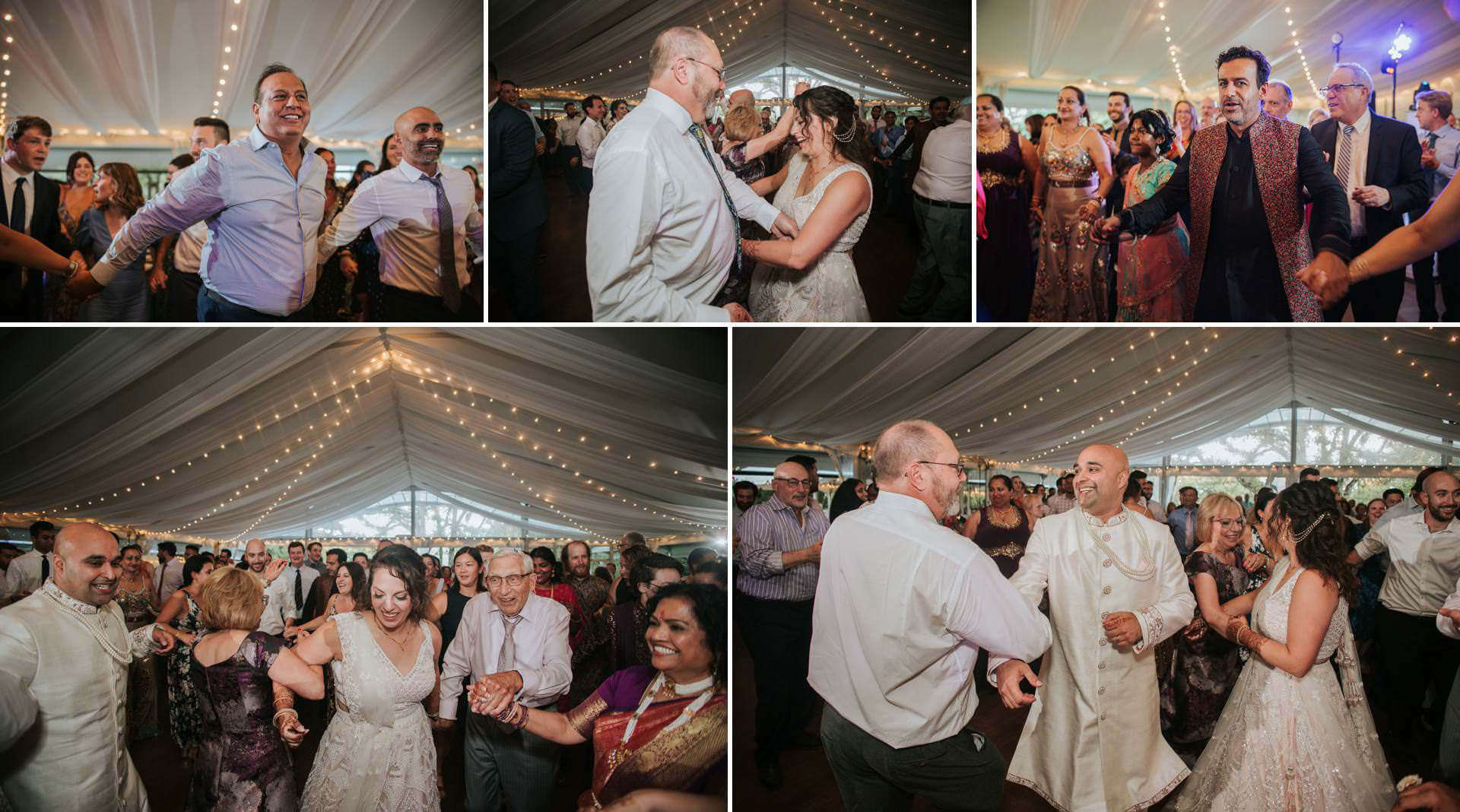
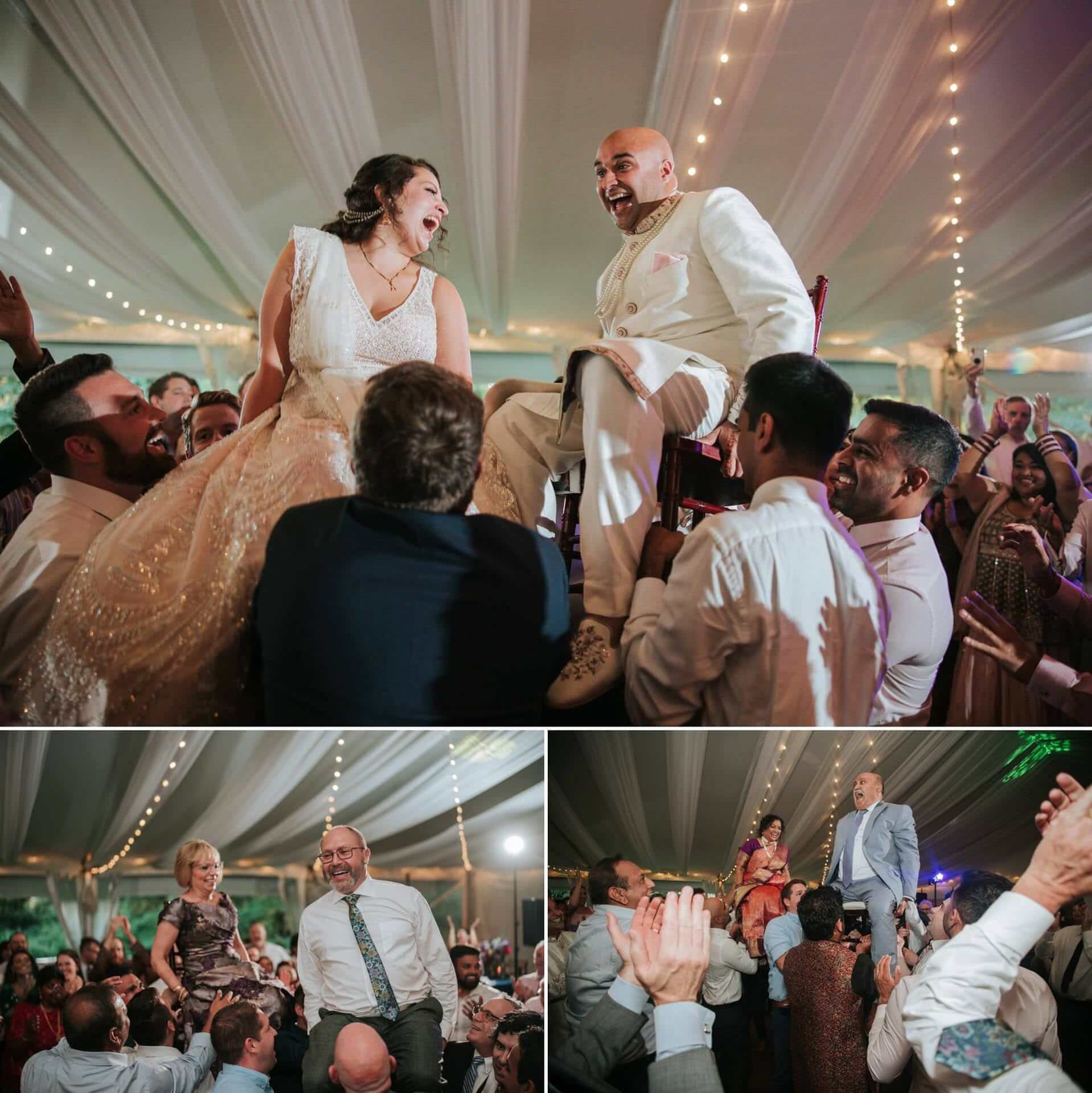
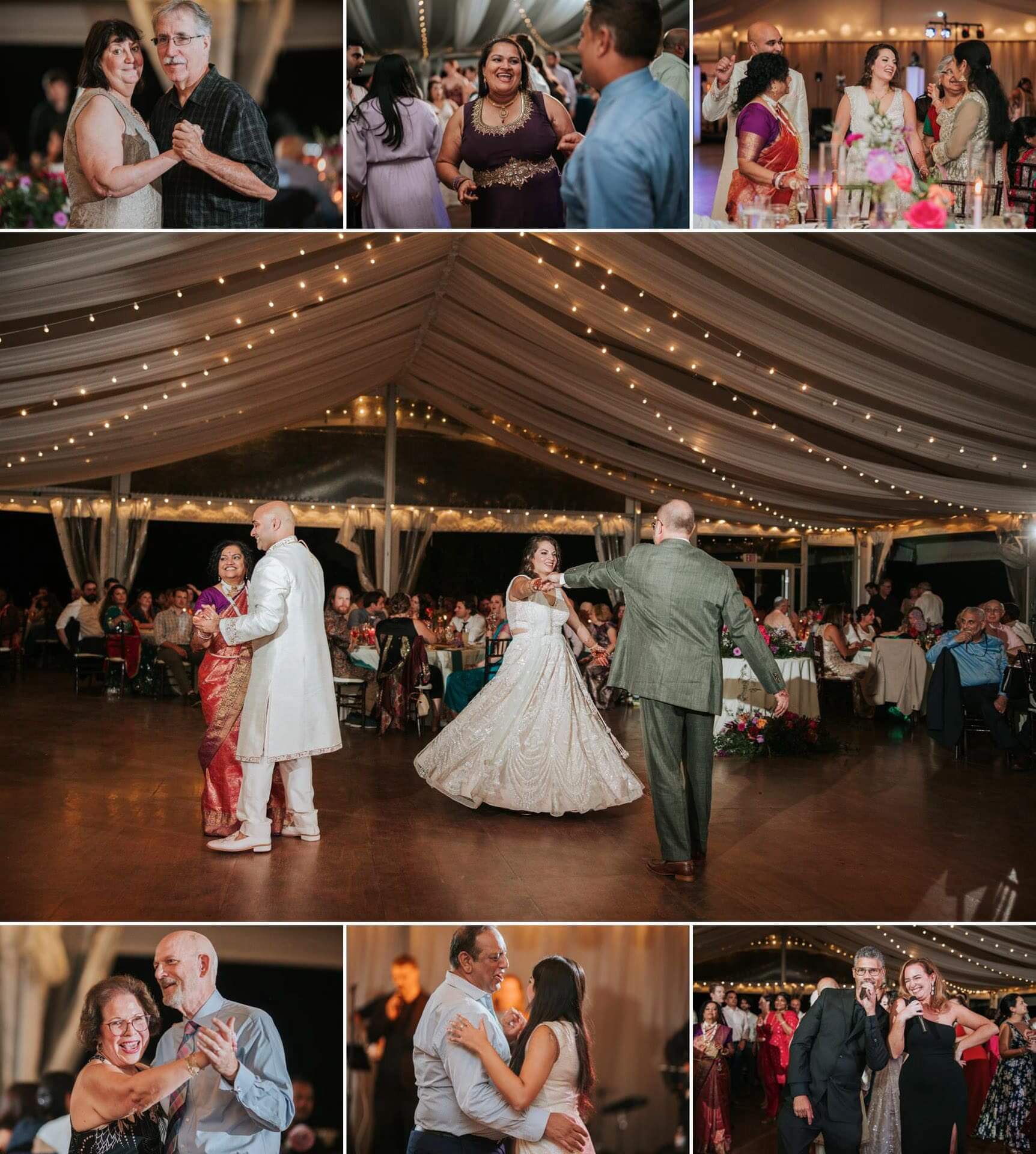
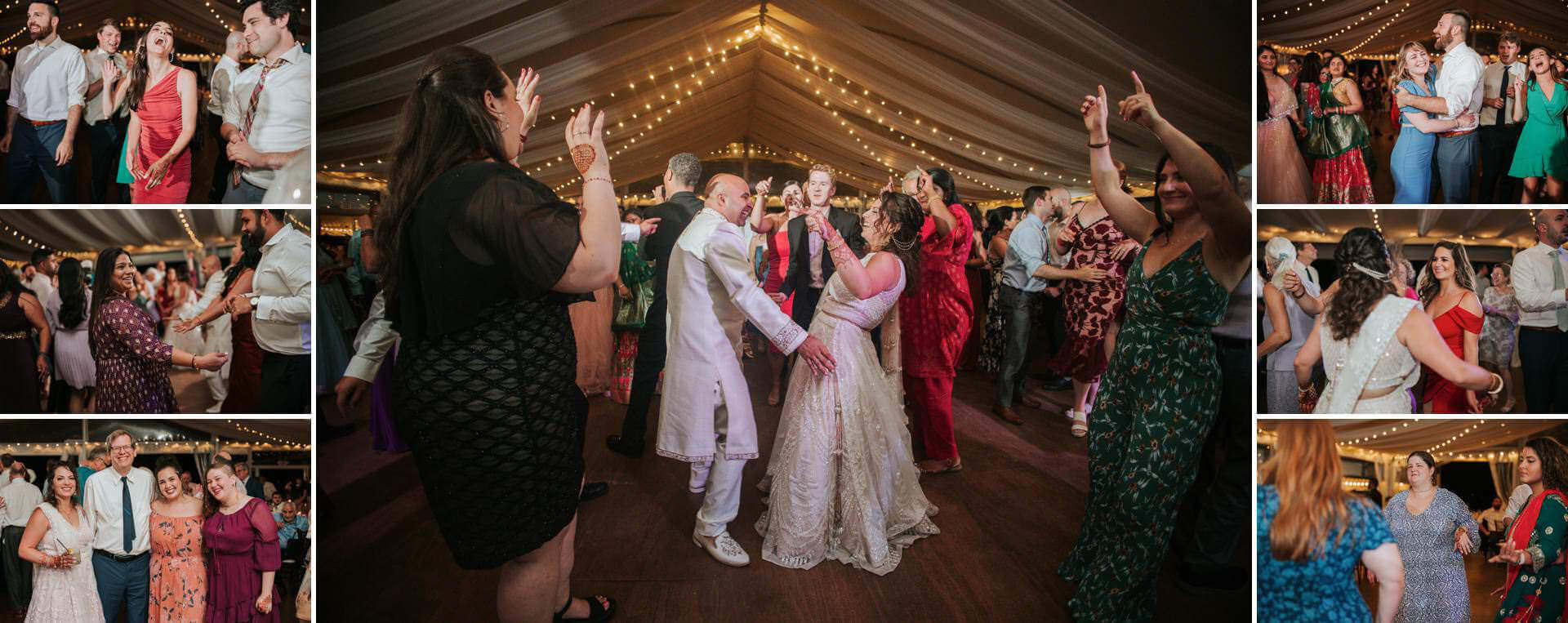
The Hava Nagila brought both families onto the dance floor at once — Lori and Rakesh lifted in chairs, guests forming circles around them, the garden filled with the particular sound of a room that’s completely given over to joy. It’s one of those moments that photographs without effort because the energy is already there.
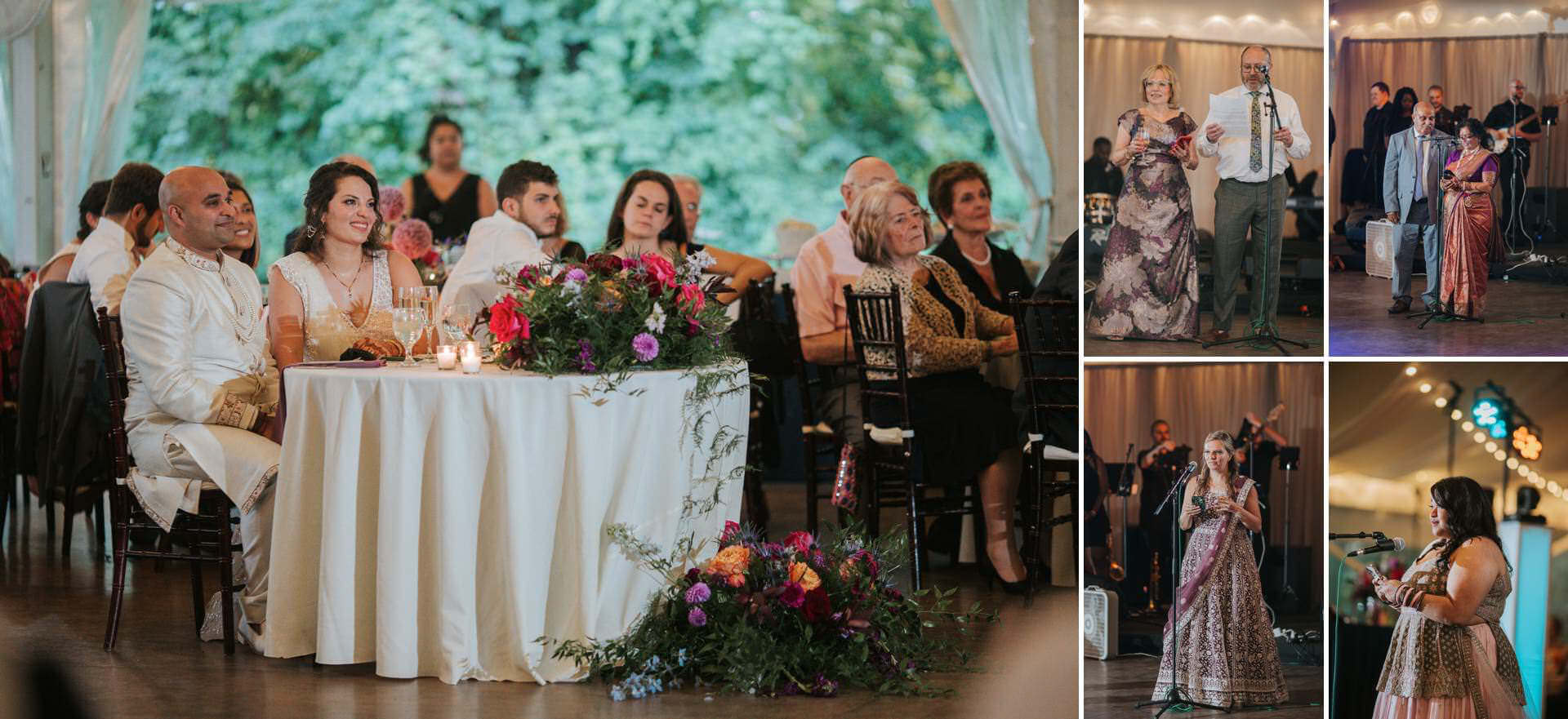
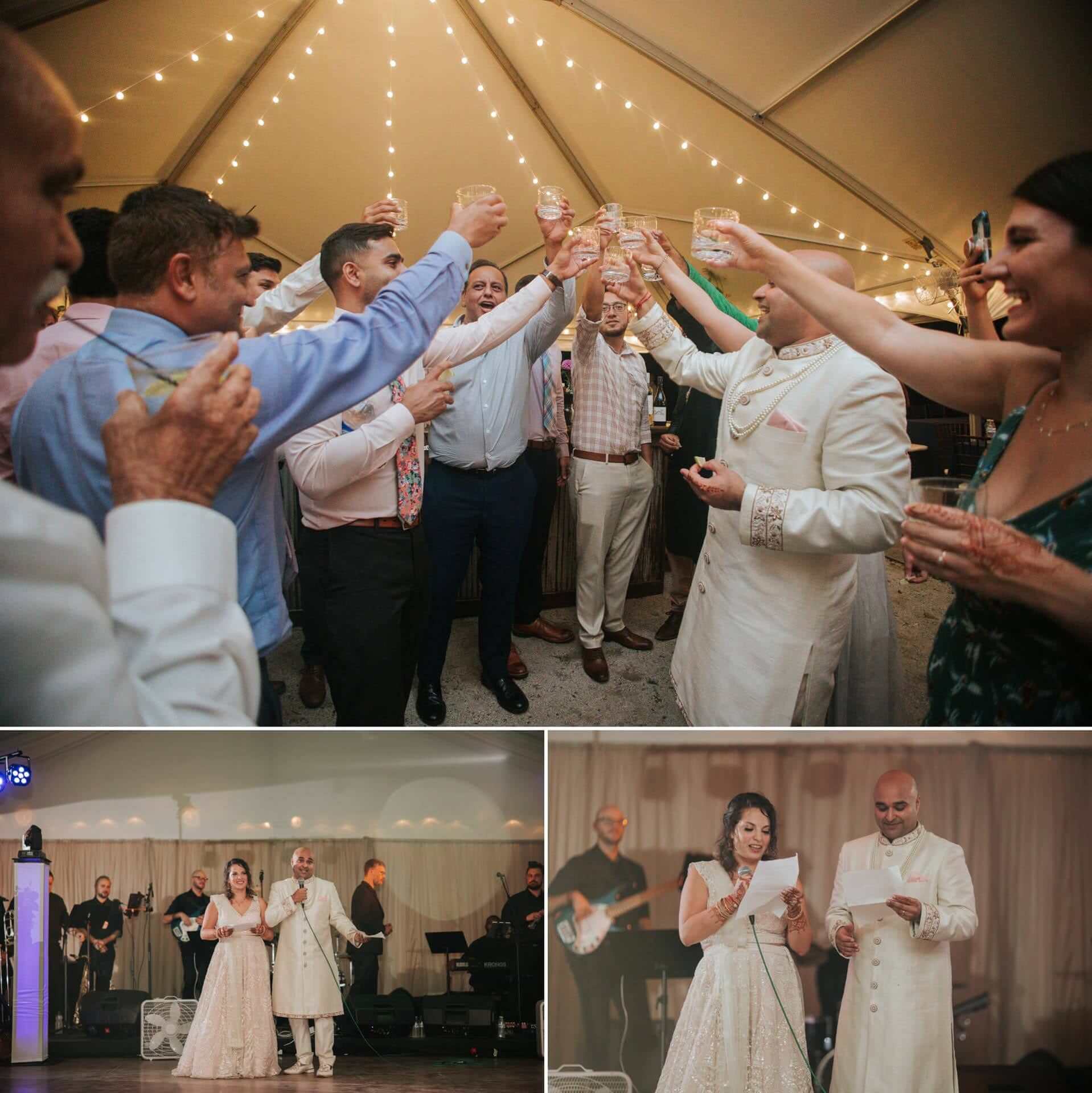
Sugarbomb Entertainment provided live music throughout the evening, moving between traditional melodies and contemporary favorites. The speeches from both sides — siblings, parents — added the personal layer that the ceremony had set up. By the time the setting sun came through the garden trees and the day wound down, Lori and Rakesh had done something genuinely difficult: they had honored two complete cultural traditions, in one day, in one place, and made it feel whole.


Thank you to the following vendors:
Wedding day Band: @sugarbomb_entertainment
Baraat Vehicle: @ragstorickshaws
Catering: @bukharagrillnyc
Dance: @bollywoodtouch
Decor: @beautifulbloomsevents
Mendhi night DJ: @djravijackson
Brides Draping: @shilpashenna
Draping: @pjmaisonbeauty
Hair and Makeup: @eleganceartistrygroup
Brides Henna: @hennabysushma
Officiant: @cantorlaurastein
Wedding planner: @asknehanow
Stage: @royalvivaahcreations
Wedding Venue: @jh_weddings
Mendhi Venue: @warwickrittenhouse
Planning a Bartram’s Garden wedding in Philadelphia?
Maria A. Garth Photography documents South Asian, Jewish, and multicultural fusion weddings across Pennsylvania, New Jersey, New York, and the DMV — guided, not posed, and present for every ritual, every tradition, and the ones that aren’t planned.
Inquiries for 2026–2027 are open. Reach out here to start the conversation.
Before the wedding day, there was an engagement session. See how Lori and Rakesh’s story began — read their Philadelphia engagement session here.