


Hindu Samaj Temple Wedding, Mahwah NJ | Devi & Sid
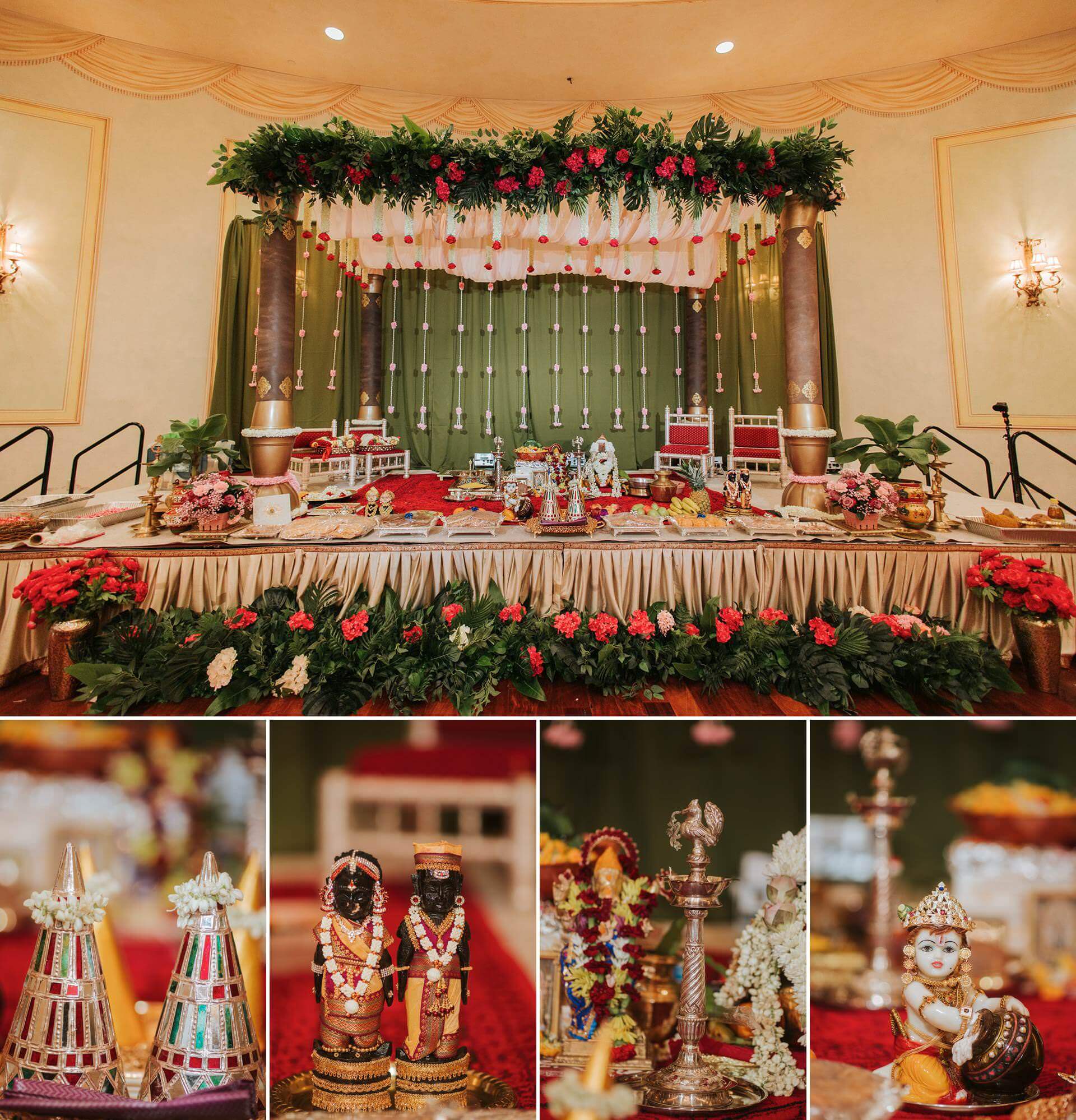
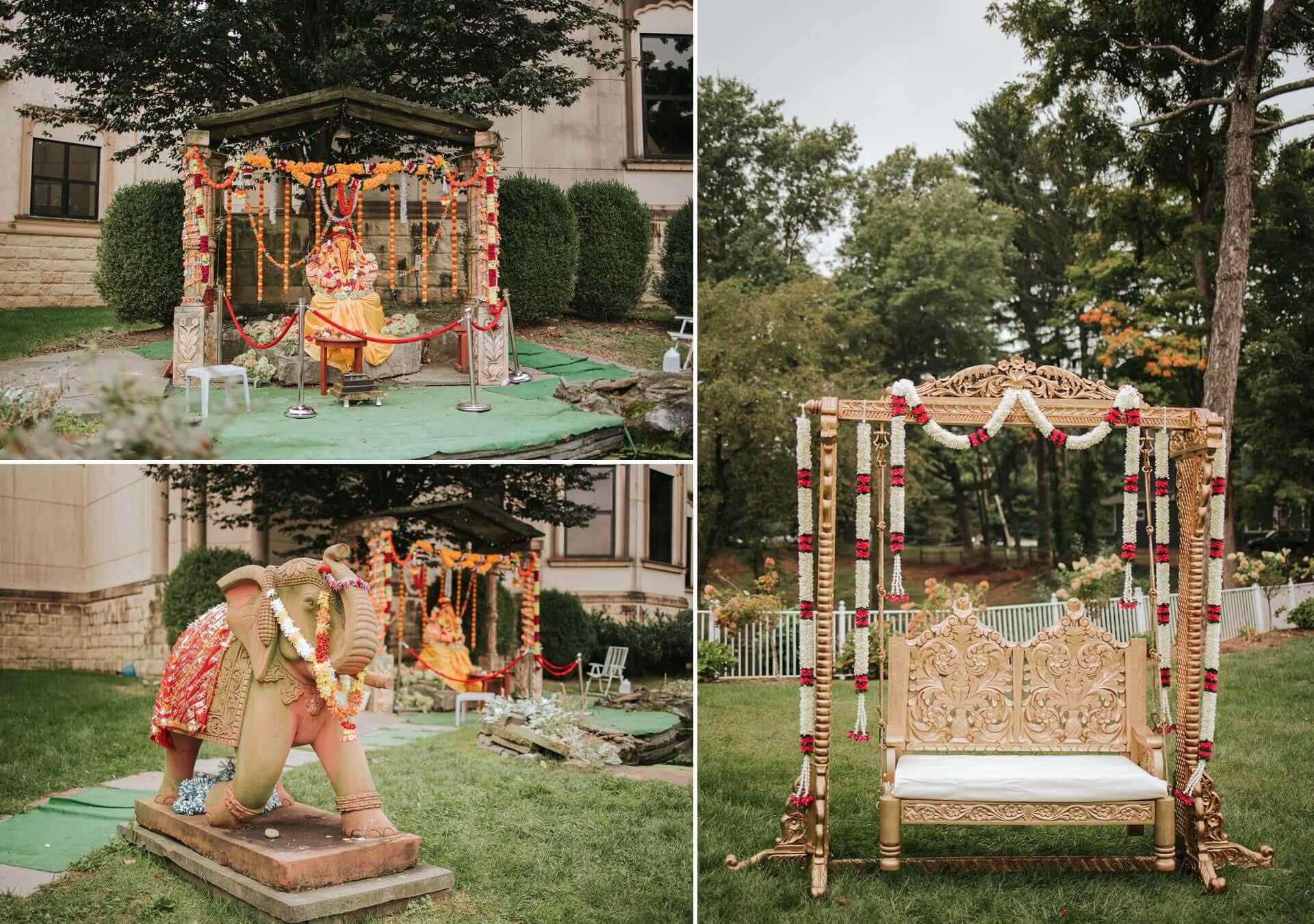
The Hindu Samaj Temple of Mahwah was full before the ceremony even began. Not just seated — full. Friends and family had come from everywhere, filling the space with the particular energy of people who are genuinely happy to be in the same room. Marigold and jasmine. Conversations overlapping in doorways. The low hum of a day that had been a long time coming.
I’ve photographed enough weddings to know when a timeline is going to hold. This one was going to hold. Everything we’d planned unfolded exactly as it should — which freed me to just watch, and follow, and let the day unfold at Hindu Samaj Temple in Mahwah, New Jersey.
The groom: from the Baraat to the mandap
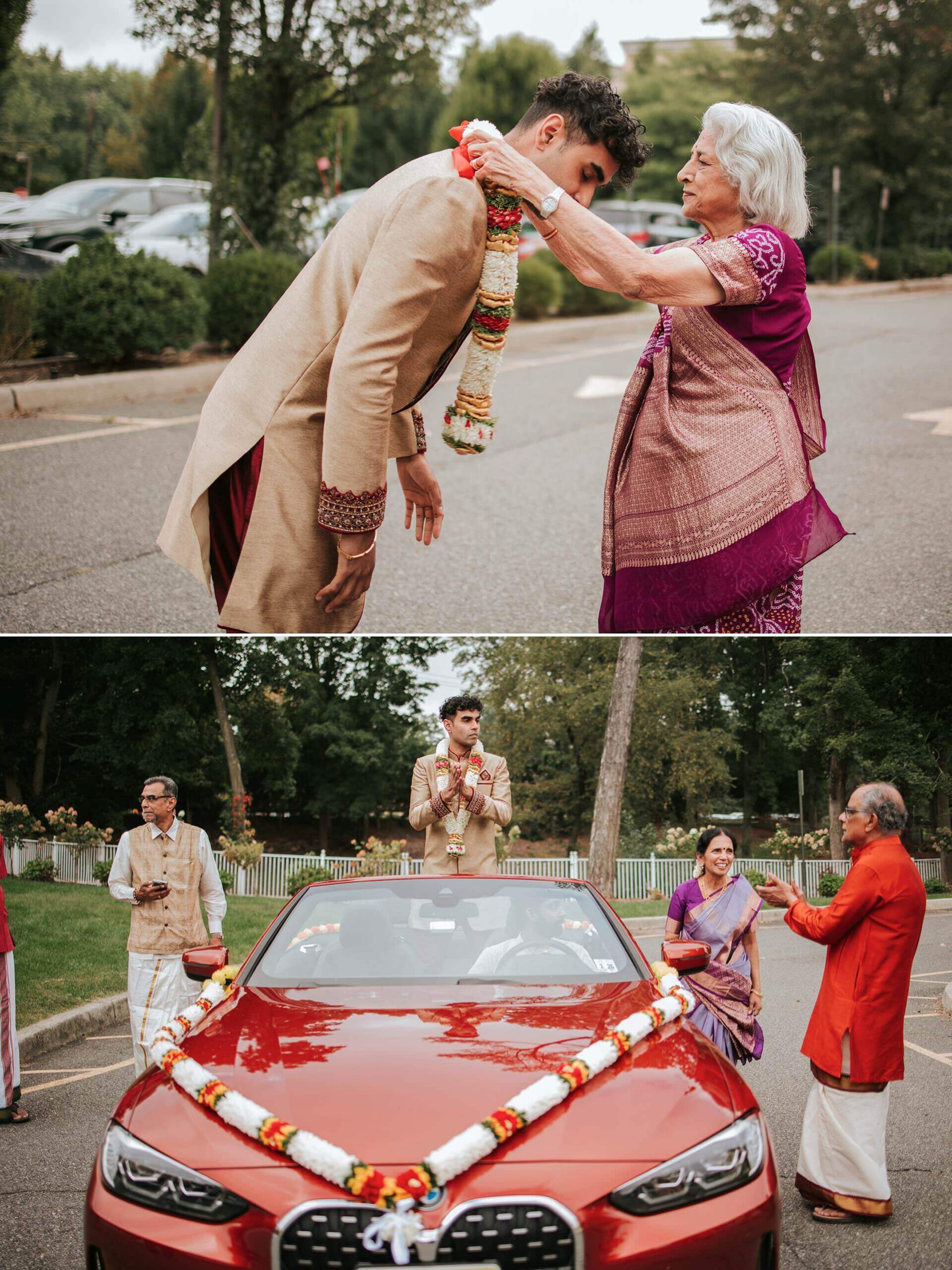
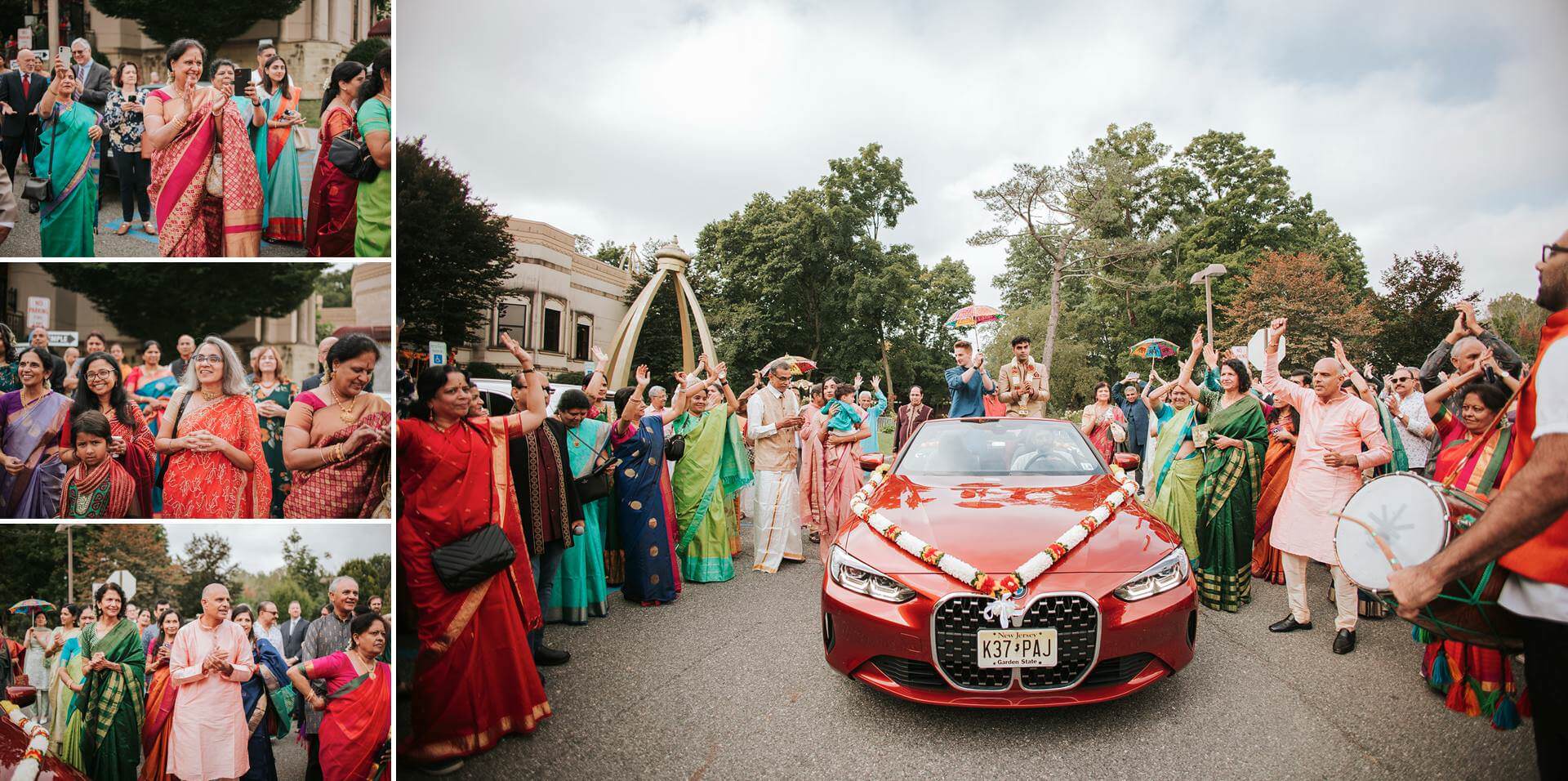
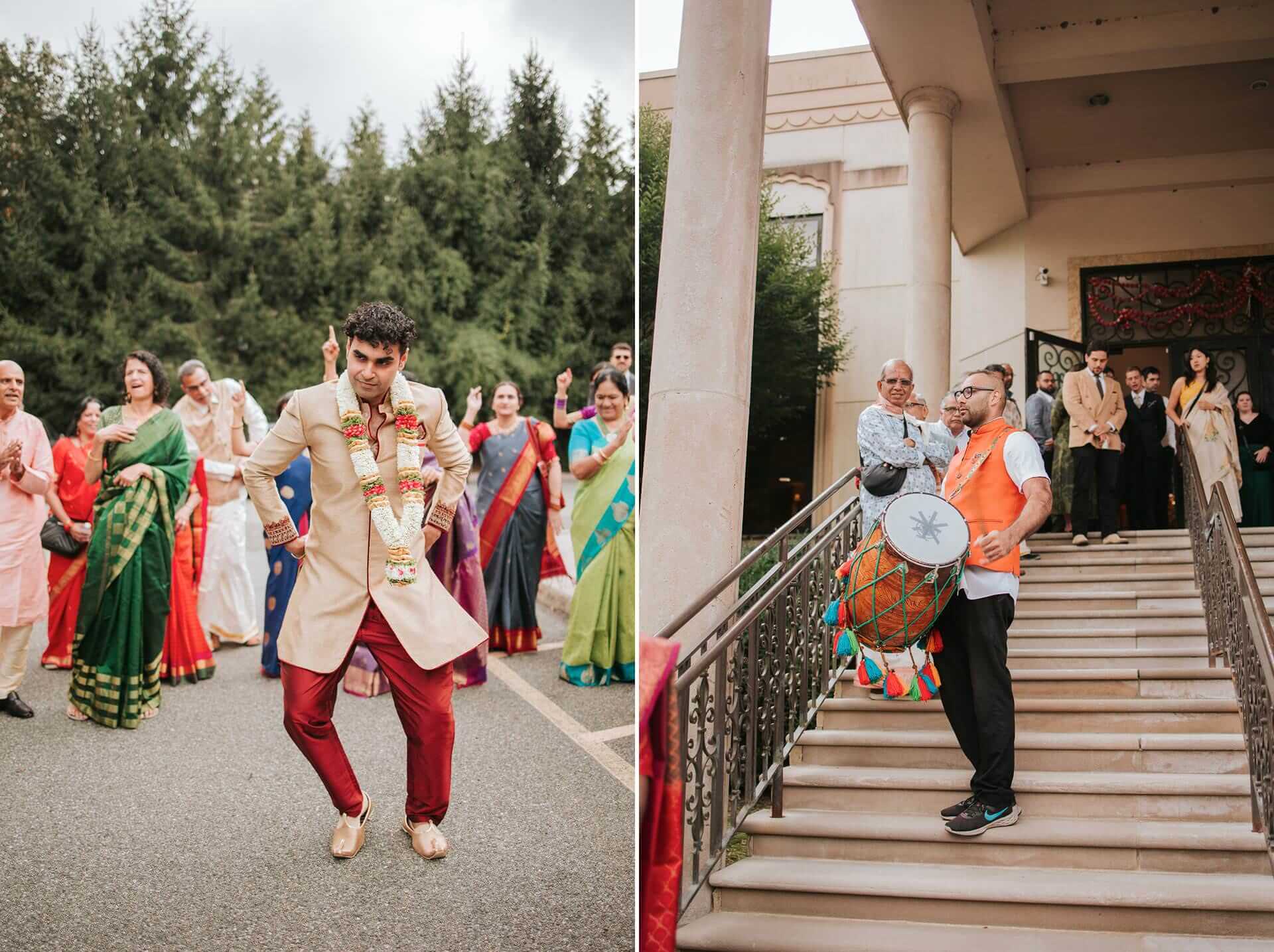
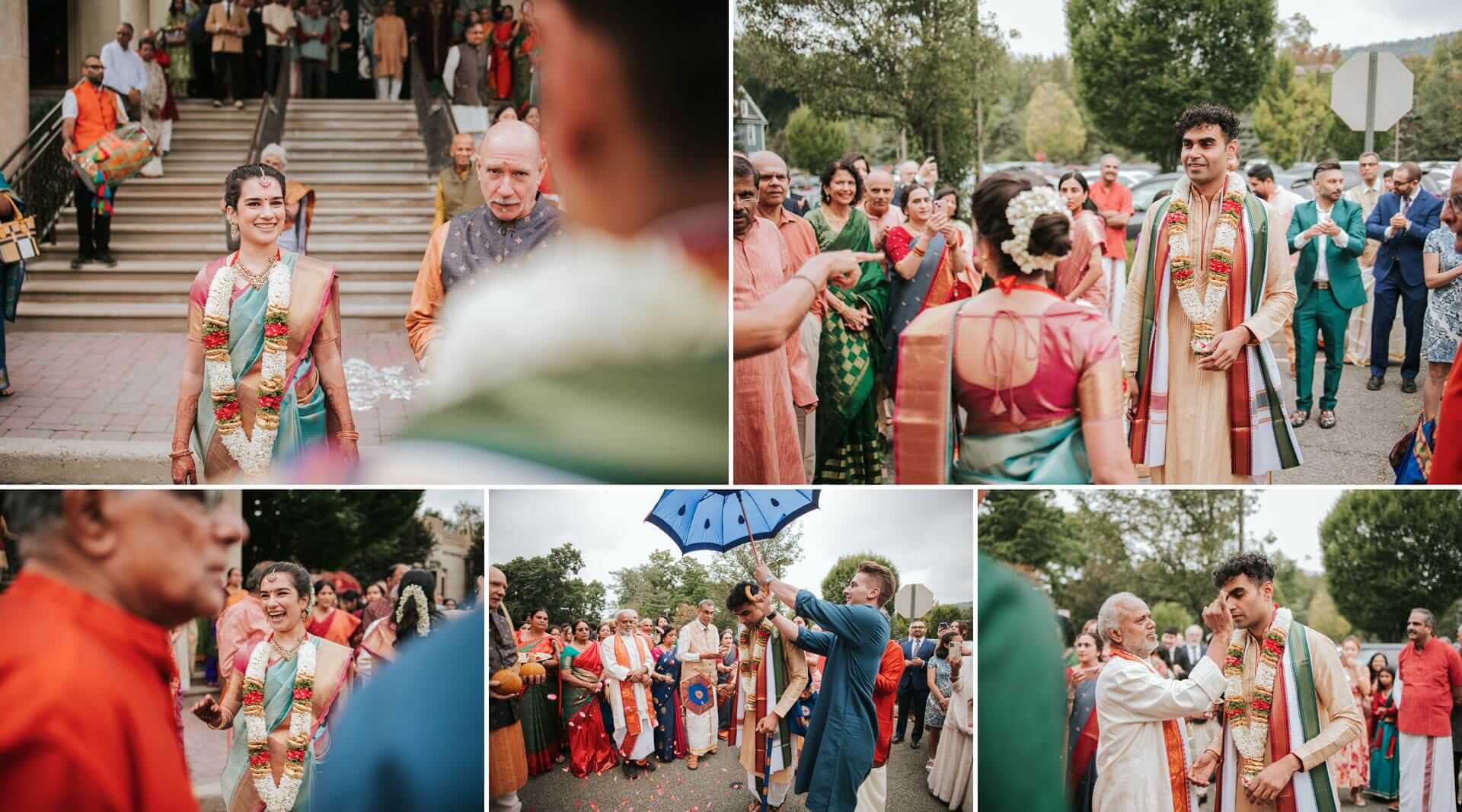
I was with Sid from the beginning — and the Baraat set the tone for everything that followed. There is a particular energy to a groom’s procession, the moment the celebration shifts from anticipation to arrival. Sid moved through it the way he moved through the entire day: observant, taking it all in, a little nervous in the way that means something. Not performing calmly, but building toward it.
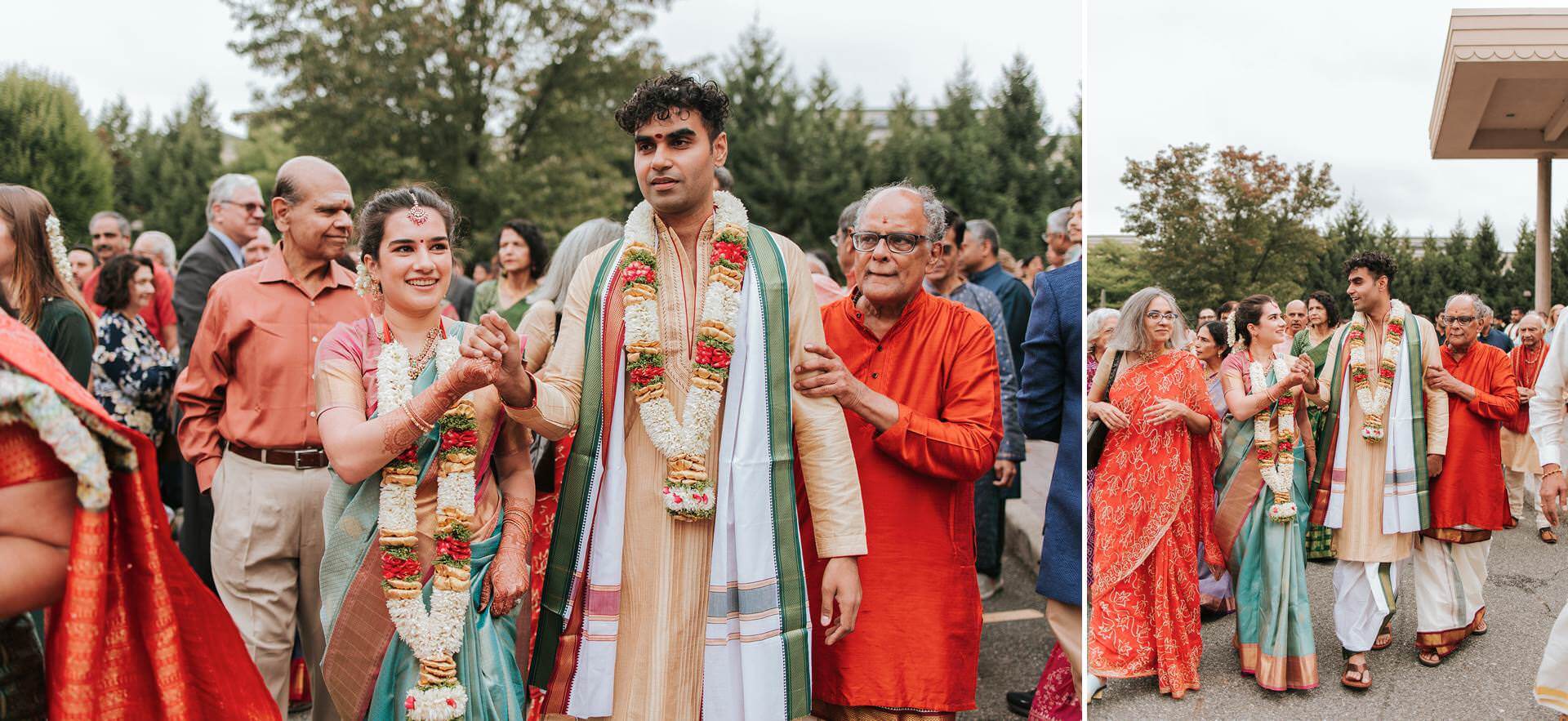
By the time he crossed into the temple and the ceremonies began, that energy had settled. He was present — actually present — standing inside each ritual rather than watching it happen to him. Surrounded by generations of family on both sides, every step of the day landed the way it was meant to.
The bride: calm in the center of it all
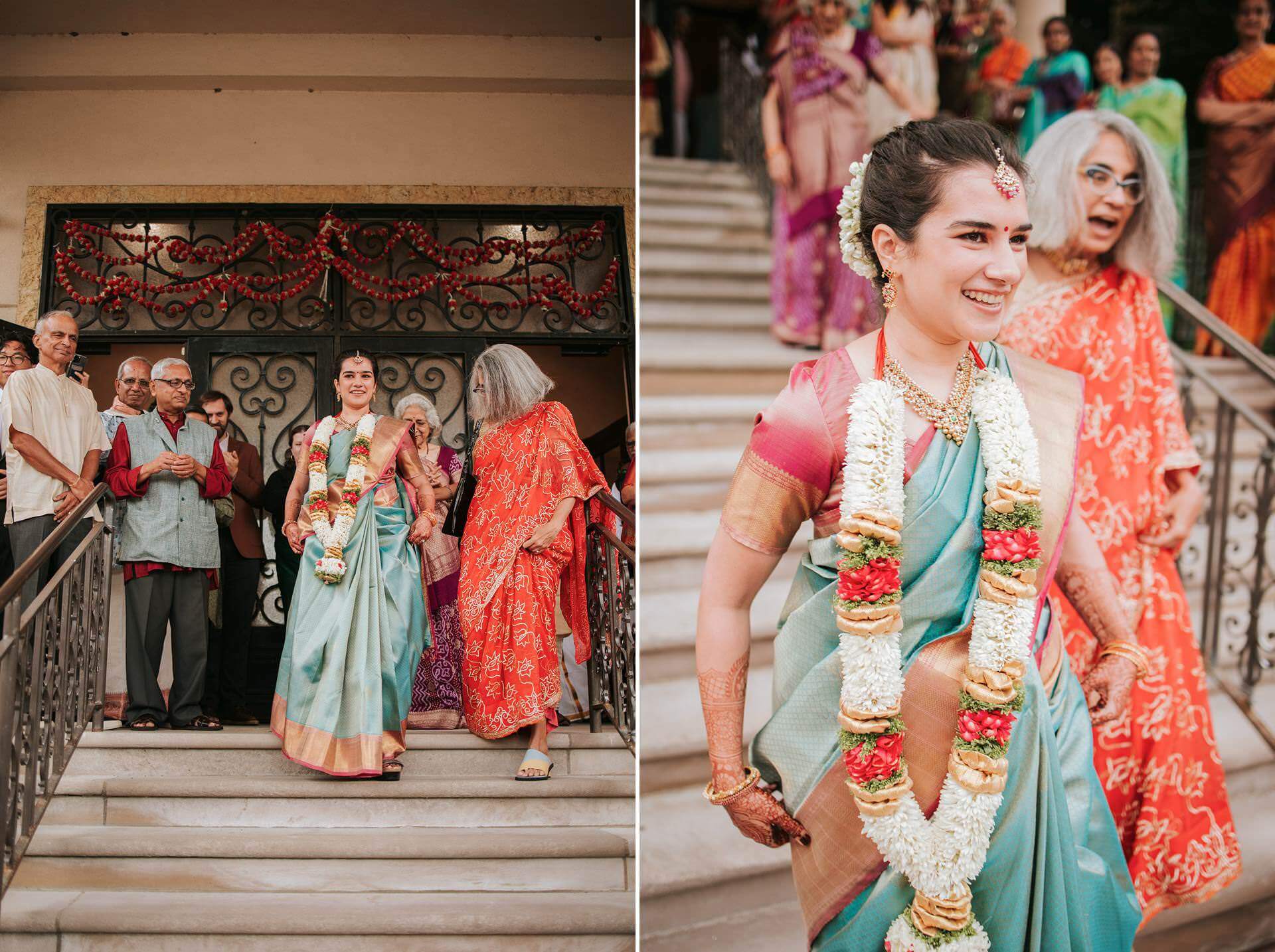
Devi moved through the day with a quietness that wasn’t detachment — it was composure. She smiled and laughed throughout, but there was a stillness underneath it that made her easy to document and impossible to look away from. The kind of bride who doesn’t need to be directed. You position yourself and wait, and she gives you everything you need.
The image I keep coming back to: Devi on the stairs, mid-movement, completely herself. There was joy in it that felt unguarded in a way the more formal moments sometimes don’t. That’s the photograph that tells you who she is.
The maalai maatral and the garland exchange
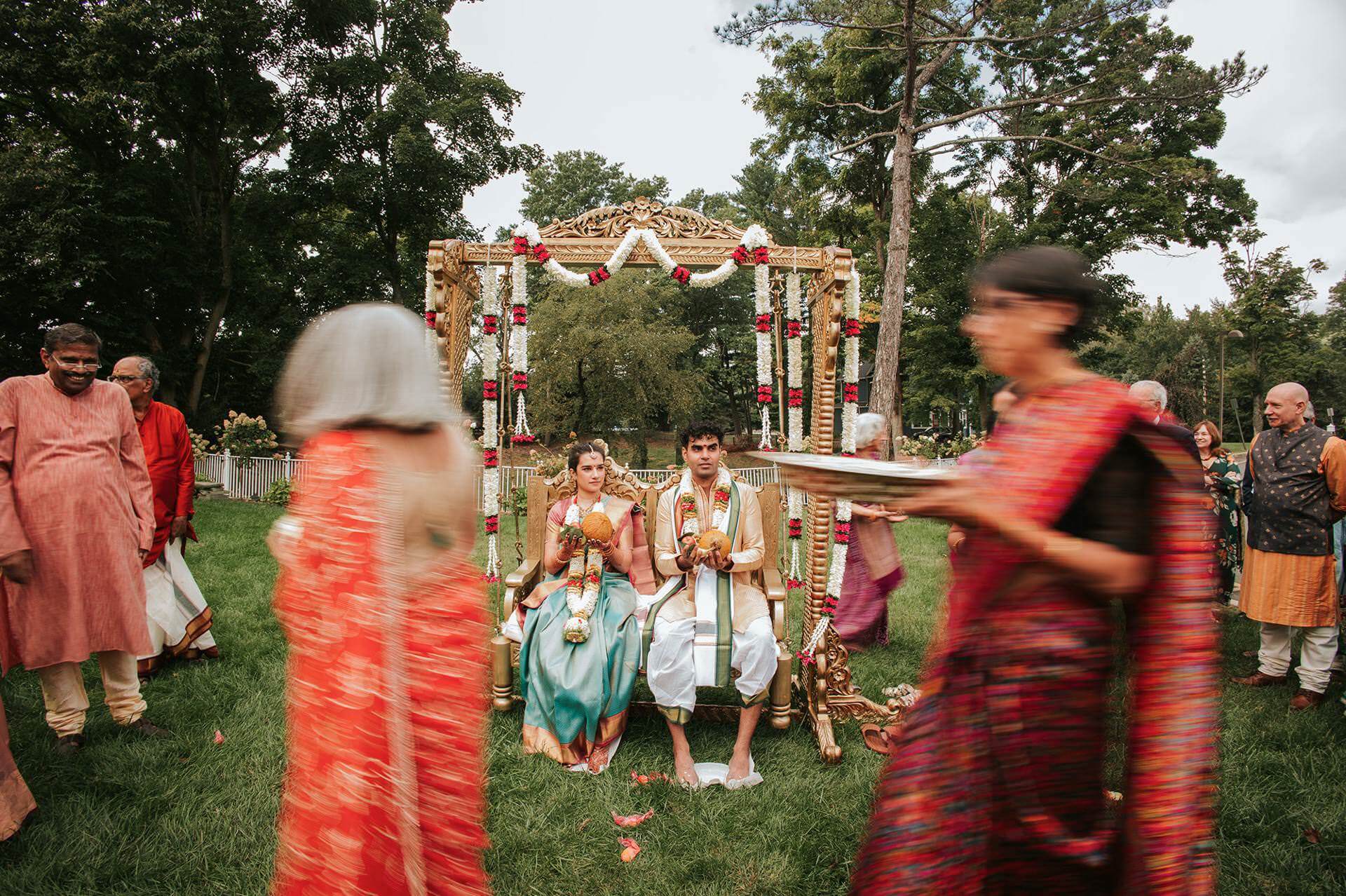
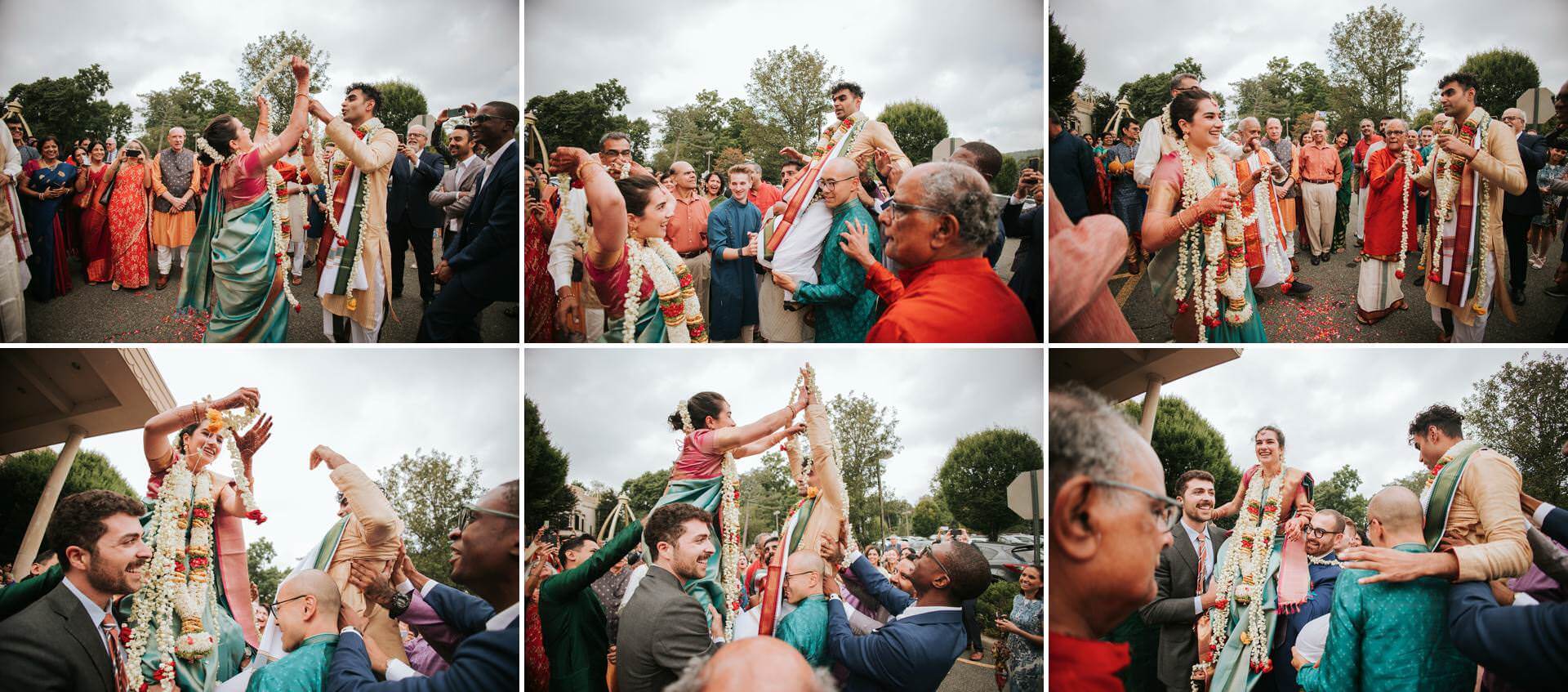
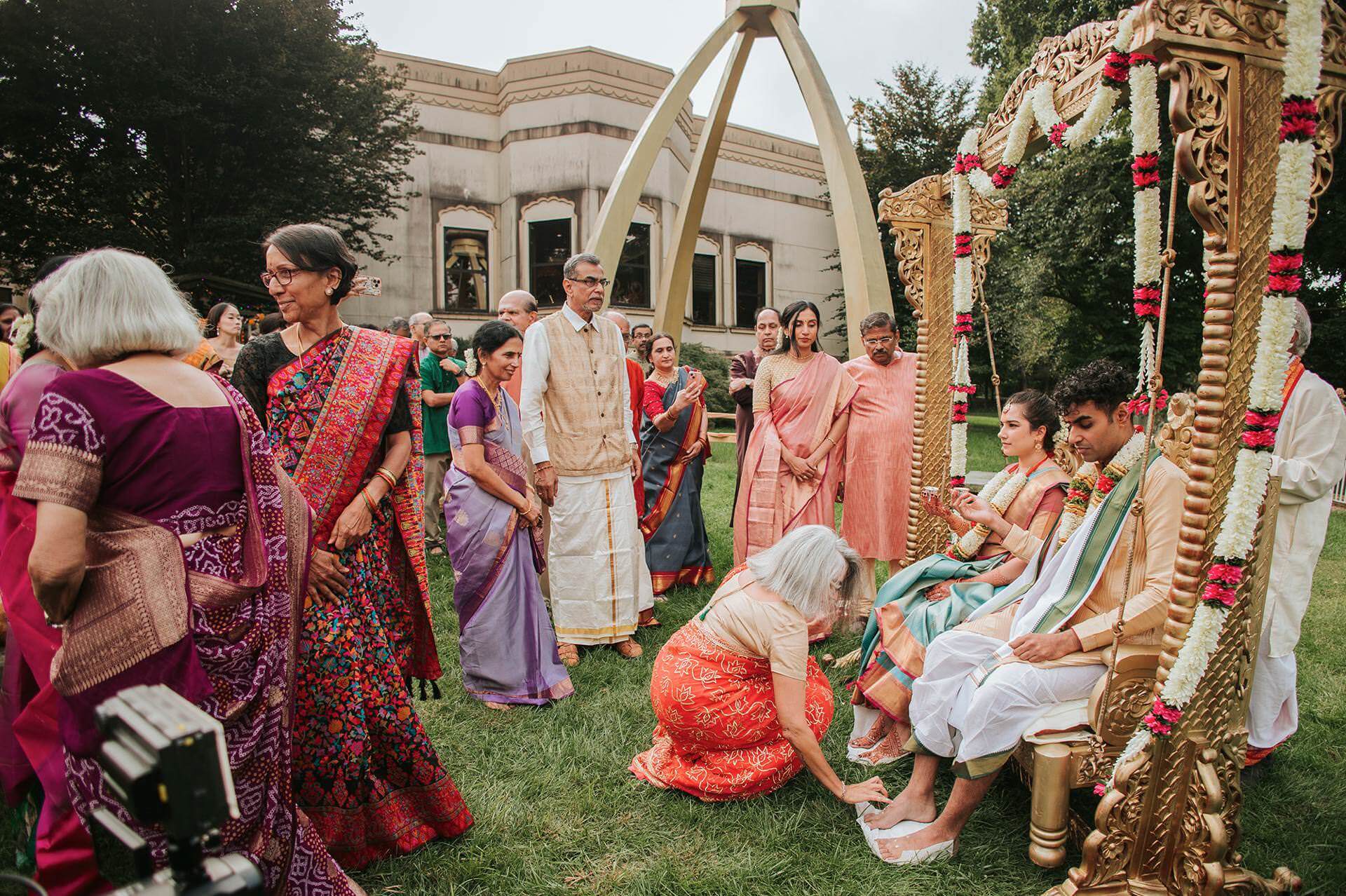
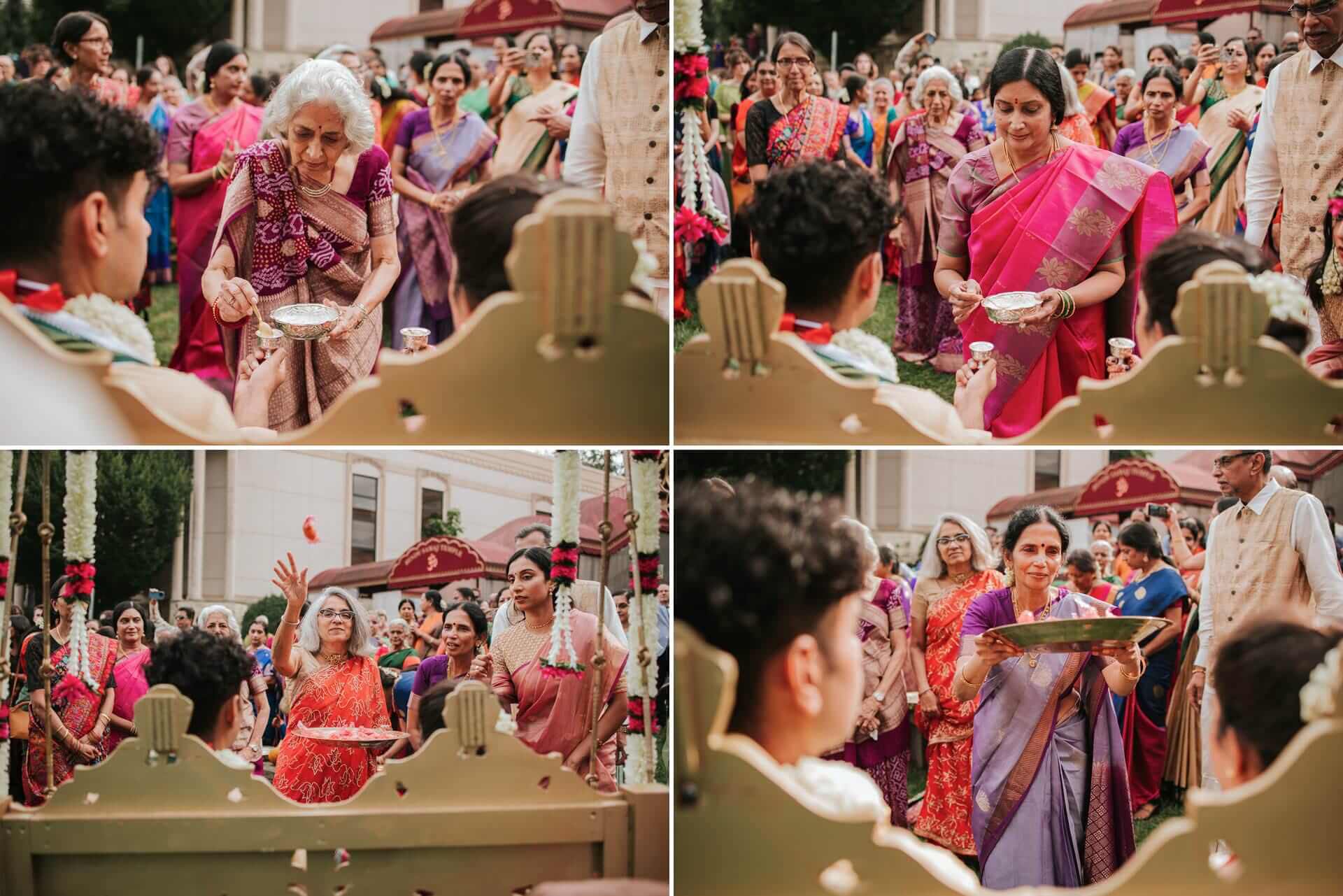
The garland exchange happened outside — and that openness suited it perfectly. The maalai maatral drew exactly what it always draws: laughter, a little chaos, families pressing in from both sides. It is one of those South Indian wedding moments that photographs differently every time because it depends entirely on the energy around it. This crowd was all in. Joyful doesn’t quite cover it.
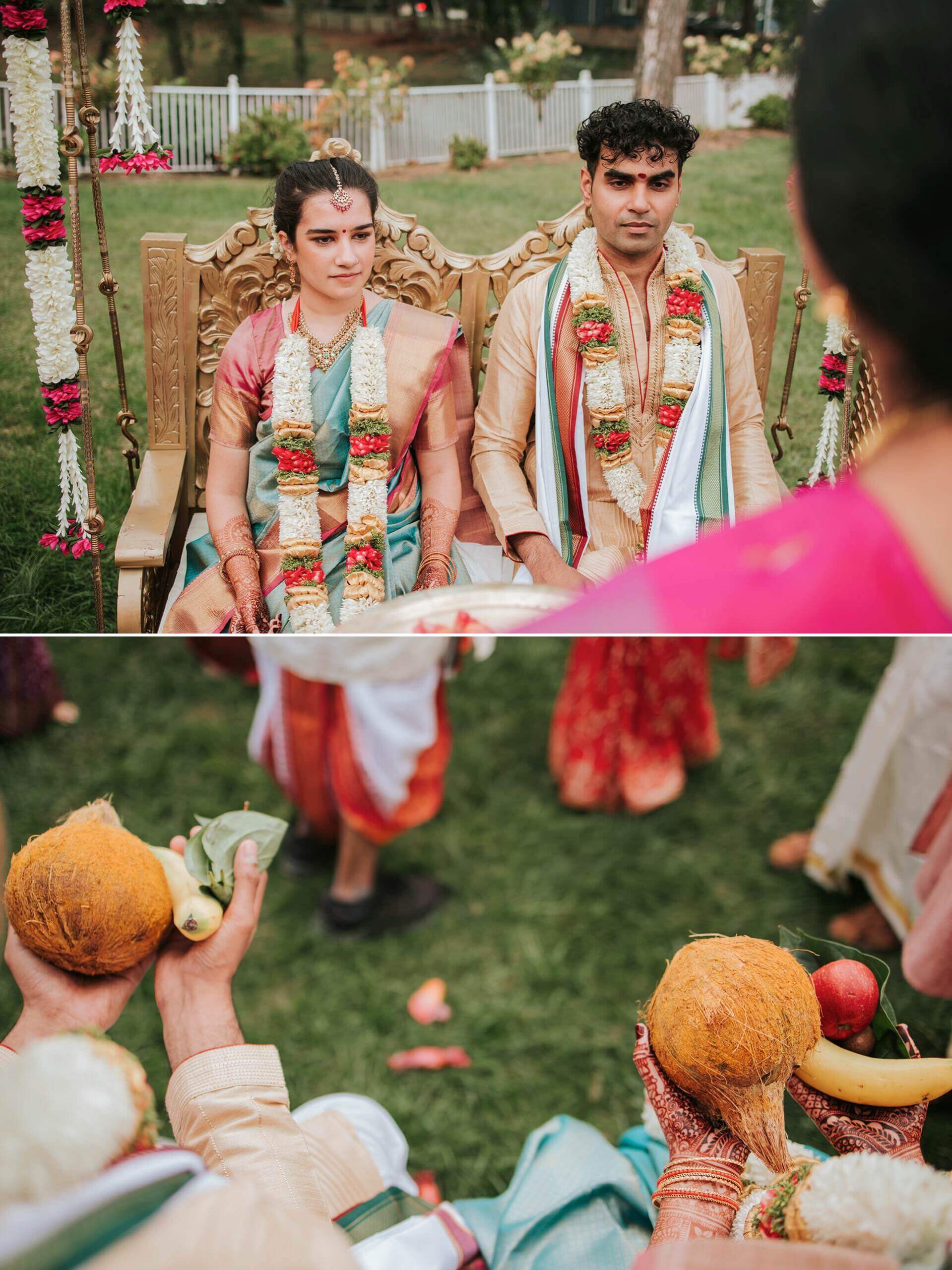
The swing ceremony that followed was one of the images from the day I won’t forget. Something about the rhythm of it, the way it marked the shift from ritual to something more tender. After the noise of the garland exchange, that stillness landed hard.
The saptapadi: seven steps, two families
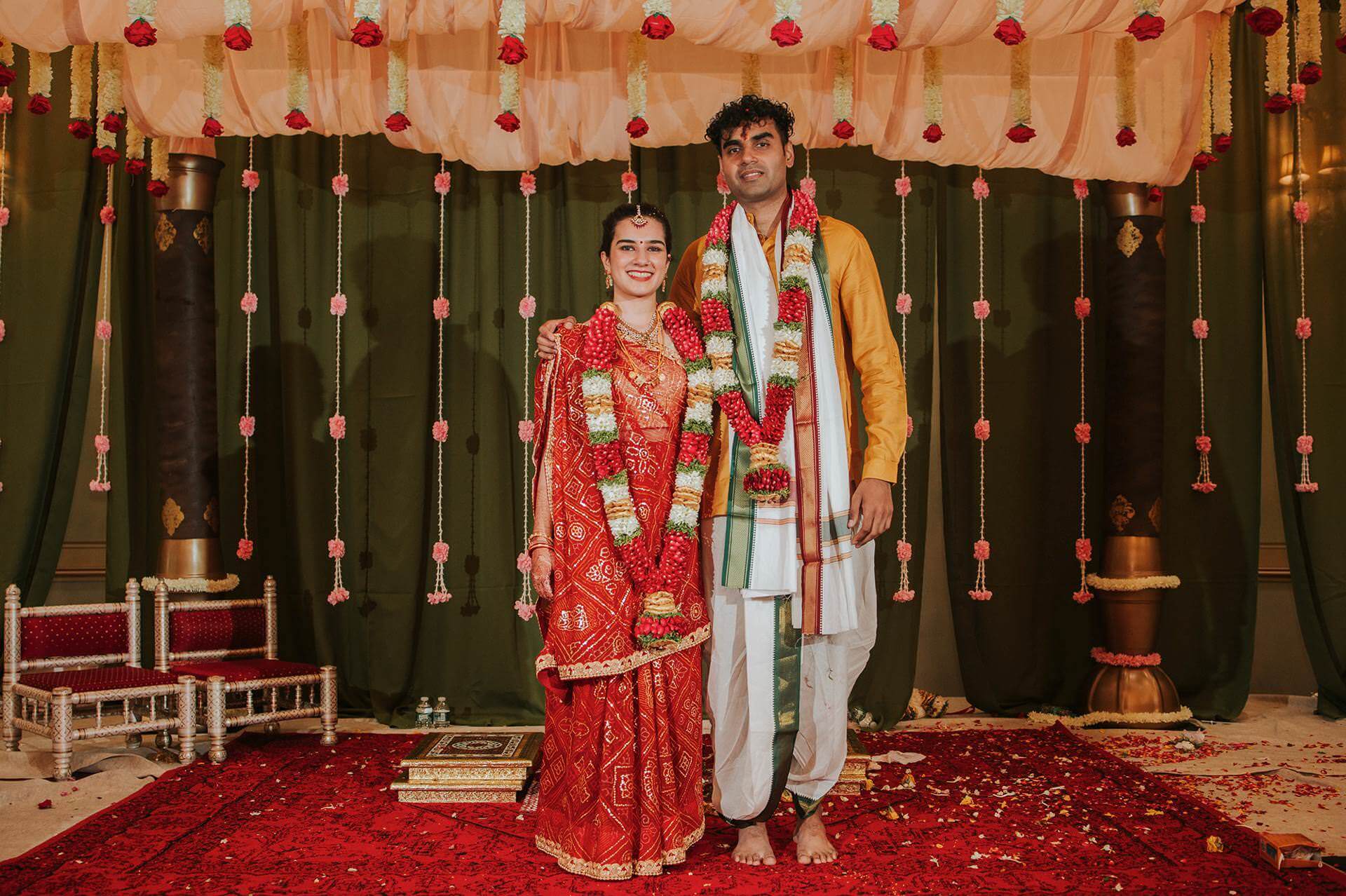
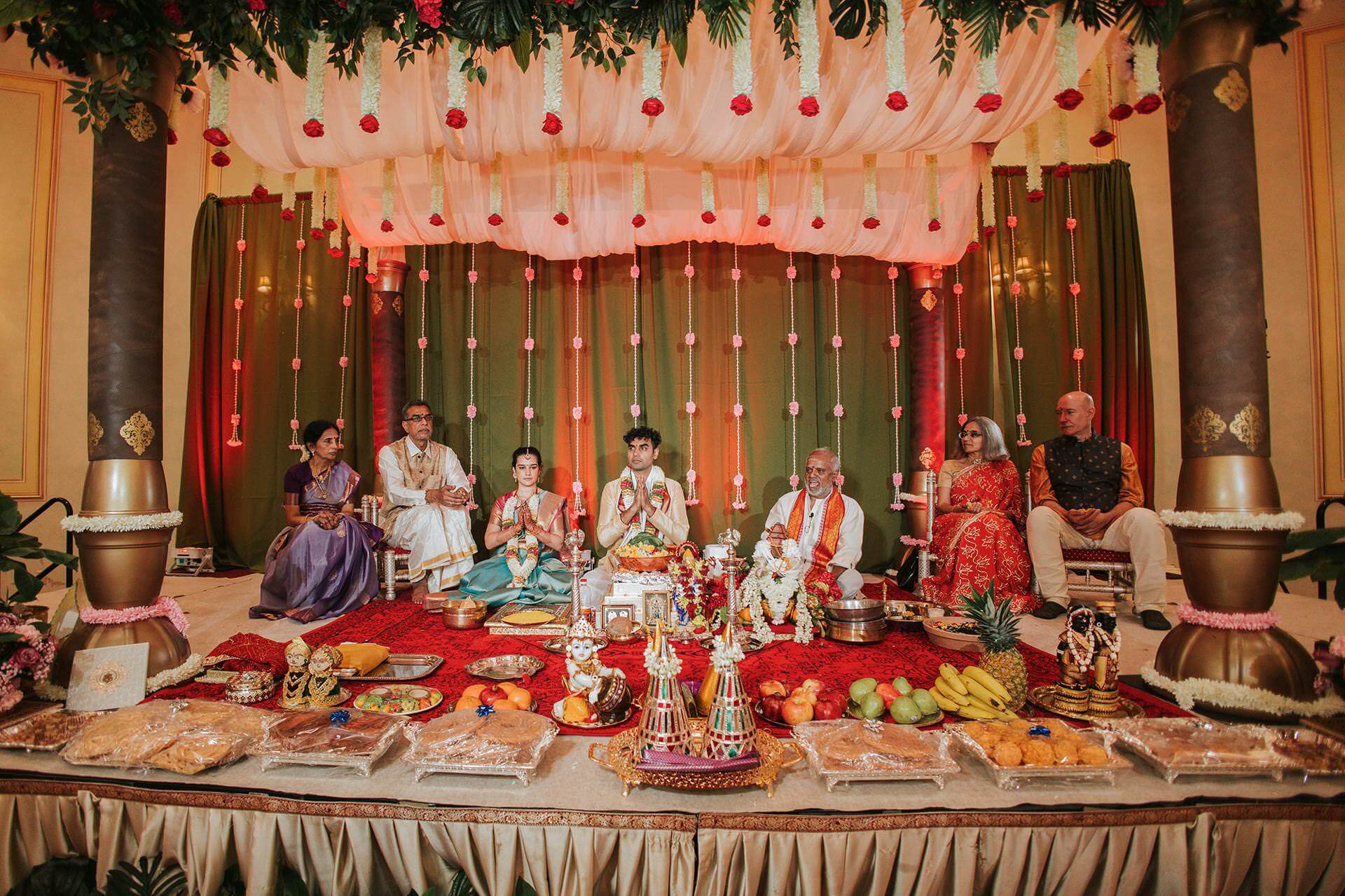
The saptapadi is always the moment I hold my breath a little. Seven steps around the sacred fire. Seven promises spoken aloud. Each circle quieter than the one before.
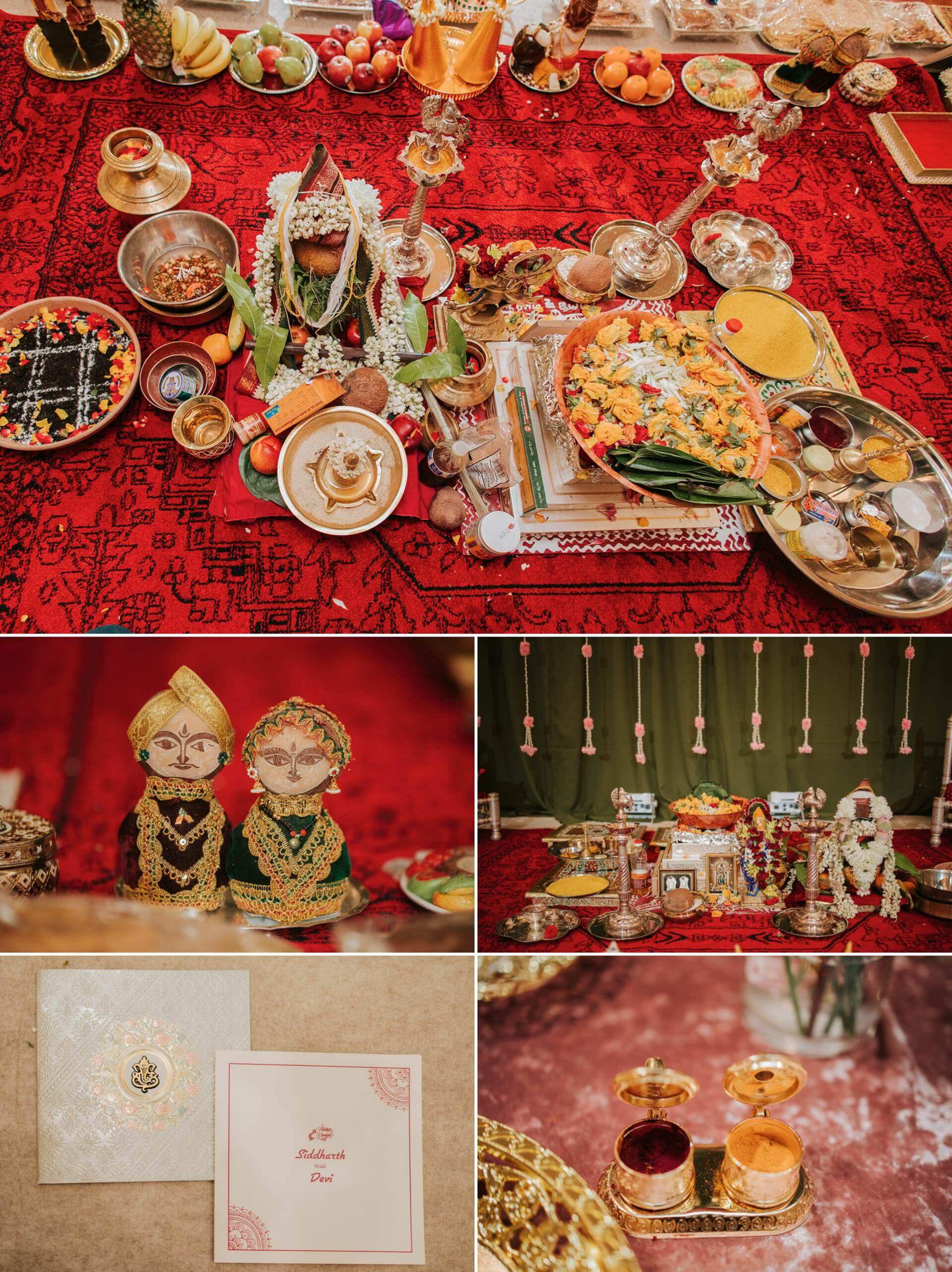
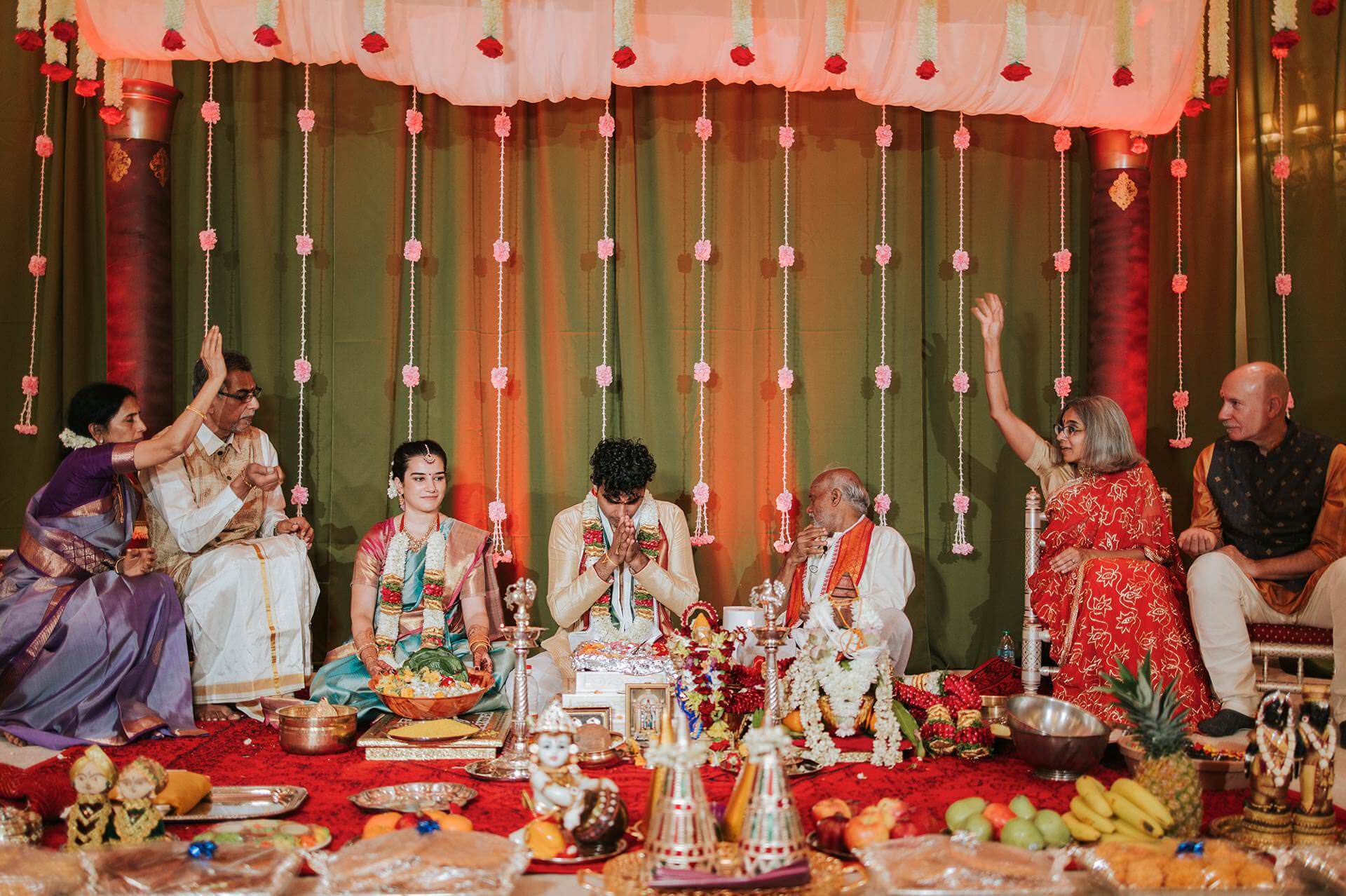
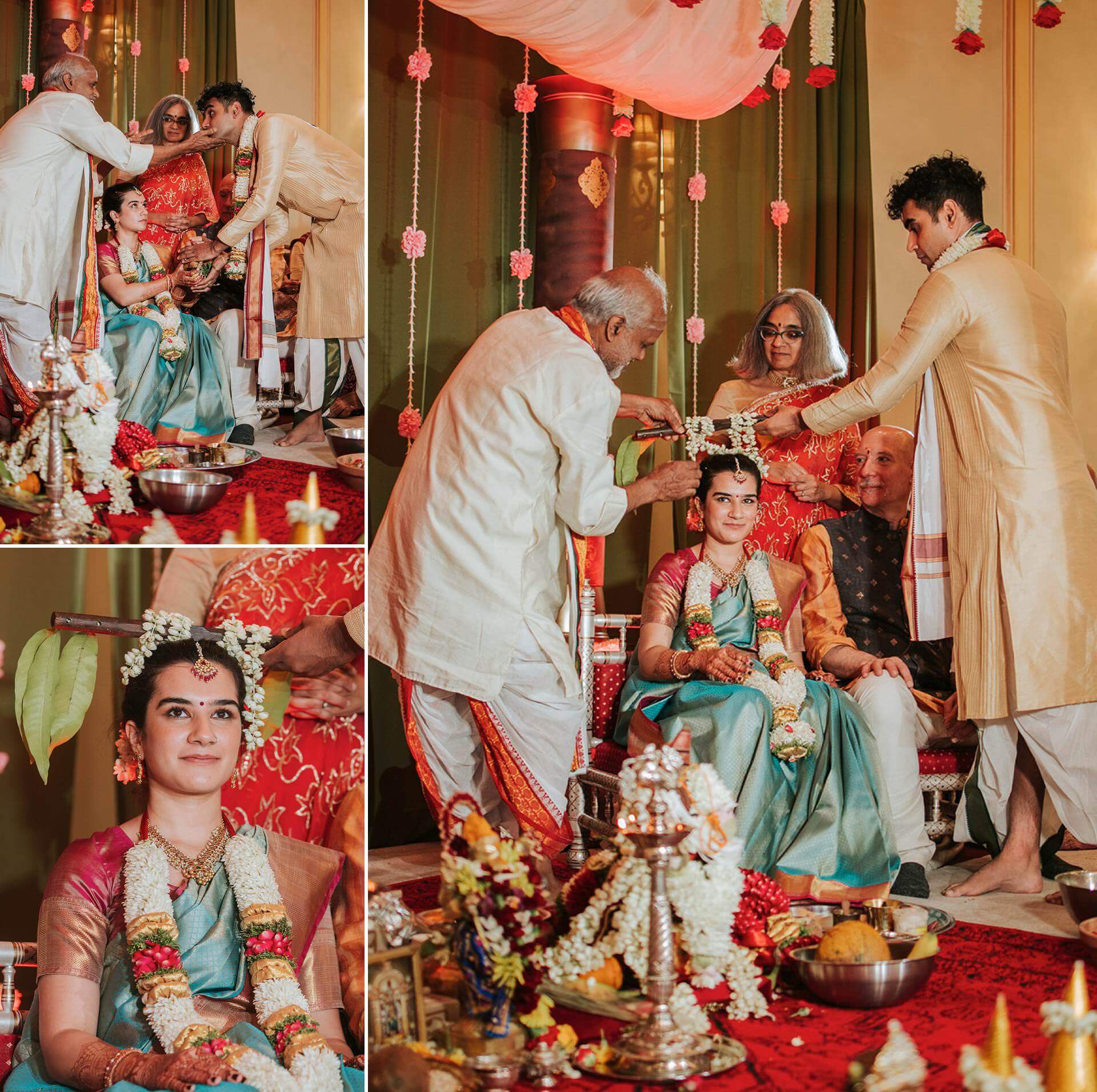
What struck me at Devi and Sid’s saptapadi was watching both families — different backgrounds, different relationships to this tradition — leaning into it together. There was no distance in that room. Everyone understood the weight of what was being witnessed. South Asian weddings rooted in Hindu tradition are transmissions as much as they are celebrations. Everything recited and offered on a day like this carries the fingerprints of something older than the two people at the center of it — passed forward with care, received the same way. Devi and Sid received it. All of it.
South Asian weddings rooted in Hindu tradition are transmissions as much as they are celebrations. Everything recited and offered on a day like this carries the fingerprints of something older than the two people at the center of it — passed forward with care, received the same way.
Devi and Sid received it. All of it.
Two musicians, one devotional day
Devi and Sid are both musicians — Sid plays carnatic violin, Devi the sitar. These aren’t casual pursuits. They are disciplines that ask for the same things a ceremony like this asks for: presence, patience, a willingness to honor what came before you. Their wedding had that quality throughout. The priest moved without rushing. The rituals breathed. Nobody was watching the clock.
Devi and Sid had done something harder than it looks — they were completely present on one of the most observed days of their lives. For two people who spend their lives translating feeling into sound, and for a groom I had the quiet honor of knowing long before this day, it made perfect sense. It was a privilege to preserve it.
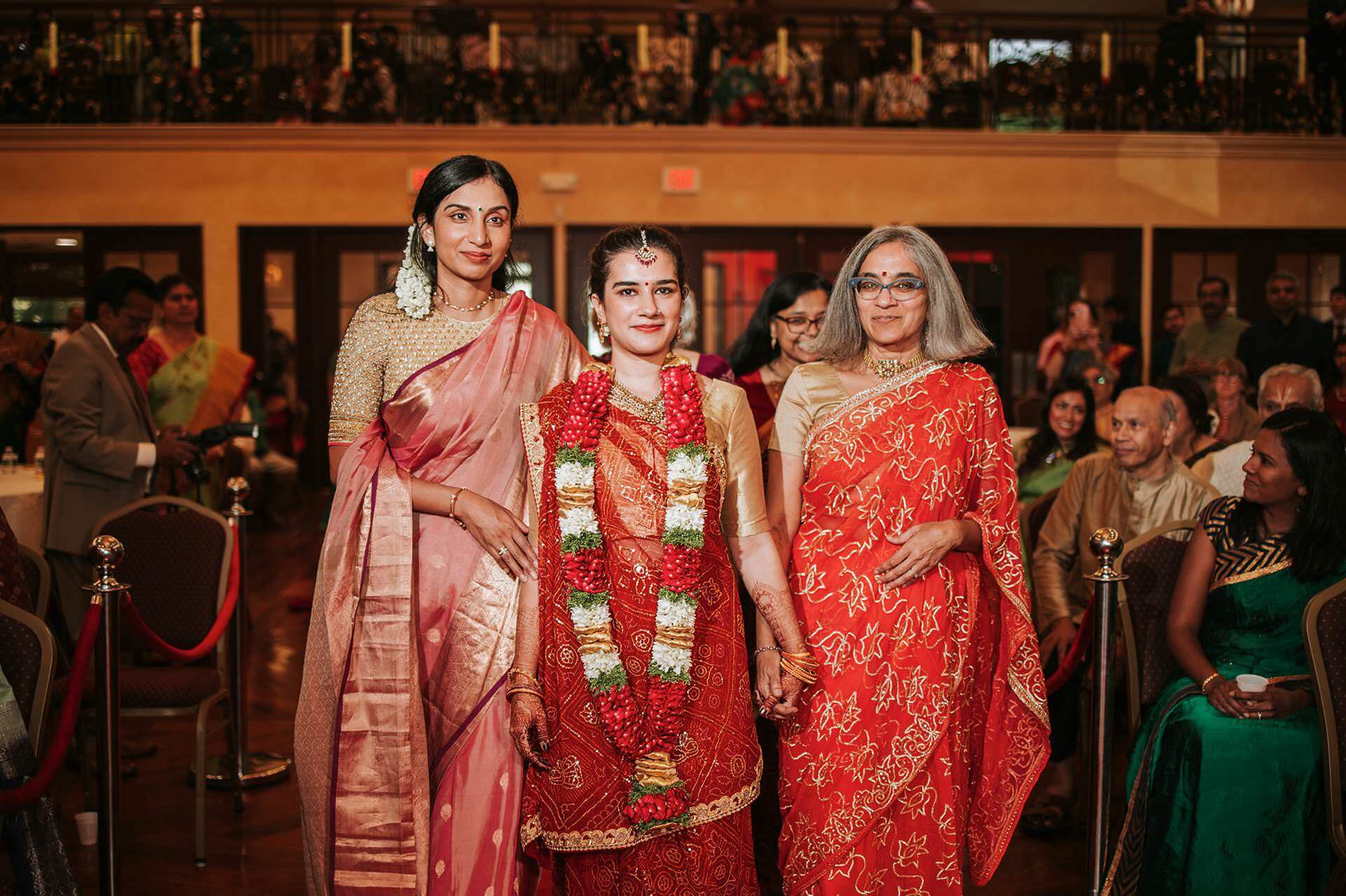
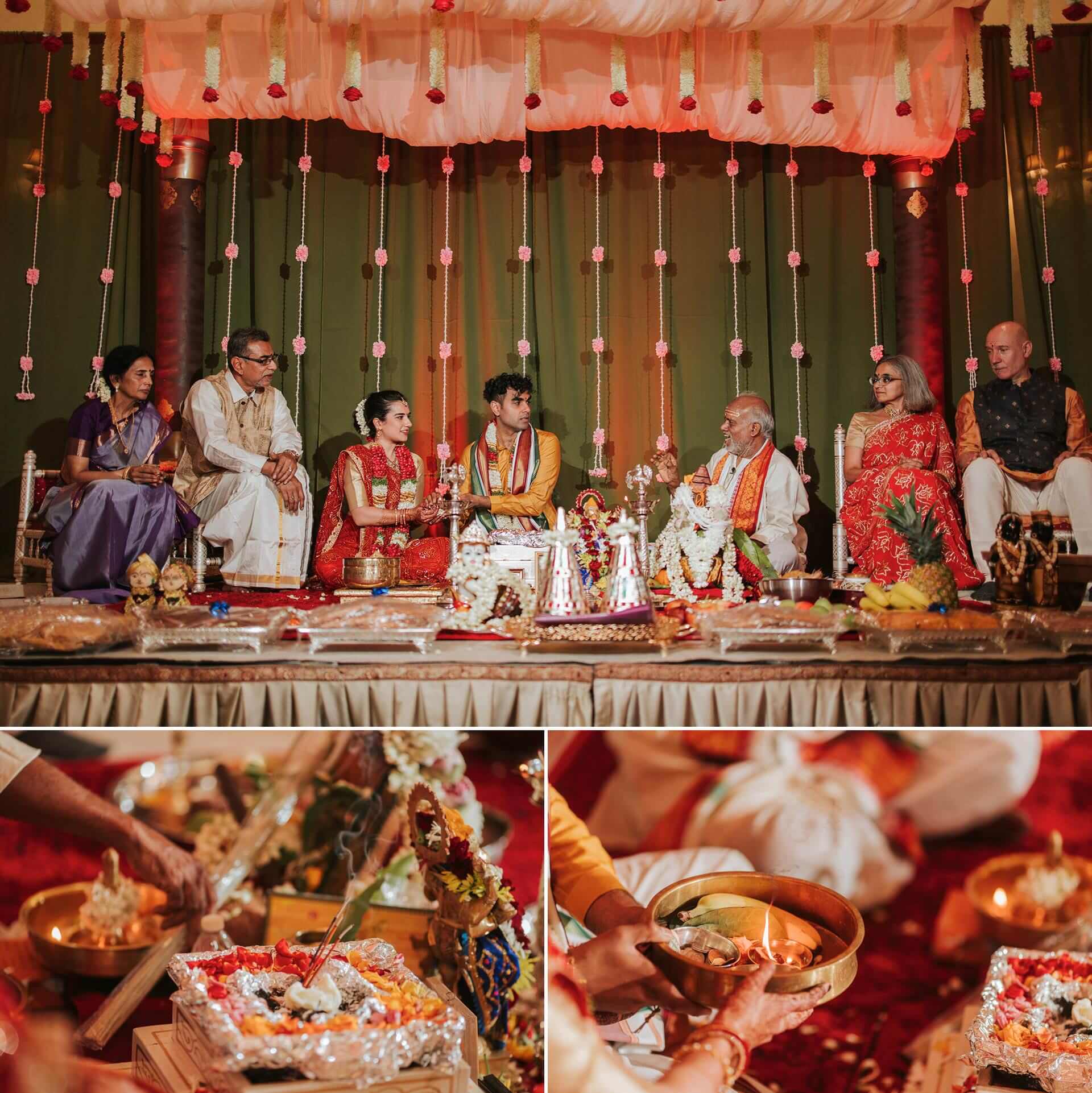
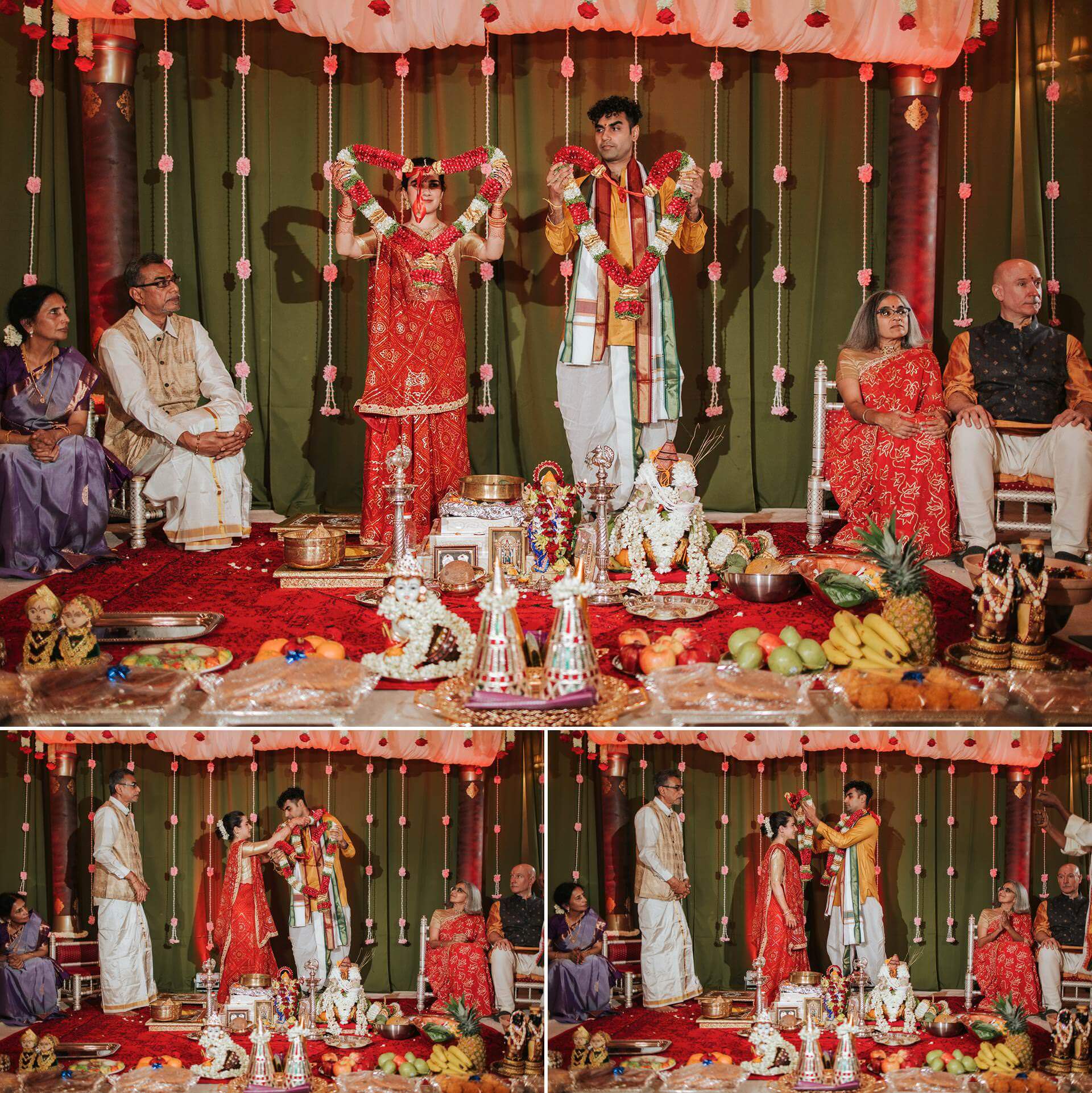
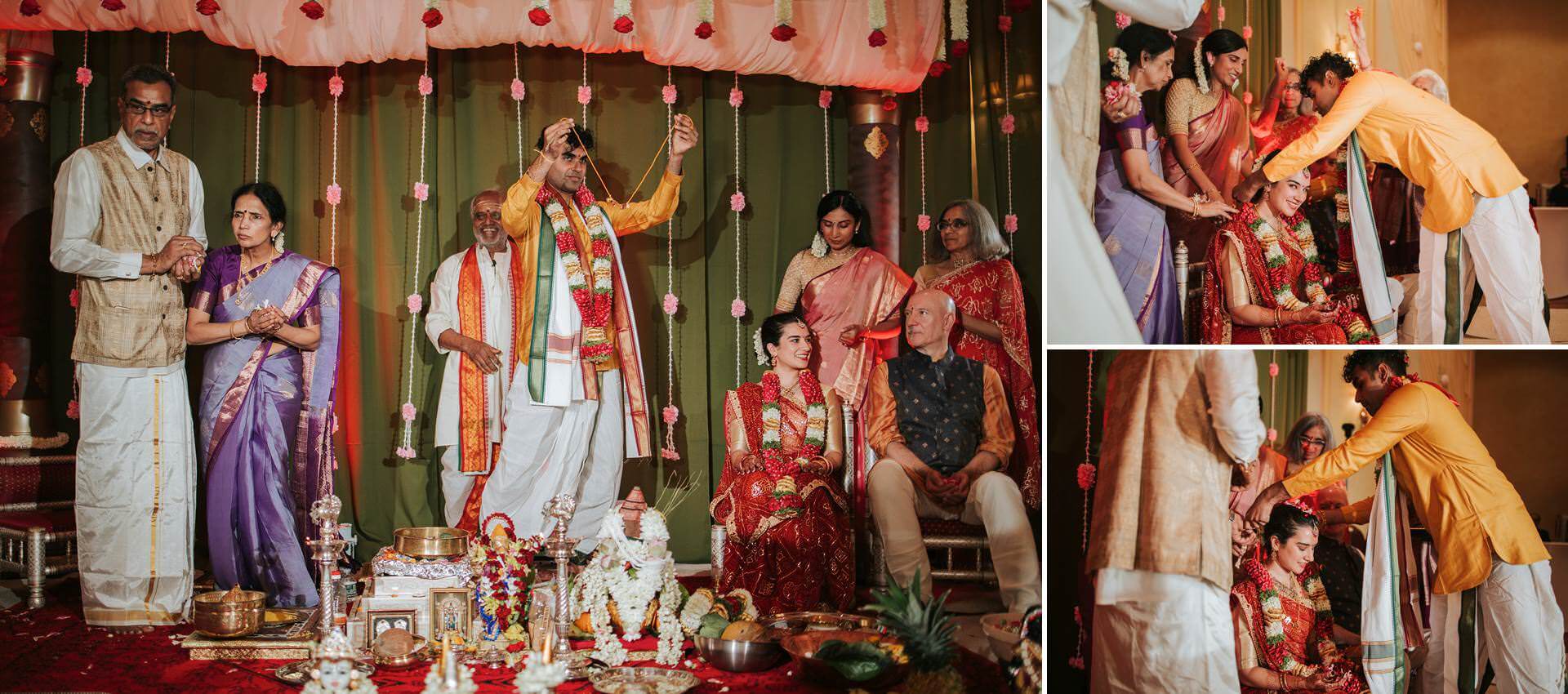
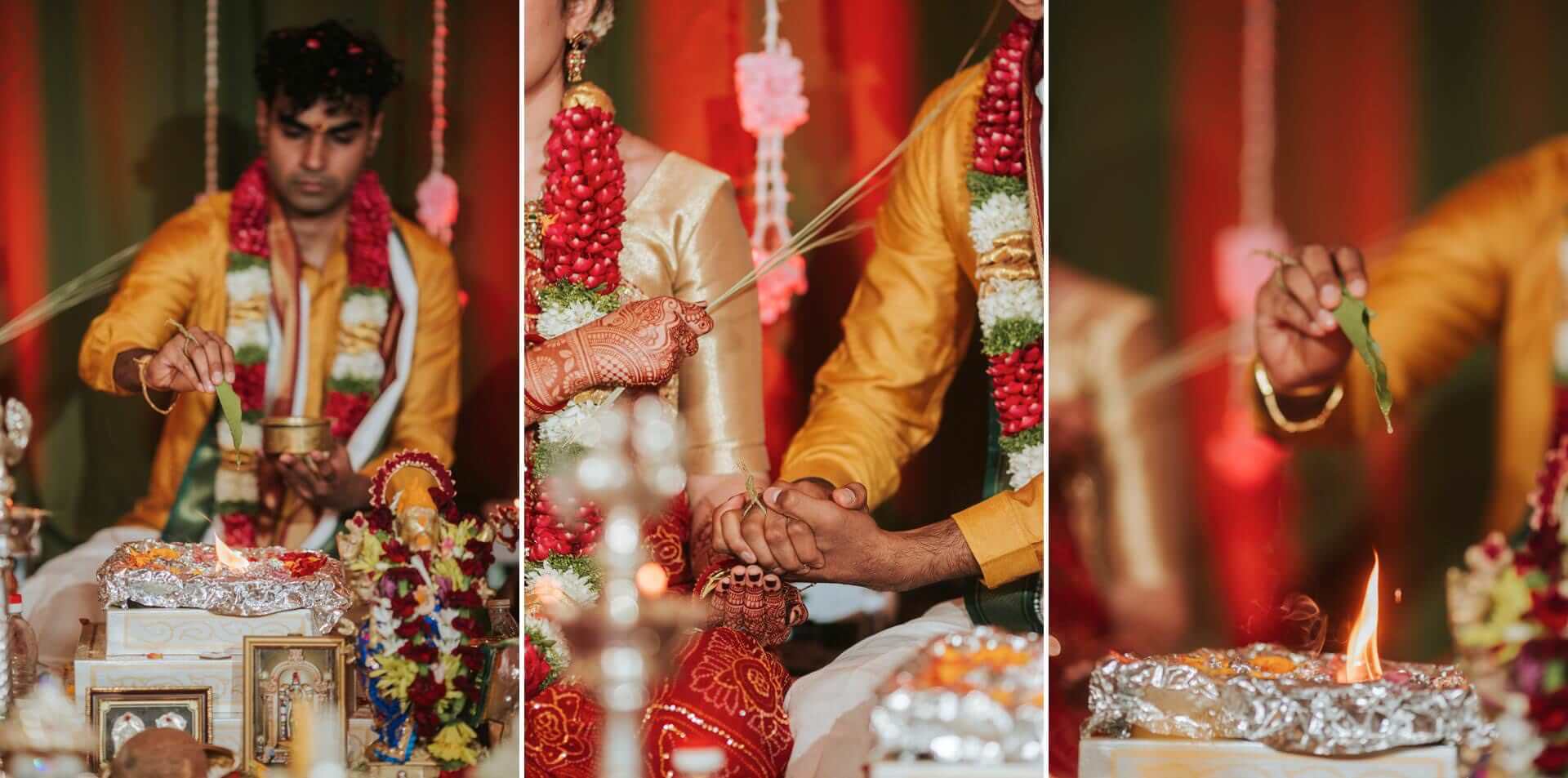
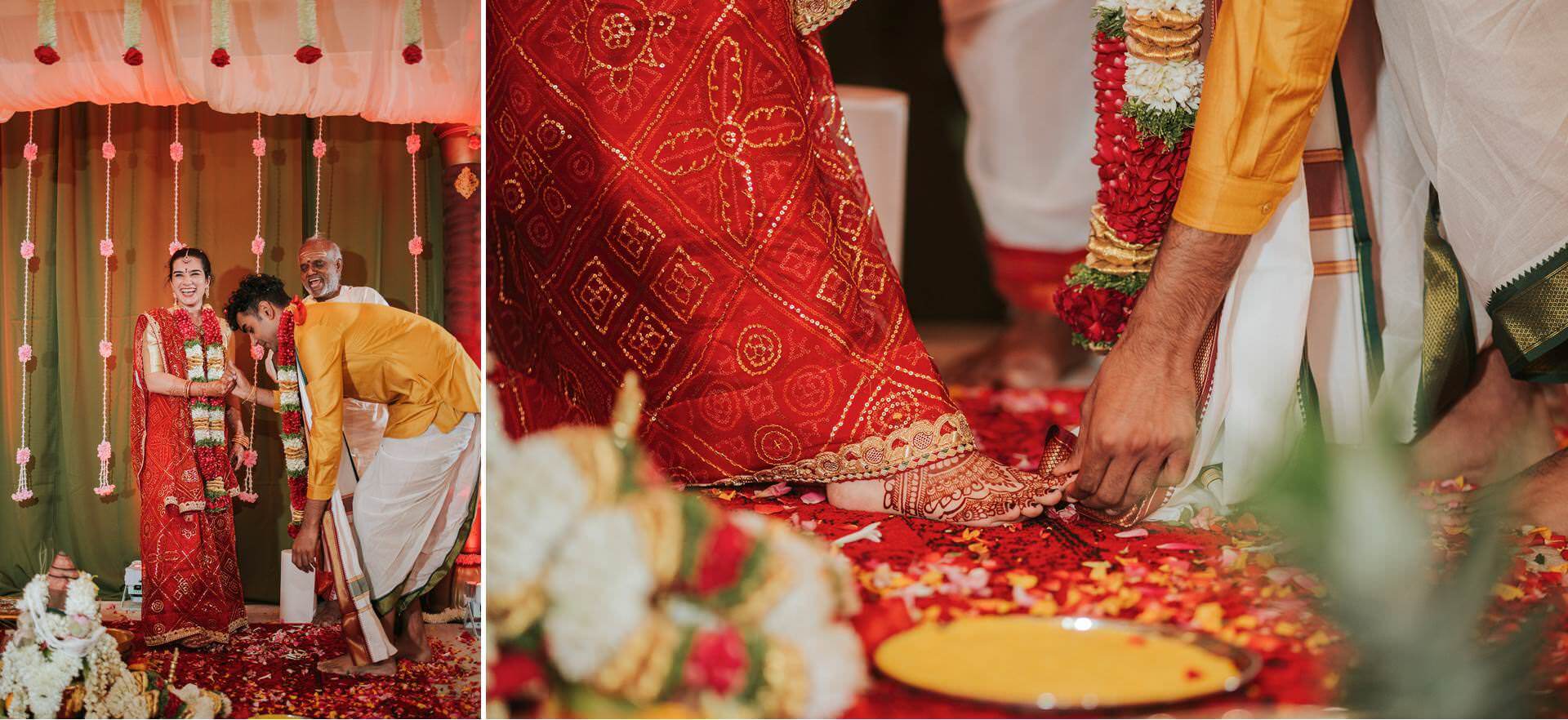
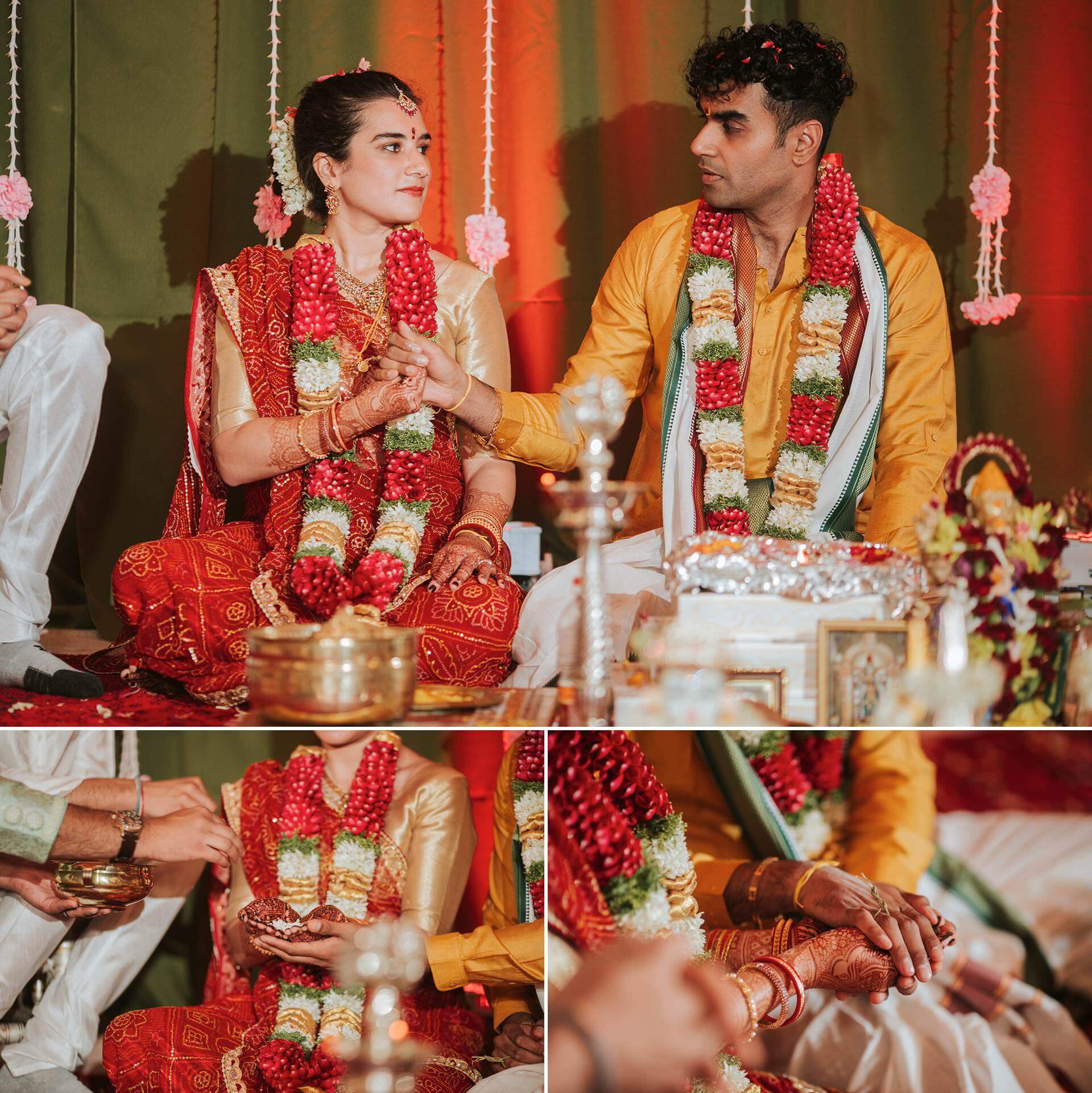
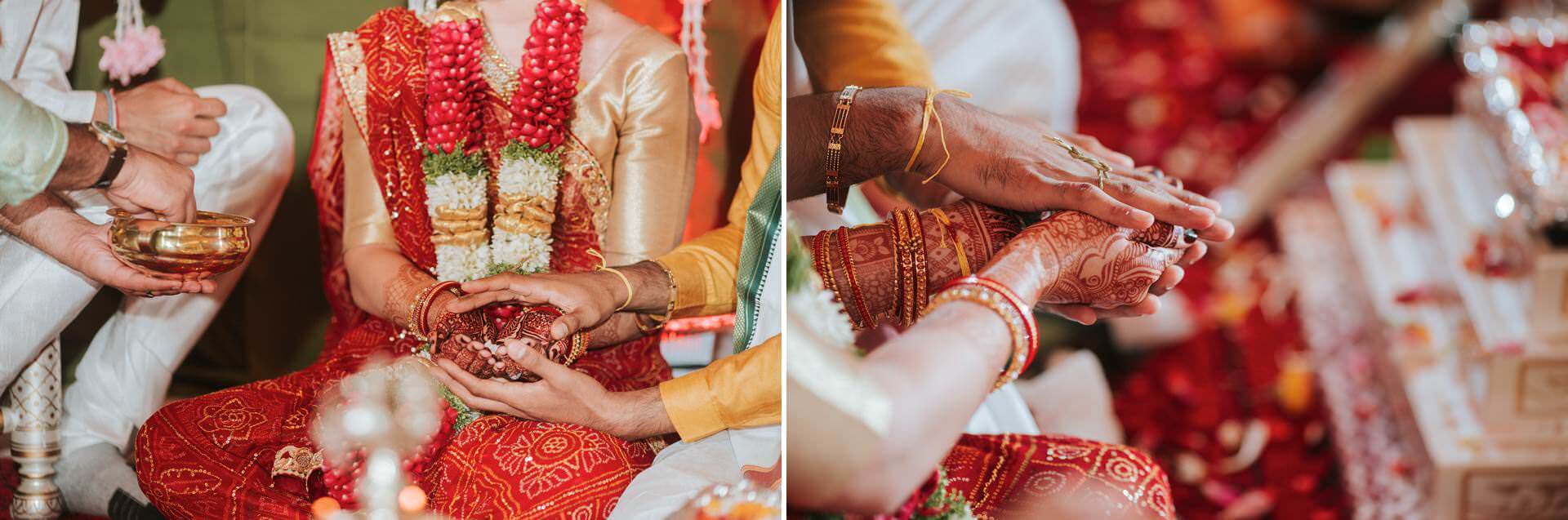
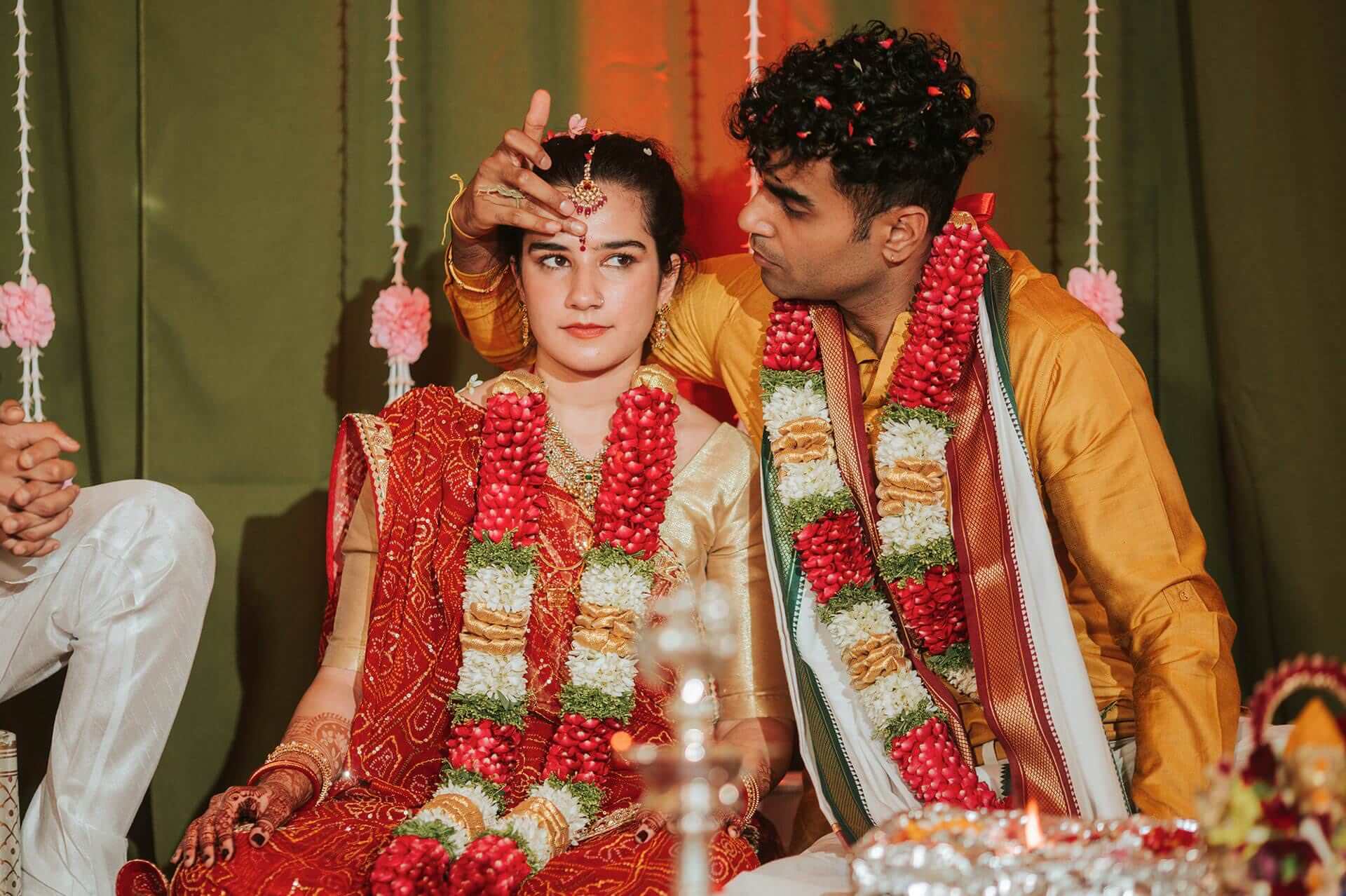
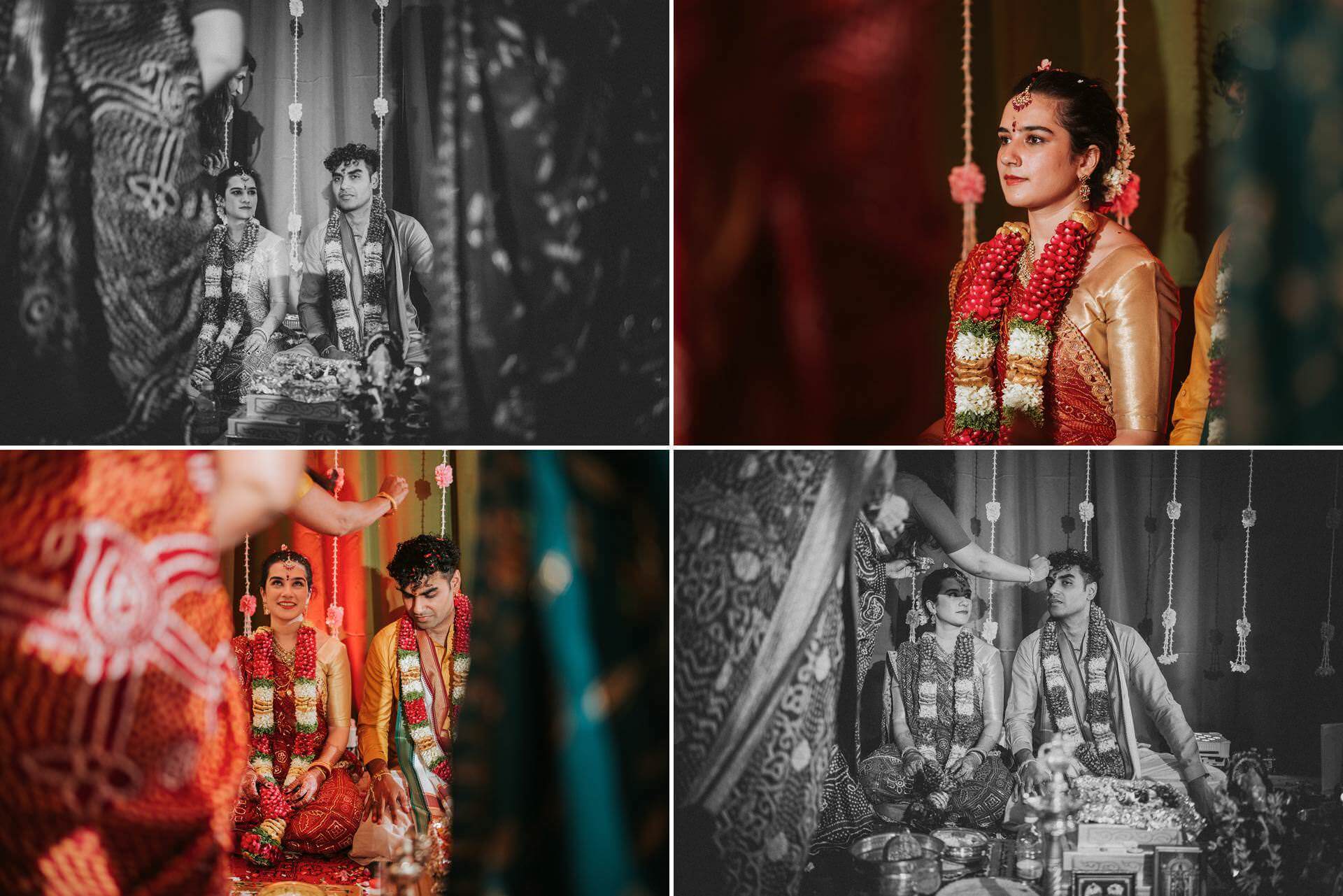
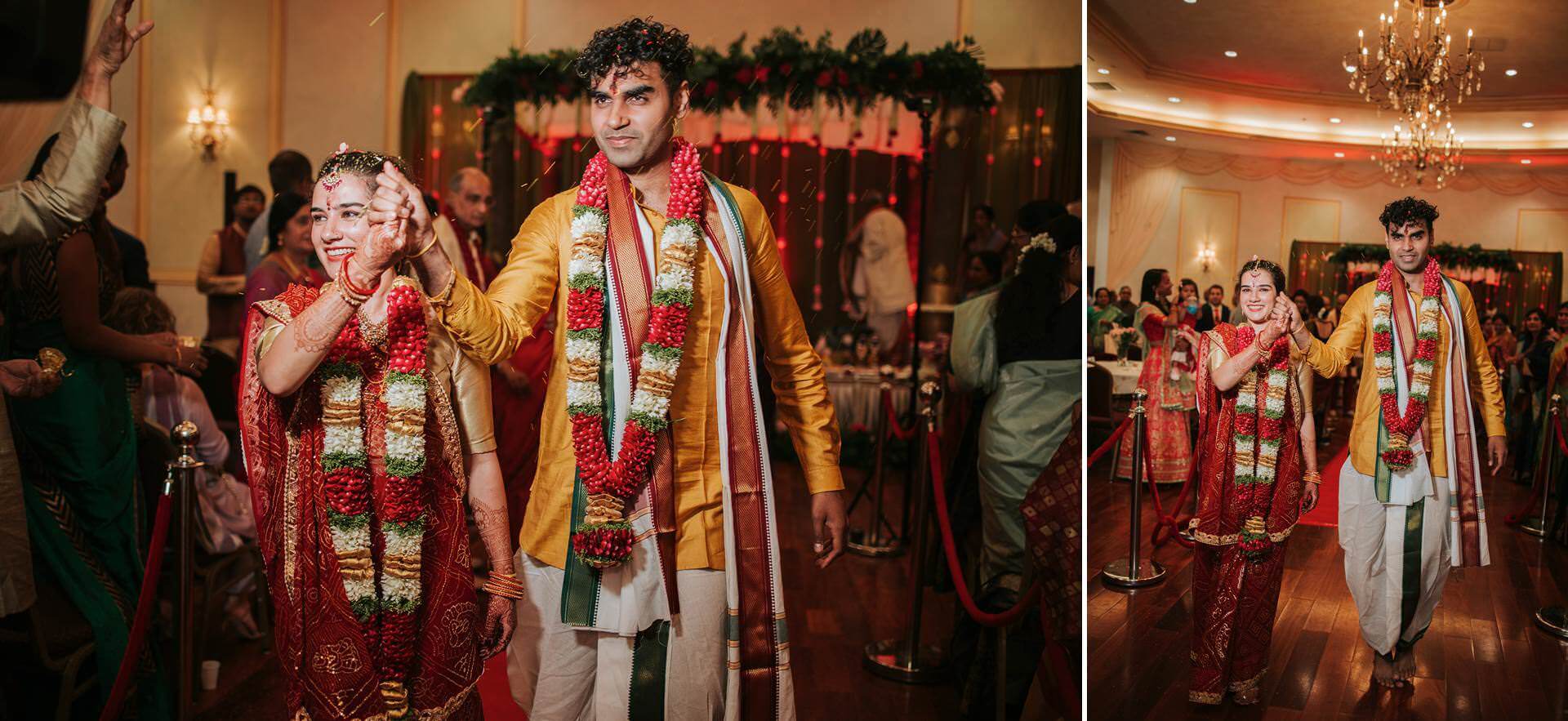
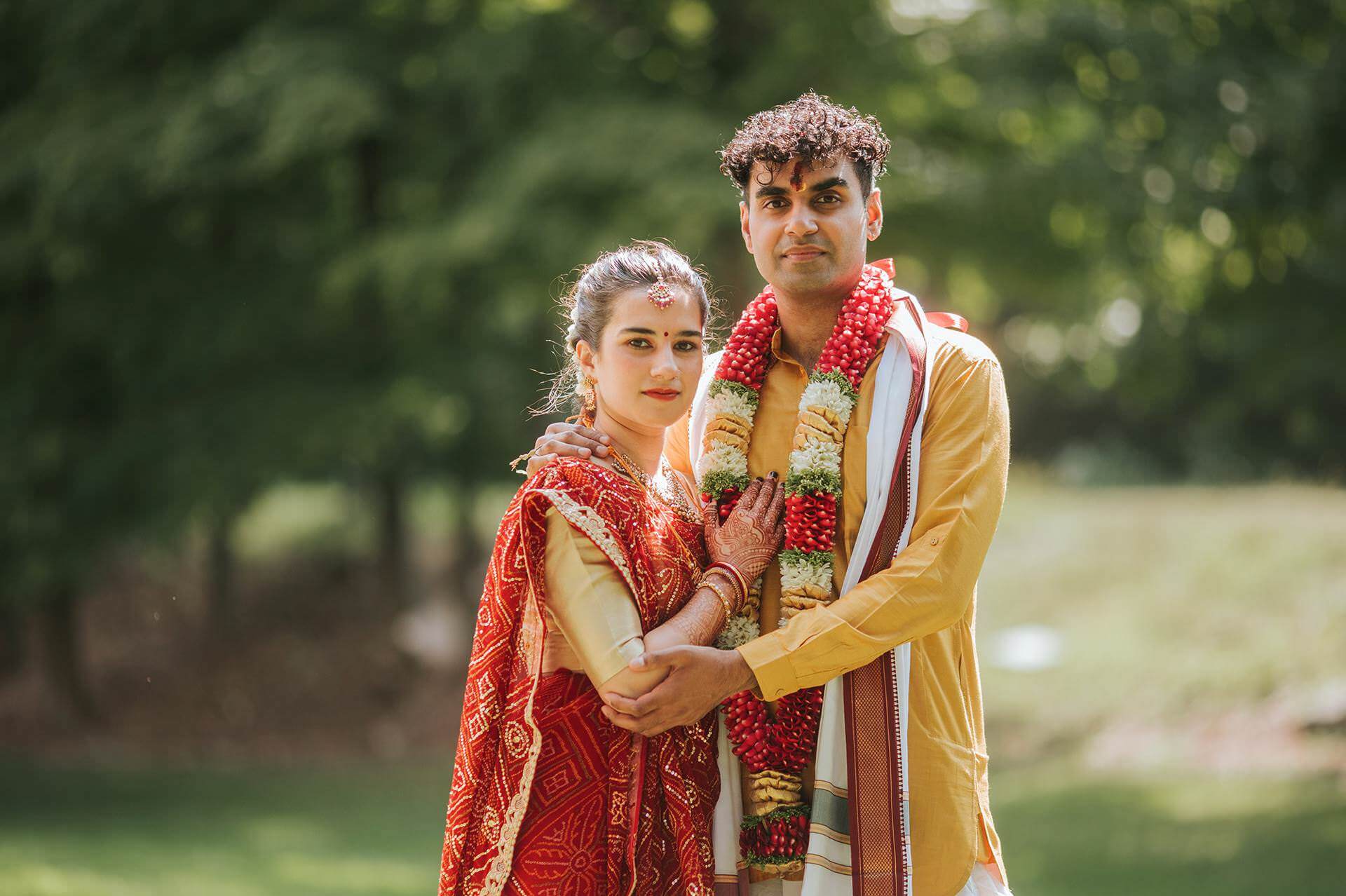
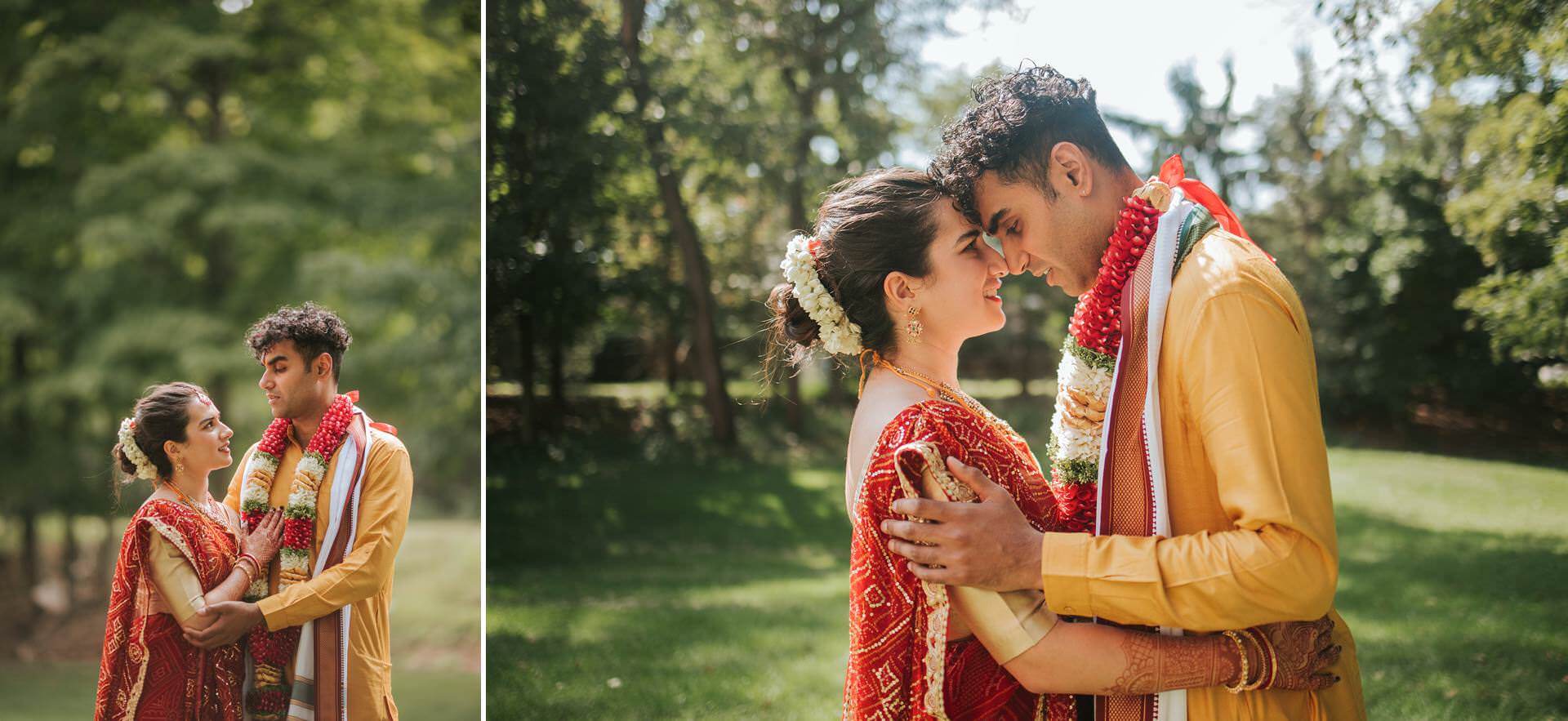
For two people who spend their lives translating feeling into sound — and for a groom I had the quiet honor of knowing long before this day — it made perfect sense. Moreover, they had done something harder than it looks: they had been completely present on one of the most observed days of their lives. It was a privilege to preserve it.
Vendor Appreciation
Venue — Hindu Samaj Temple, Mahwah, New Jersey
Photographing South Indian Hindu weddings in New Jersey
Hindu Samaj Temple in Mahwah, New Jersey, is one of the most beautiful spaces I’ve worked in. The architecture, the light, the way the ceremony fills the room — it photographs with a depth that not every venue has. Moreover, as a photographer with over 14 years of experience documenting South Asian and multicultural weddings across New Jersey, Pennsylvania, and the East Coast, I know how to be in that room. These are ceremonies with layers, with tradition, with moments that move fast and matter forever.
If you are planning a South Indian or Hindu wedding at Hindu Samaj Temple in Mahwah or anywhere across New Jersey and Pennsylvania, I’d be honored to hear about your day. MAGP documents South Asian weddings with the care and cultural fluency they deserve — guided, not posed, and present for every ritual.
Inquiries for 2026–2027 are open. Reach out here to start the conversation.